Sariyer – what to see and do
In many ways Sariyer on the European side of Istanbul is still very much a village. Vendors sell fruit and vegetables from their trucks parked on corners and fishermen line the waterfront intent on hooking dinner. In summer time old men in voluminous swimming shorts bake on the concrete walkway like beached seals. It’s very picturesque and it’s easy to see why a lot of Yeşilcam movies were filmed along this stretch of Bosphorus.
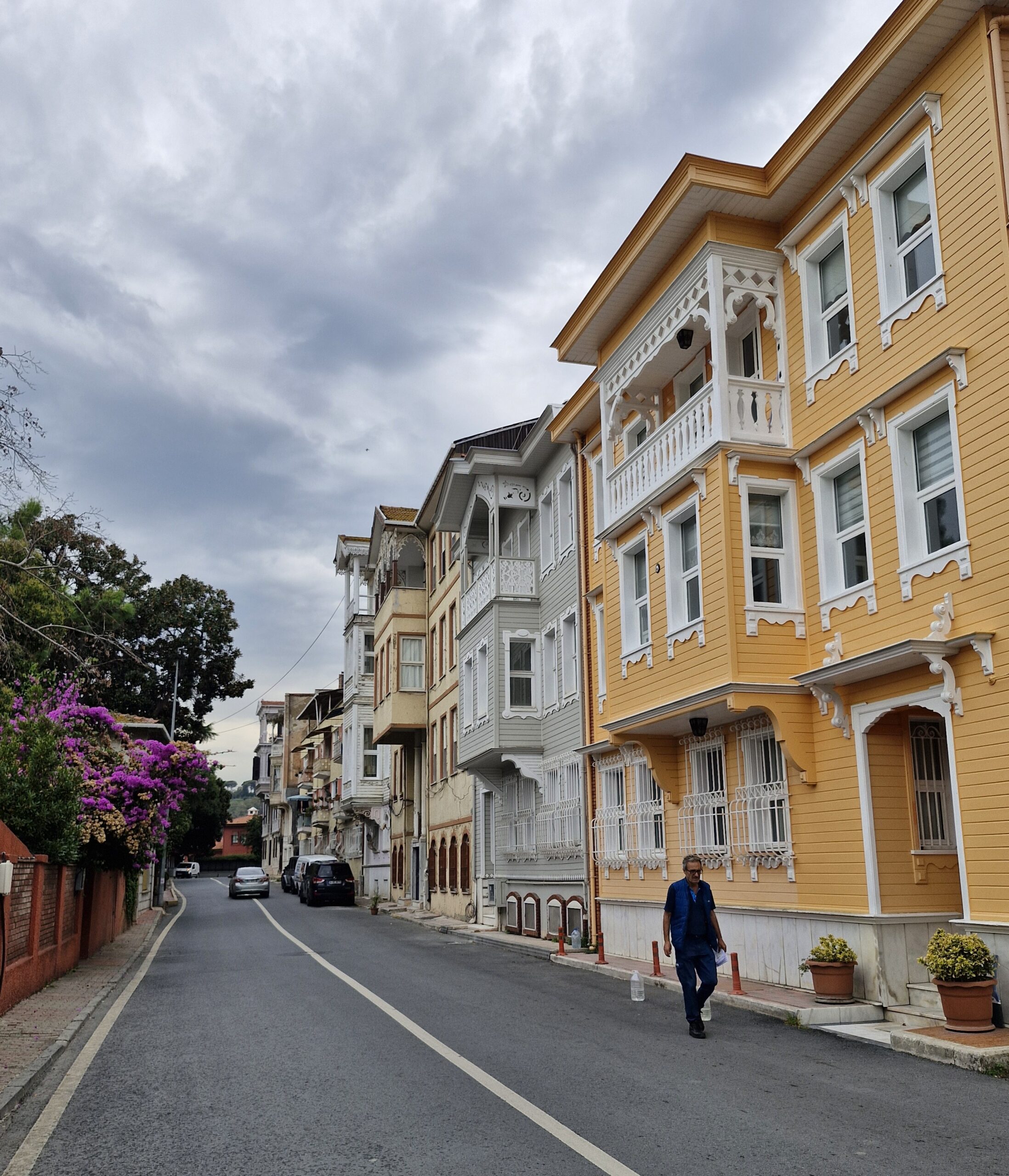
Getting to Sariyer from my home in Goztepe on the Asian side of Istanbul can take up to two hours whether I use the ferry, or take the Marmaray, metro and a bus. As you can imagine, when I do go there, I make sure it’s worth the effort. Luckily Sariyer has a lot to offer in the way of history and culture, but you do need to be prepared to walk up hills, change buses and get lost sometimes.
What you can see in Sariyer
I’ve been to Sariyer on a number of occasions now, each time with a different site in mind. The following is what I’ve seen so far. If I’ve included a bus number, you can catch it from the Yeni Mahalle stop a stone’s throw from the Sariyer Iskelesi (the wharf).
Telli Baba Türbe
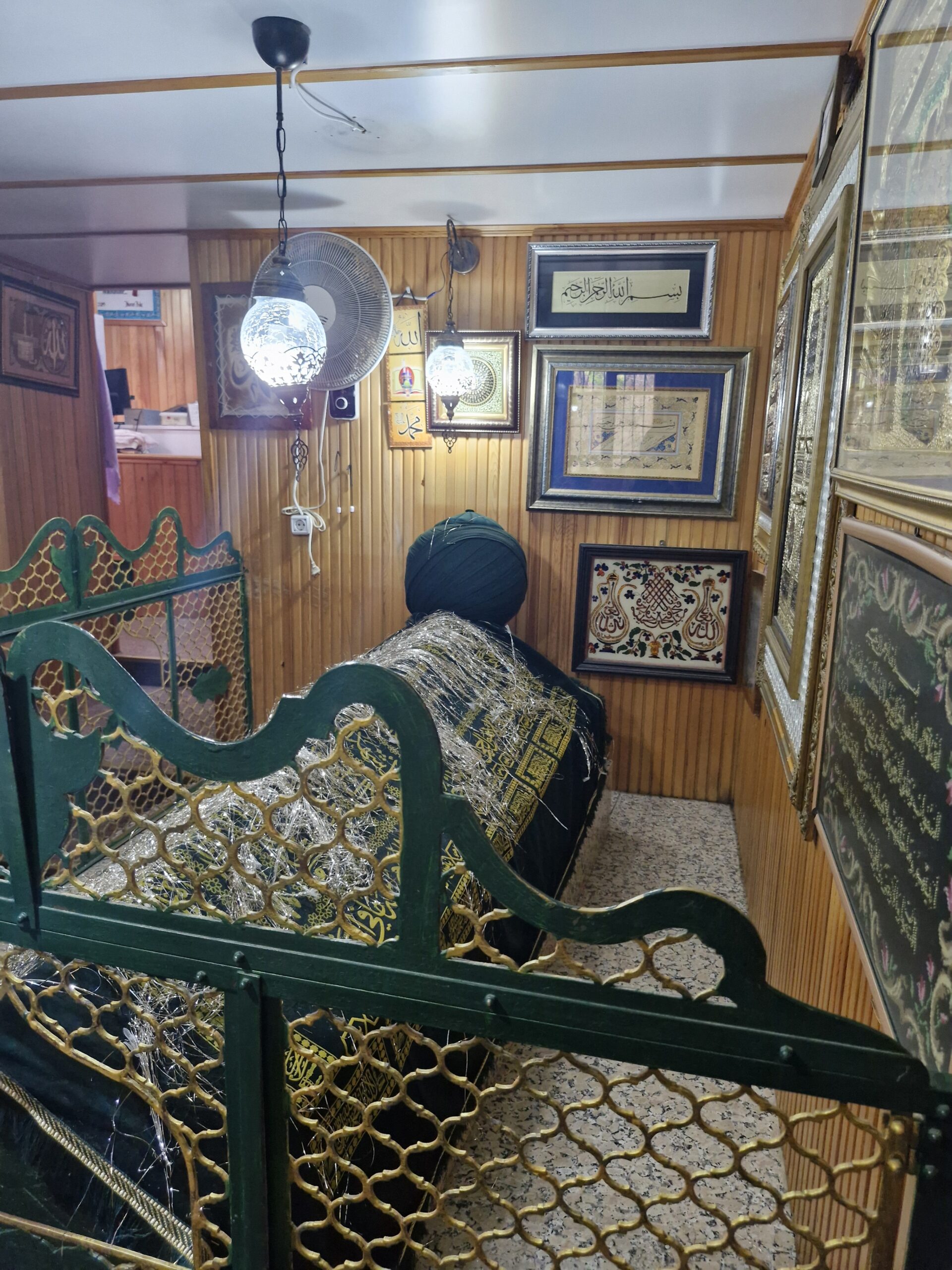
This is the tomb of Imam Abdullah Efendi. He’s one of the four saints of the Bosphorus, which includes Joshua , Aziz Mahmud Hudayi and Yahya Efendi.
Telli Baba is believed to help single people find a spouse and it’s very common for women to visit his tomb, either on their own behalf or for their daughters. They take a gelin teller, a bride string (these look a lot like the thin tinsel you’d use on a Christmas tree) there for the purpose and pray for their wish to come true. It’s thought the amount of time you have to wait for a match corresponds to the length of the string you choose. Those lucky in love return with offerings of string to express their thanks.
His tomb is on the road to Rumeli Kavağı. You can catch a 25 or 25A bus to the Telli Baba bus stop and from there it’s a 5 minute walk uphill. The road is narrow with no pavement so keep an eye out for cars.
Sadberk Hanım Museum
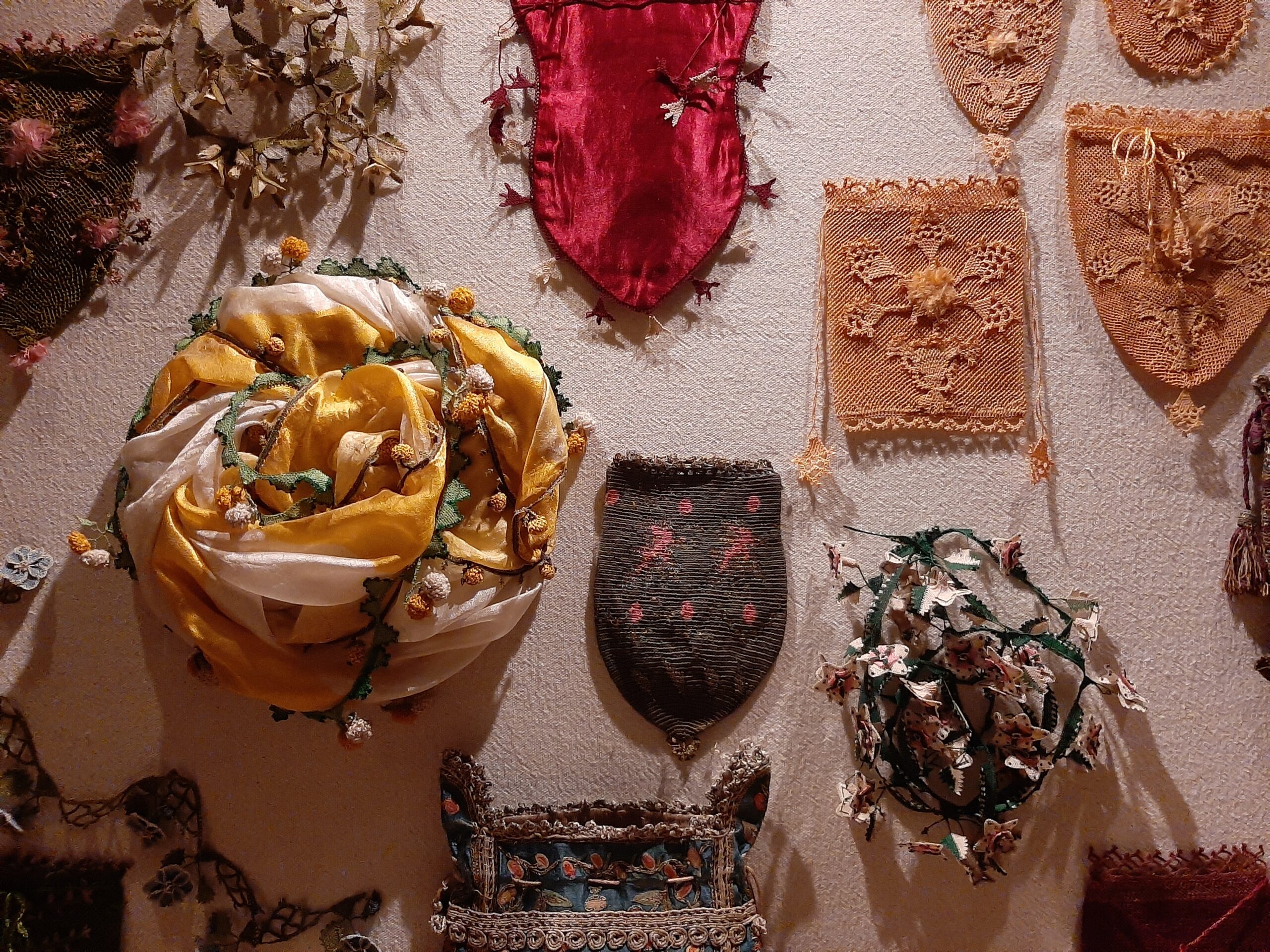
The Sadberk Hanım Museum is housed in the Azaryan Mansion, formerly the summer house of the Koç family, a leading Turkish family-run business empire. The property became Turkey’s first private museum in 1980. Inside there’s a treasure trove of items that once belonged to Mrs Sadberk, Vehbi Koç’s wife, including items dating back to 6000BC, exquisite porcelain ware, jewellery and lush textiles. The building itself is also gorgeous, and well worth seeing.
It’s a 20 minute walk along the waterfront from Sariyer wharf, which is very pleasant provided it’s not boiling hot or pouring with rain (as happened on my first visit there). Alternatively you can catch 25E, 25A, 25Y or 152 all from the Yeni Mahalle bus stop described above.
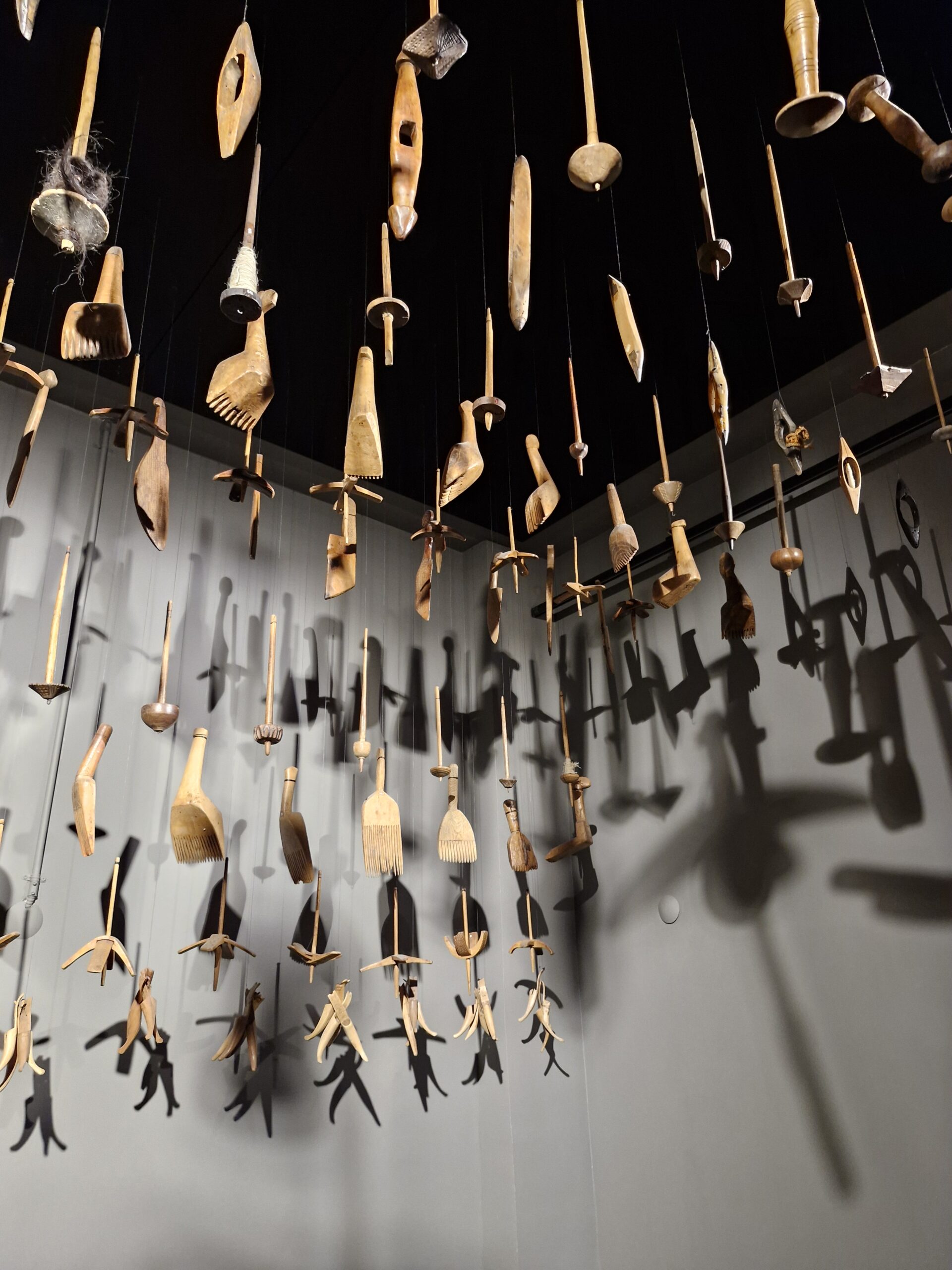
Turkey has long attracted writers, artists and creatives, and photographer Josephine Powell was one of them. She was the first foreigner allowed to travel through the country after the founding of the Turkish Republic. Her wanderings took her the length and breadth of Anatolia where she joined nomadic camps, visited carpet shops and met with rug dealers, collecting textiles and taking photographs as she went.
In 2007 she donated a substantial collection to the Vehbi Koç Foundation and now it’s on permanent display in the Vehbi Koç Büyükdere House. As well as 36 rugs woven between the 18th and early 20th centuries, there are saddlebags, tents, cradle covers, wall coverings, a loom and numerous weaving tools in the collection.
When Vehbi Koç (one of Turkey’s wealthiest individuals) purchased the Büyükdere House, plus the grove behind it in 1938, he and his family were living in Ankara. They spent every summer here as a family, until Vehbi Koç died in 1996. Look out for the private funicular in the garden out the back!
You can visit between 10.00-17.00 every day except Wednesdays when they’re closed. It’s a 15 minute walk from the Yeni Mahalle bus stop, or you can catch a 25E, 25A, 25Y or 152 bus there instead. On the way you pass the Uzunçarşılı Yalısı, home to historian Ismail Hakki Uzunçarşılı who wrote dozens of books on Turkish and Ottoman history.
Ovidius Kulesi
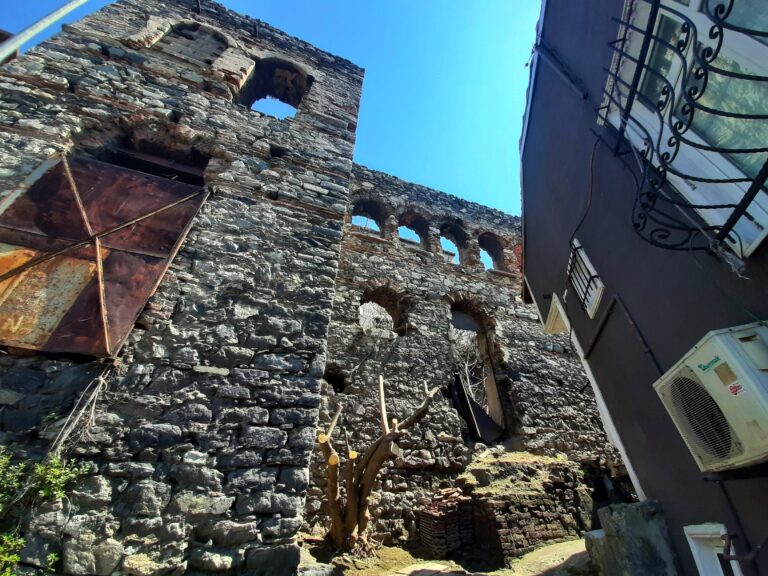
This is one for people like me who want to see history in the flesh, even if requires a two hour trip to get there (including a fairly steep walk), and it still excited when what I’ve come to see is only visible through a wire fence and from a distance.
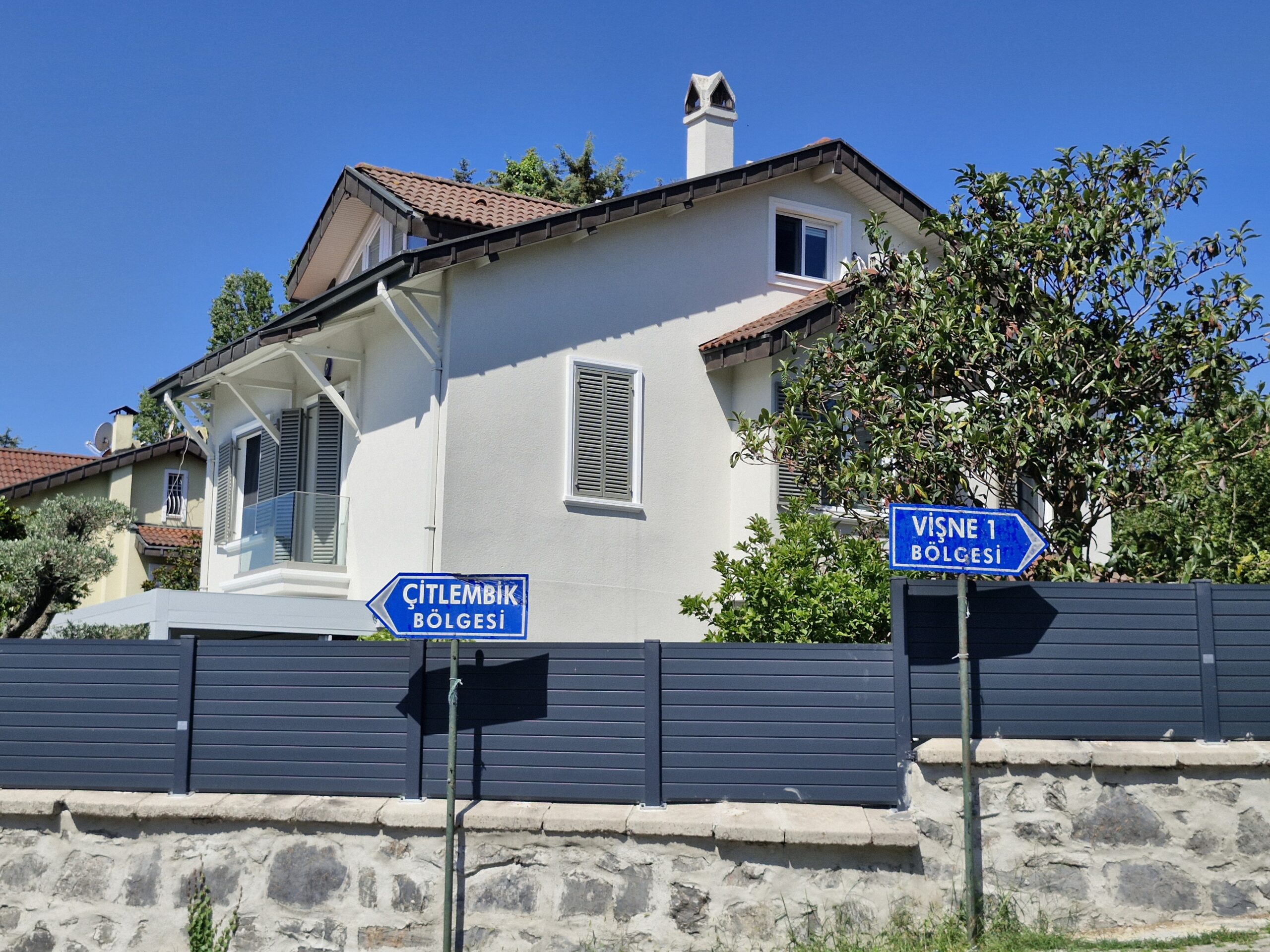
Along with my intrepid friend Kate, I set off early one summer morning in search of Ovidius Kulesi. This 6th century watch tower is located in a Sariyer neighbourhood called Uskumruköy. Literally and delightfully translating as Mackeral Village, as in the fish, it was once a village surrounded by orchards. They were full of cherry trees and çitlenbik, hackberry bushes, in what is now a strangely middle-class suburb with actual lawns and banal non-Turkish looking free-standing private houses.
The history of both the location and the tower are uncertain. According to legend, a holy man was passing through on his horse when it stumbled. The man fell to the ground and locals came to his aide. When he asked the name of the place they said it was called Kumru (dove) so the holy man declared it should be named Uskumru Köy (Dove Village). There’s another version that involves the combination of two words that variously mean weak or steak or intellect but I couldn’t follow it well enough to explain it here.
Whatever the case, I can say the agricultural past lives on in signs pointing to the cherry section and rolling green vistas leading down to the Black Sea, interspersed unfortunately with crops of new, ugly villas.
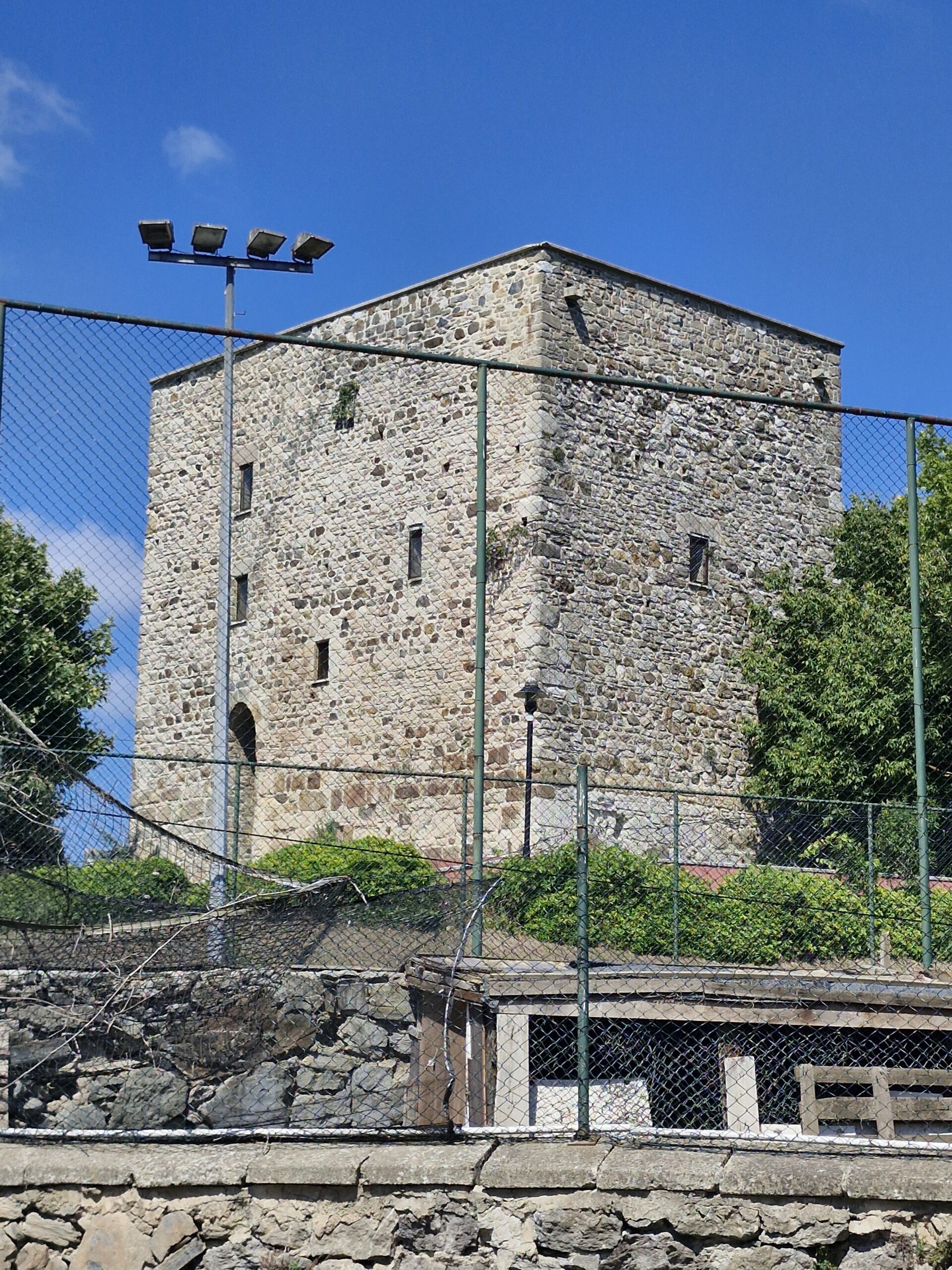
Anyway, back to the tower. Some sources date Ovidius Tower to the Roman period and say it’s named after Roman poet Ovid, (spelled Ovidius in Latin) who passed through or possibly stayed here during his journey to the Roman town of Tomis (present-day Constanța in Romania) where he’d been exiled by Roman Emperor Augustus. Others date it to the Byzantine Empire, sometime between the 12th and 14th centuries. They believe it was built by the Genoese (of Galata Tower fame) who also built the Kilyos (Kumköy) Castle in the 14th century.
What I can say is that I wasn’t able to climb the fence to get an up close look and had to satisfy myself with a view over someone’s vegetable garden. The tower was heavily restored in the 1990s yet is still an astonishing piece of history and dominates the rather mundane surroundings.
To get there you need to catch a 152 from Saiyer Merkezi stop (about 5 mins north of the wharf, through the park). The road upwards is extremely narrow and winding so hang on tight, or better yet, bags a seat. From the Migros bus stop it’s then a 15 minute uphill walk to tower.
Dikranyan Efendi Yalı in Kefeliköy near Sariyer
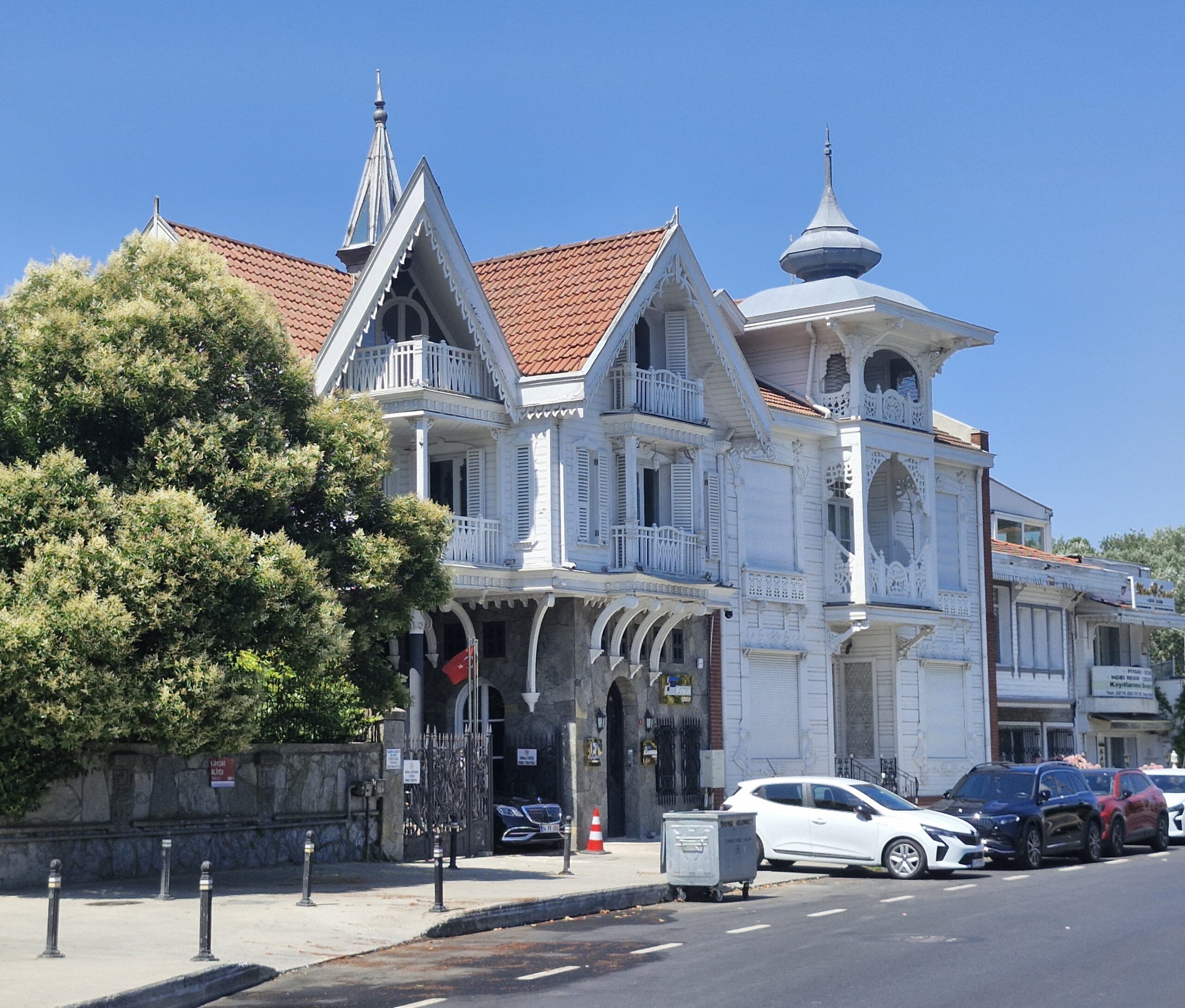
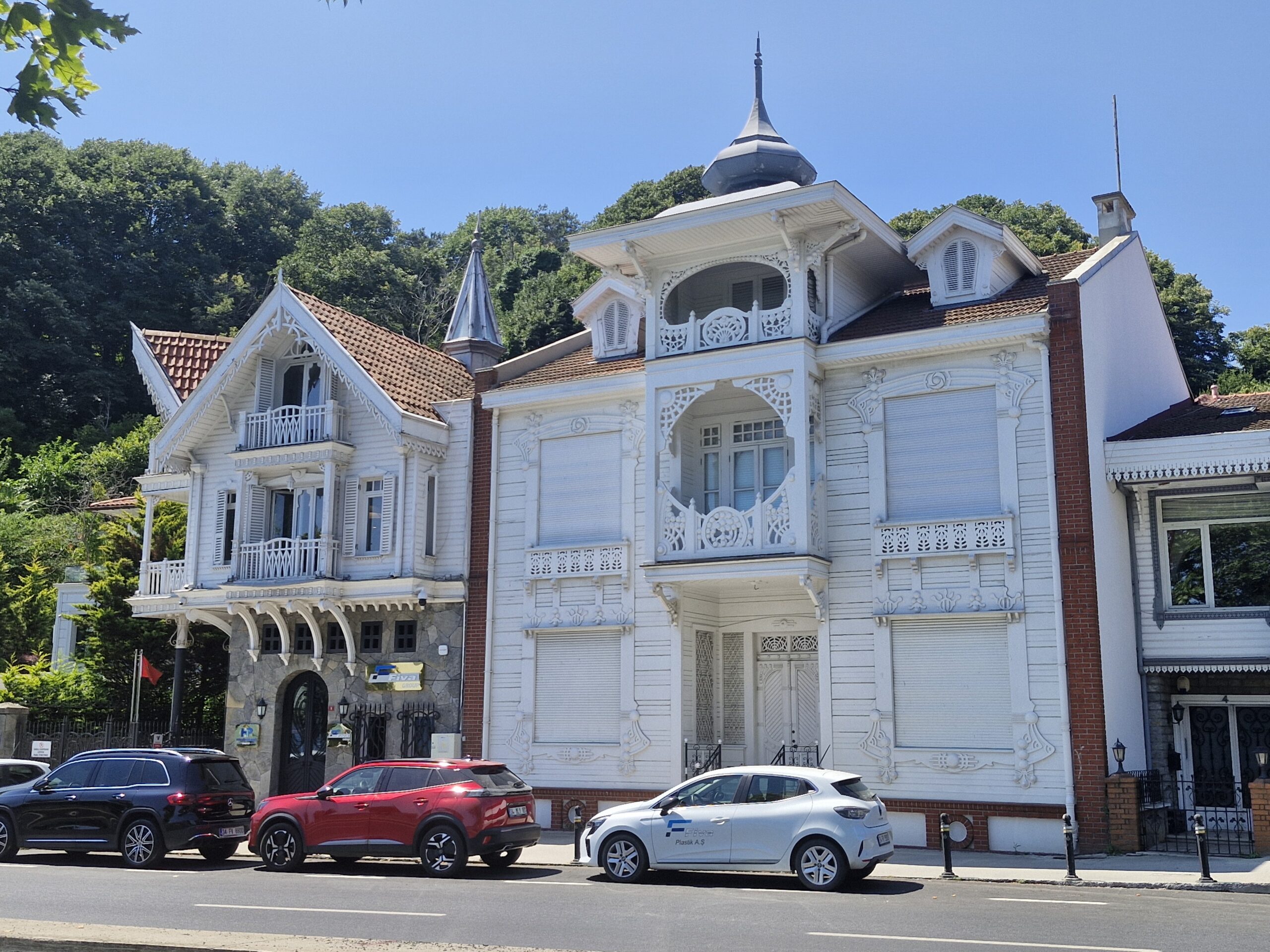
The same day I saw the tower I caught the 152 back down the hill and continued on to the Çayırbaşı bus stop. That’s where you’ll see an extraordinary wooden house, designed by Italian architect Raimondo d’Aronco in 1895. The building is currently listed on Google Maps as Fiva and when it was first built, the water came right up to where the pavement is now. A coastal road made from reclaimed land was constructed in 1956 and the fanciful onion dome you can see was added to the house in 1969.
Naval Officers’ Club
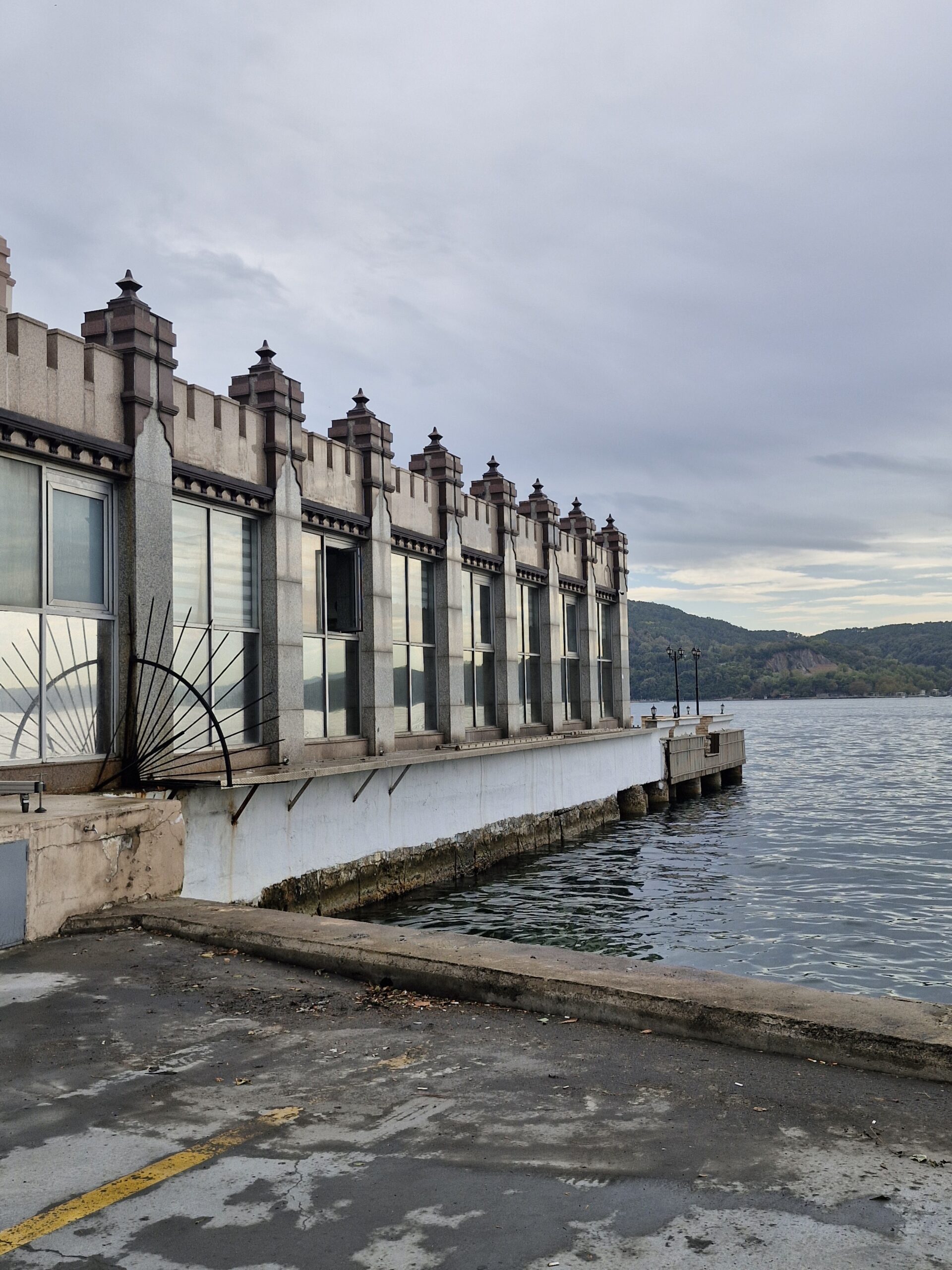
Just along from Sariyer wharf on the waterfront you’ll see a rather bizarre little building. Built in 1911 as a brick military station with a garden, the present day two storey Sarıyer Subay Askeri Gazino Müdürlüğü, an officer’s military casino (think club rather than gambling) is decidedly medieval in style, featuring a terrace between two small towers and upper battlements. An inscription bears the signature of Sultan Mehmet Reşat, aka Sultan Mehmet V, one of sultans of the Ottoman Empire.
Lastly, somewhere in the backstreets of Sariyer centre, there’s supposed to be a hamam with a türbe behind it. The tomb is rumoured to be that of Sarı Er, an unknown soldier who participated in conquest of Istanbul. He’s believed to have a blonde wife and thought by some to have lent his name to the area. Try as I might I couldn’t find either, only a small carpark and the back of a run-down building.
Where to eat in Sariyer
I haven’t eaten in many places in Sariyer because I don’t know the area that well. The options consist of high priced eateries and cheap and cheerful affordable and I’ve only been to the latter because I only spend serious money on dining out in Istanbul if I know for certain I’ll get quality food. Hünkar Böreckci is good for pastry snacks, Saray Muhallebicisi across the way for light meals and puddings or the Arnavutköy Sokak kireçburnu Kafe Restoran for basic selections like sandwiches and tost.
How to get there and back
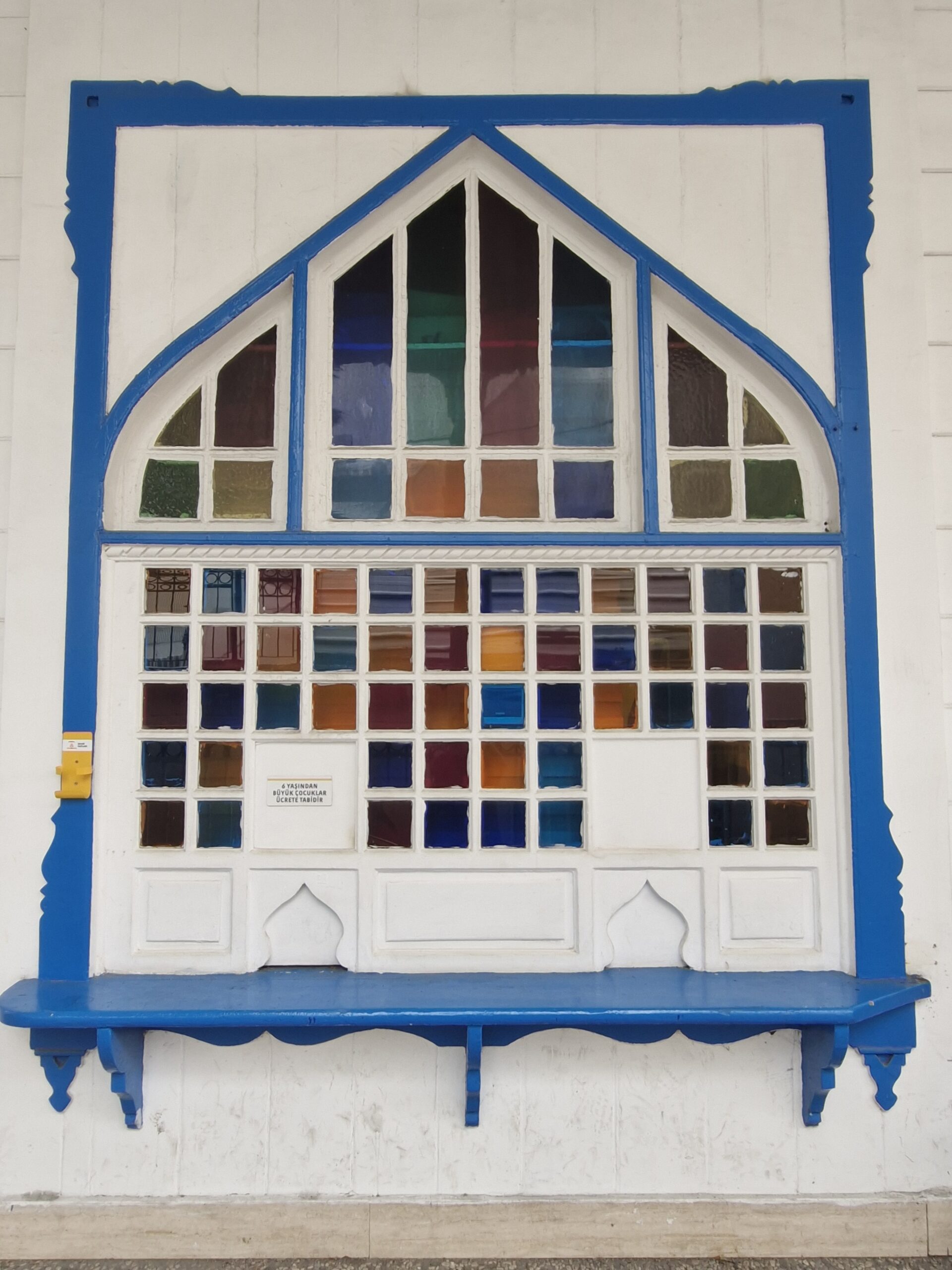
This very much depends on where you’re coming from and how early you want to start your day. There’s a ferry that departs Kadikoy at 7.50 in the morning that picks up passengers from Beşiktaş at 8.15, arriving at Sariyer at 9.15.
Alternately you can catch a metro from Yenikapi to Haciosman Metro Station. From there catch bus numbers 25, 150 or 152 to Sariyer Merkezi (down by the water).
You can also get to Sariyer on the ferry that departs from Eminönü throughout the day. It also goes via Beşiktaş. You can find out exact departure times on the Istanbul Şehir Hatlari website.
One last thing
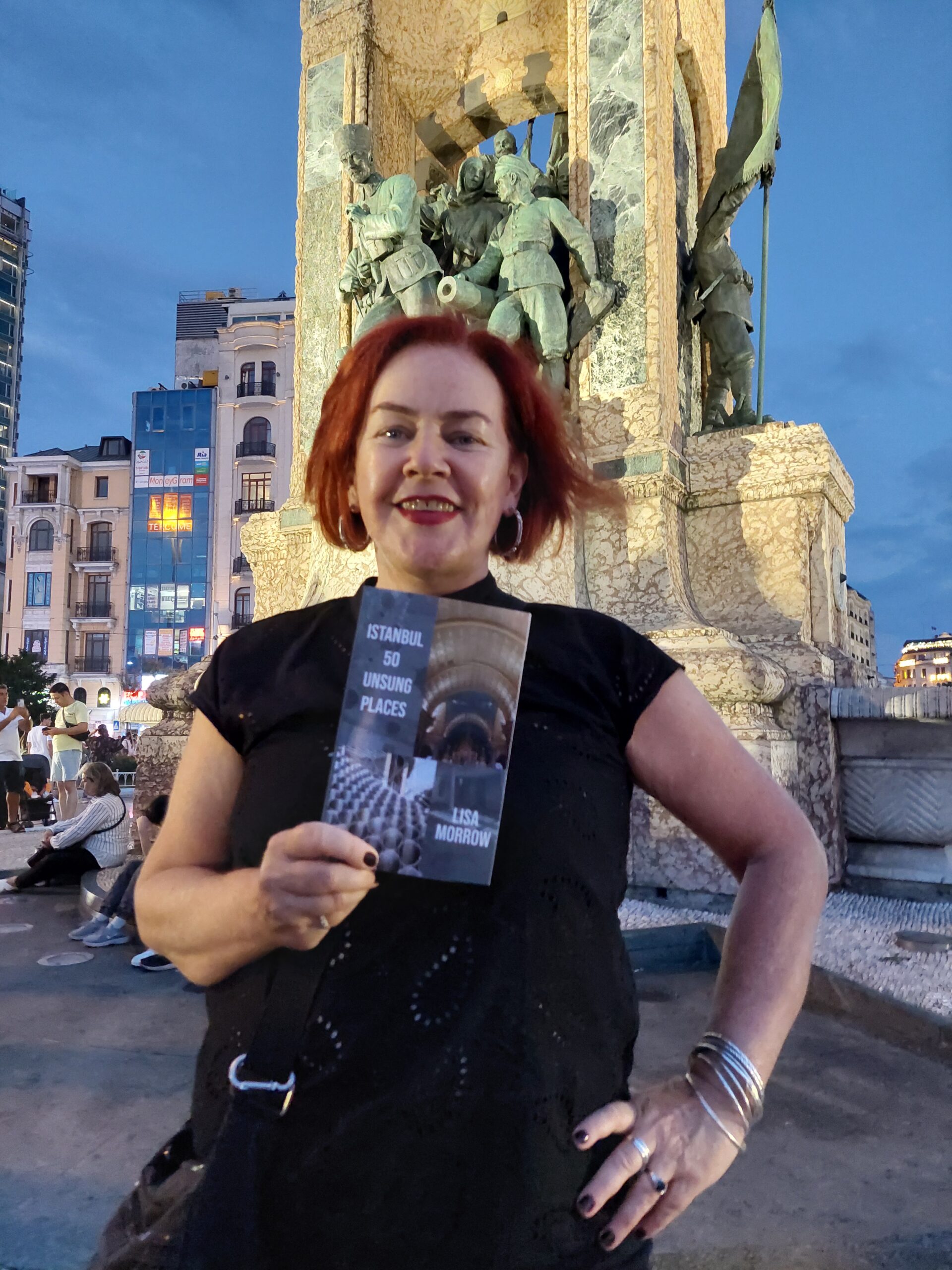
I hope you enjoy exploring a bit further afield than Sultanahmet and the other better known tourist sights. If you do, why not grab a copy of Istanbul 50 Unsung Places and explore more?
Alternatively, find out more about my local neighbourhood Kadikoy, with my self-guided walking tour Stepping Back Through Chalcedon. Part of the money I earn from my books and guides goes towards running this website where you can find lots of free and up-to-date information to make the best of your time in Istanbul.
Whatever you do, stay safe in Turkey and have fun!