Burgazada – what to see and do
Burgazada History
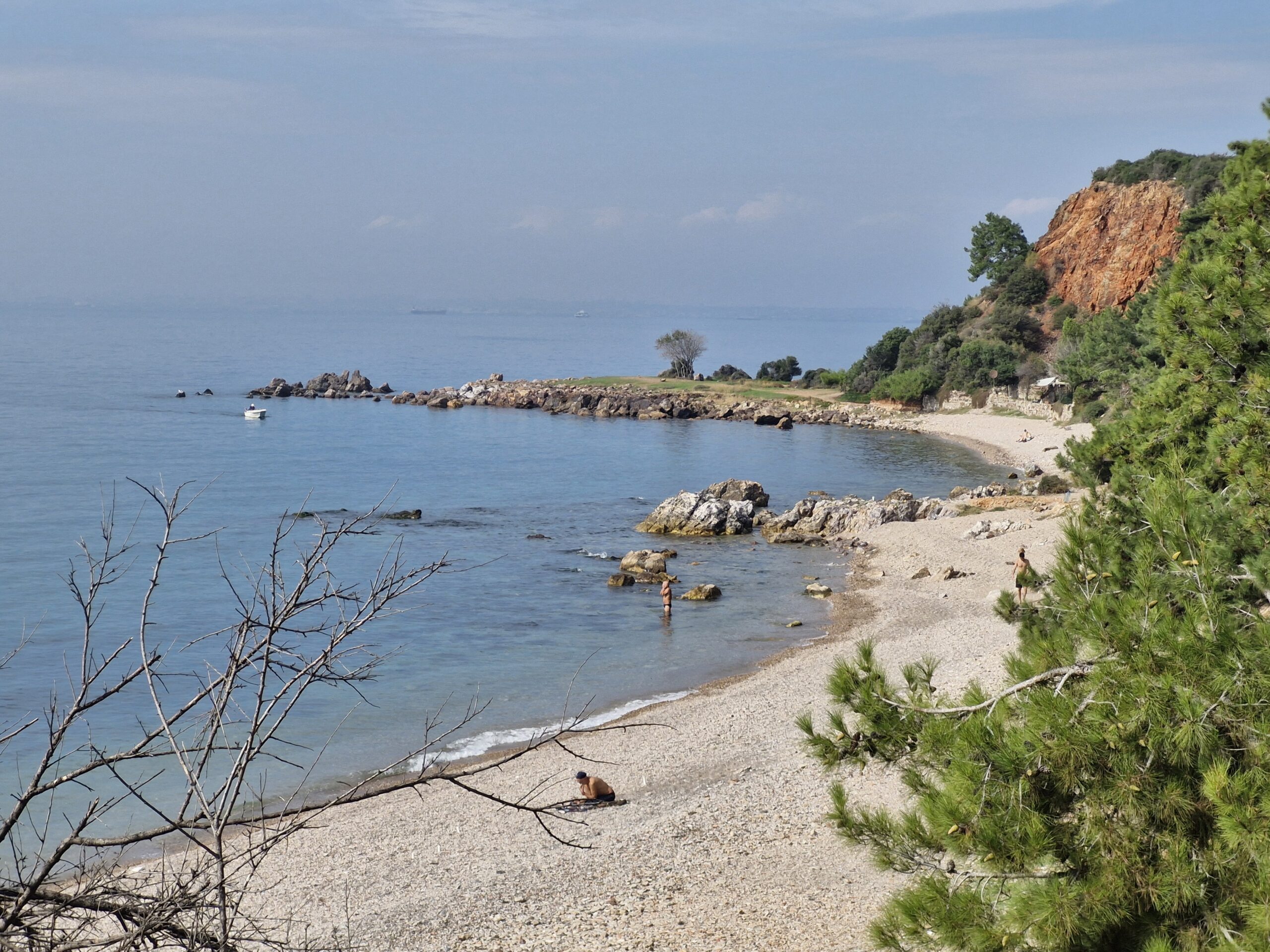
Today Burgazada is a peaceful island studded with red pine trees, off Istanbul out in the Sea of Marmara, but like the other Princes’ Islands, it has a rich history. In ancient times it was known as Panormos, then later on during the rule of Alexander the Great it was called Antigoni, after Antigonus I. He was a general and successor of Alexander and built a fortress, a burgaz on the island.
The famous Muslim traveller Evliya Çelebi wrote of Burgazada that, “The island is ten miles wide and quite fertile. It has about 300 houses with gardens and fresh water. The people are Greek. There are prosperous churches. Goats and rabbits are abundant. The vineyards in the mountains are innumerable. The people are wealthy sailors”.
Burgazada is actually only about 2 kilometres wide and Çelebi also mentioned that Jews and Armenians lived on the island, along with a considerable sized Greek population.
With its dense forestation, Burgazada was the perfect location for the first sanatorium to be established on the Princes’ Islands. One opened in 1902 as part of the Sankt Georg International Children’s Hospital, founded by Dr Giovanni Battista Violi. After the hospital closed in the 1940s the building was converted into a mansion where the painter İbrahim Çallı once lived. Today, it serves as a hotel.
Now Turks constitute a large proportion of the island’s population while a small number of Austrian priests and nuns are said to live in the buildings belonging to the Austrian High School but I wasn’t able to find the people or the buildings. However you can see the few remnants of the once vital Greek community that once thrived here, if you’re prepared to walk.
What to see on Burgazada
Walk to Bayrak Hill
I’ve been to Burgazada a few times but this post is based on an outing I made to the island on one of those perfect April days in Istanbul when the sun is shining and the temperature perfect for being outdoors, warm but not too hot. I went with my husband Kim, Rachel who started off as someone who read my books and followed me on social media and is now a friend, and a New Zealand born woman Rachel met on a tour.
I plotted a walk that totalled 5.4 kilometres with the first part a meander through the town, before heading up a long steep slope to the peak. The reward is a lush grassy knoll at the top and beautiful views across the water.
Burgas Palas
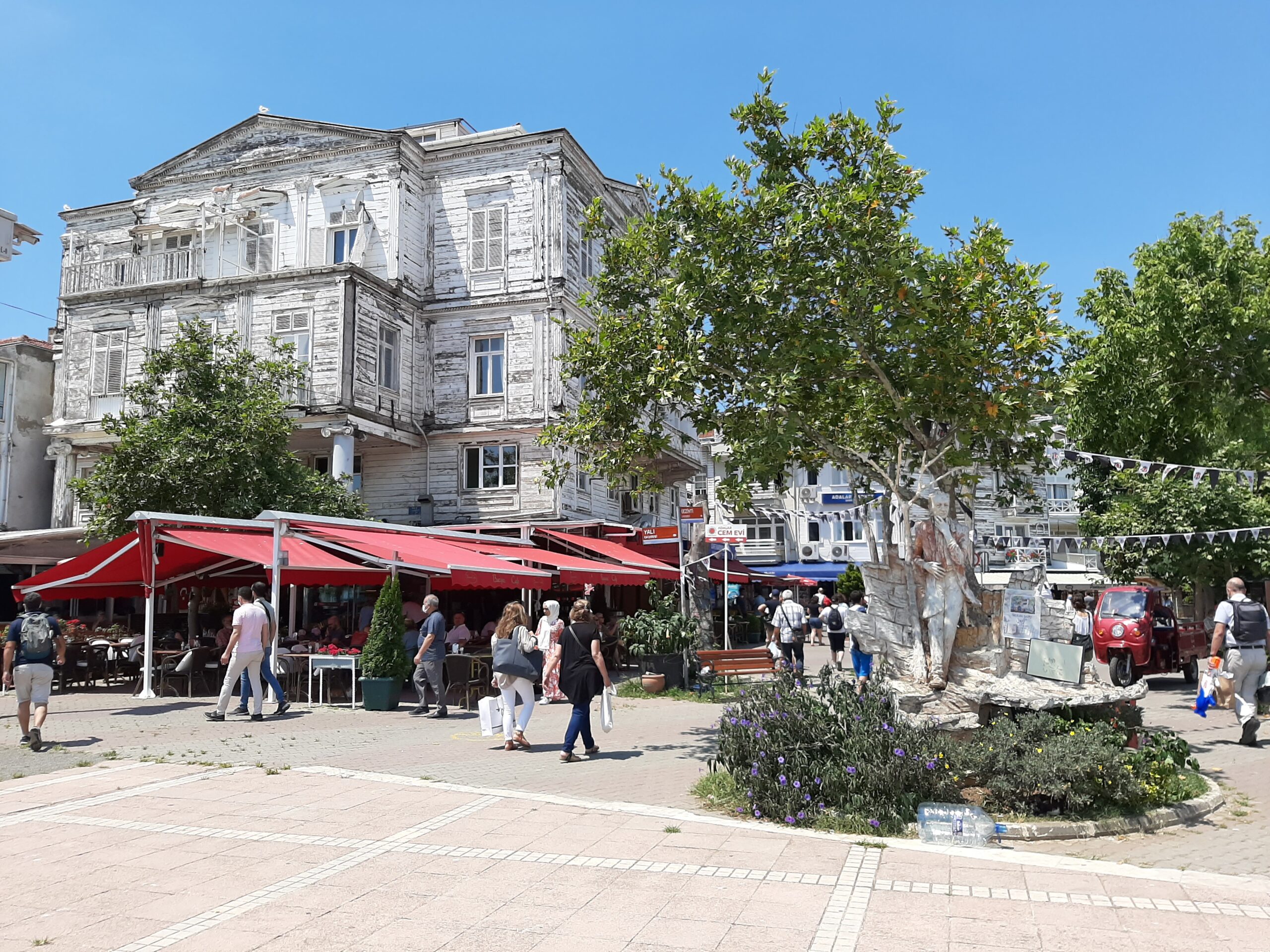
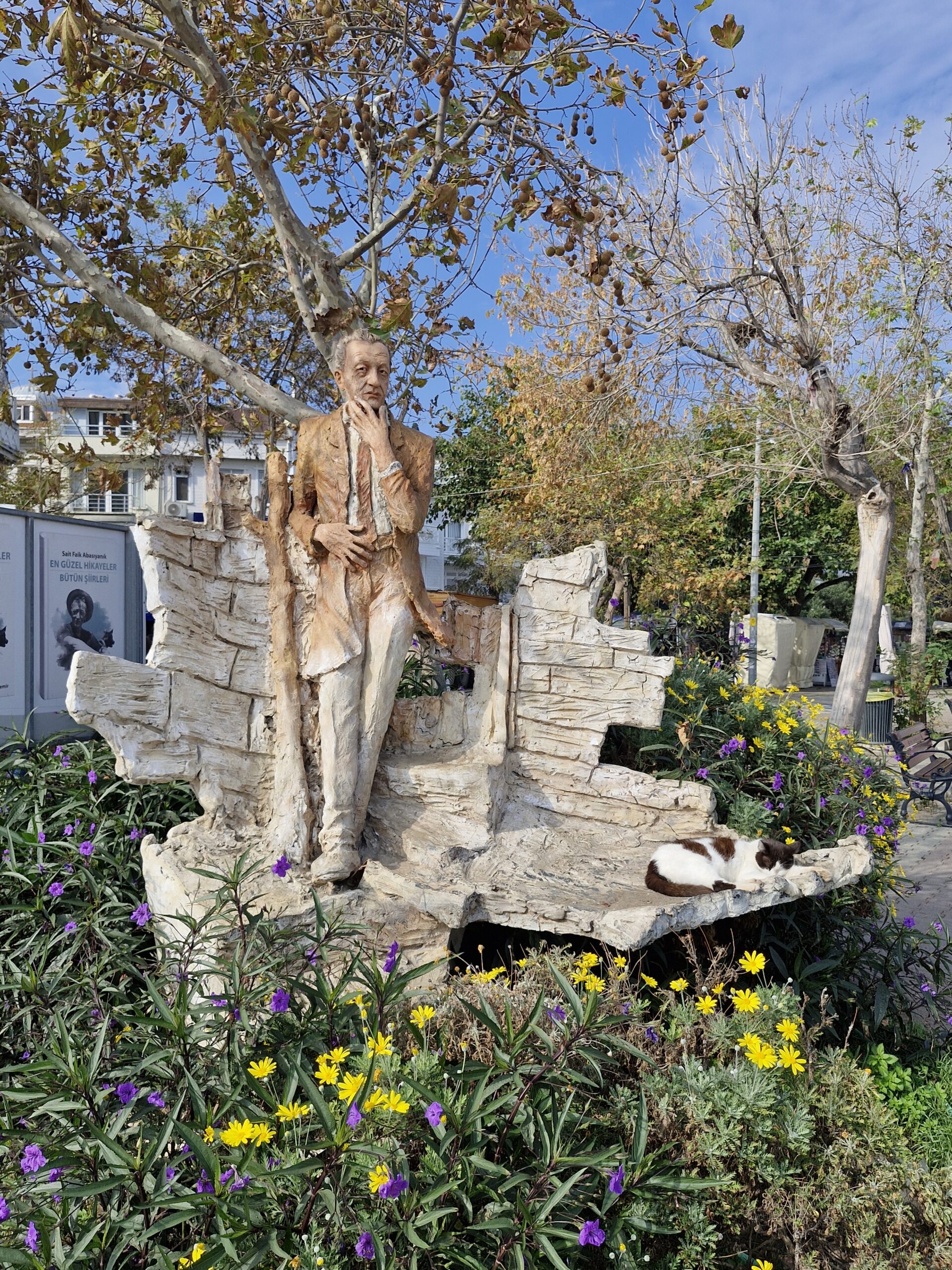
The first thing you see after you disembark, forming a backdrop for the statue of the nonchalant figure of Sait Faik Abasıyanık (more on him later), is a shabby white building, with paint peeling off the wood. It was once a grand hotel known variously as The Pantheon, Hotel Antigoni, and Burgas Hotel. In 1942 it was converted into the Burgaz Hotel but is no longer in operation.
Aya Yani Church (Ionnes Podromos Kilisesi)
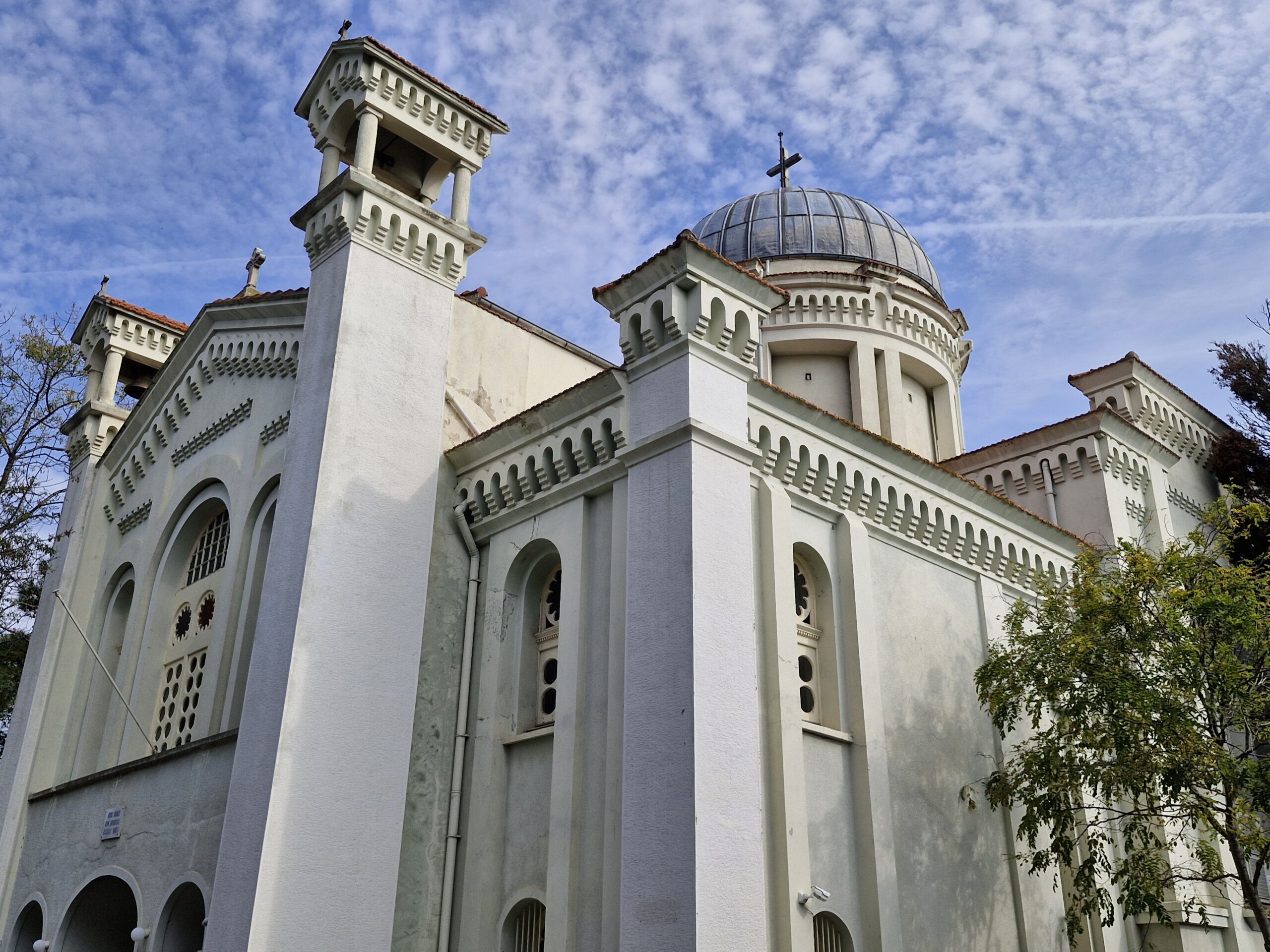
Next we walked inland up a few streets to Ionnes Podromos Kilisesi, the Greek Orthodox Aya Yani Church. The church you see today was built on the site of the first church commissioned by Empress Theodora in 842. It was designed and constructed by Nikolaos Dimadis between the years 1896 and 1899 and you don’t have to look very closely to see the similarities to the Greek Boys’ High School on the Golden Horn. That’s because Nikolaos’ dad was Konstandinos Dimadis, the architect of that striking red building in Fener, Istanbul.
Aya Yani is a basic cross-shaped church and the upper half, including the dome, is easy to see as you approach the island on the ferry. The other interesting building you see is a cute little hexagonal pavilion suspended out over the water. That’s the Burgazada Deniz Klübü, a members only club, It began life as the Adalar Water Sports Club (ASSK) founded in 1963 to encourage island kids and young people to engage in sport and foster their physical and mental development. Basically, to keep them out of trouble!
Back to the church. The church was built above an underground cell where it’s alleged St Methodios the Confessor was imprisoned for seven years. His captors were supporters of the Iconoclast Movement who opposed the use of icons in the church. When St Methodios was finally released he went on to become one of the most respected patriarchs of the Eastern Orthodox Church. There’s also a deep, glass-covered holy spring in the courtyard but it’s not usually open to the public.
The walk up to Bayrak Hill
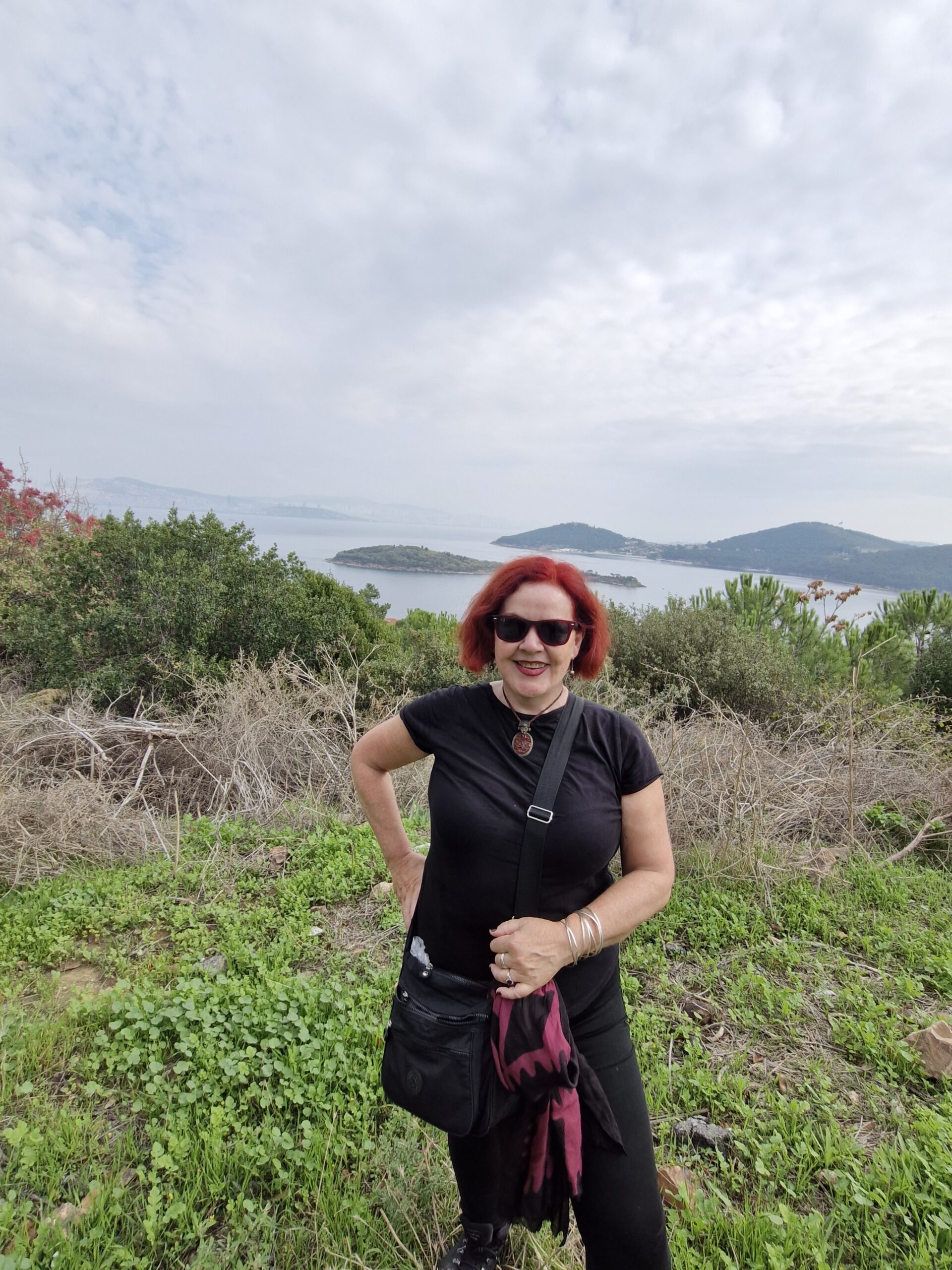
From Aya Yani church we headed towards Büyük Çamlik Sokak and then upwards, following a road that went from tarmac to loose stone with a cemetery on our right and ever expanding views on our left. It took 30 minutes from the wharf to reach the top of Bayrak Hill, which stands at a height of 176 metres.
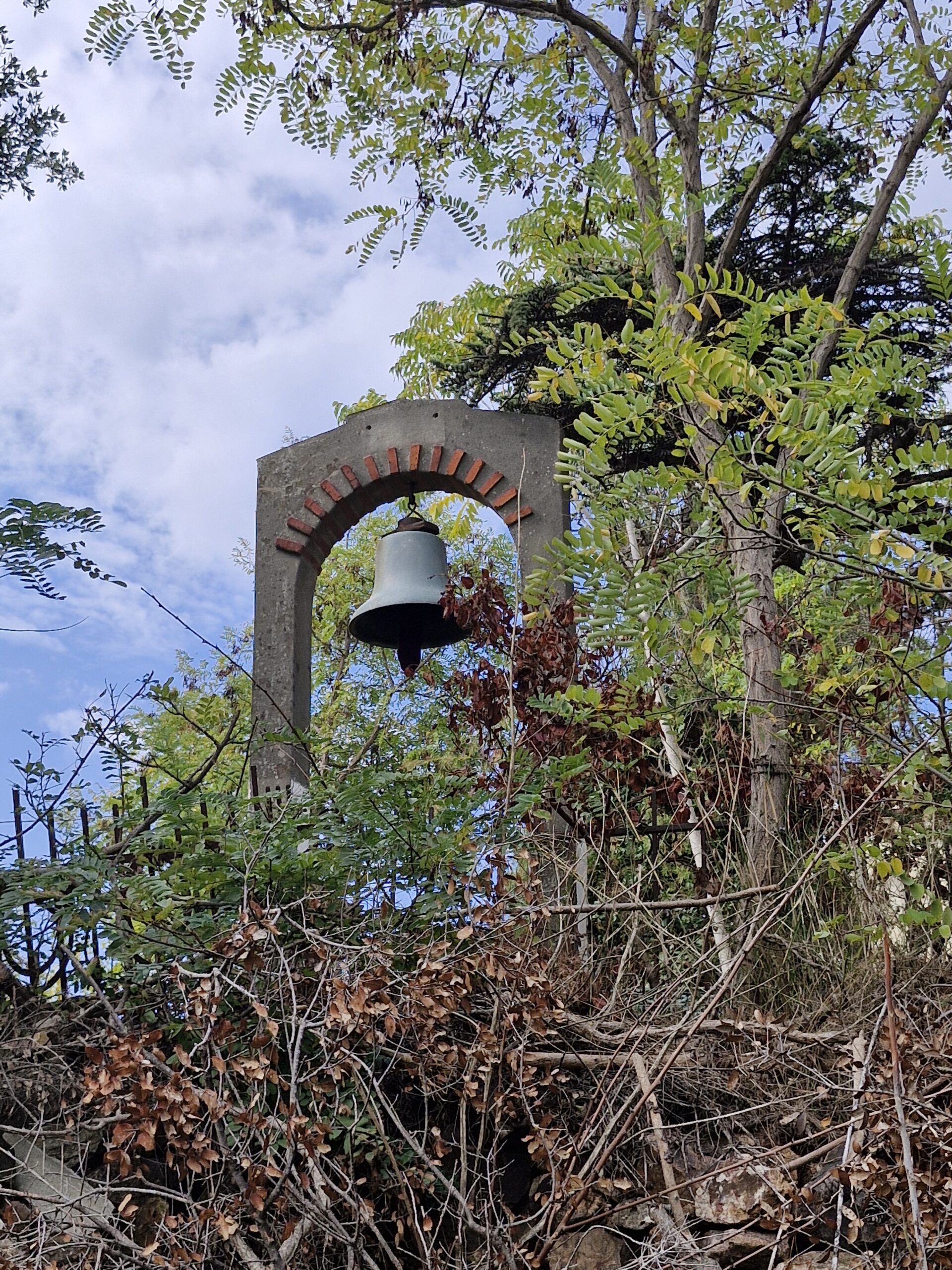
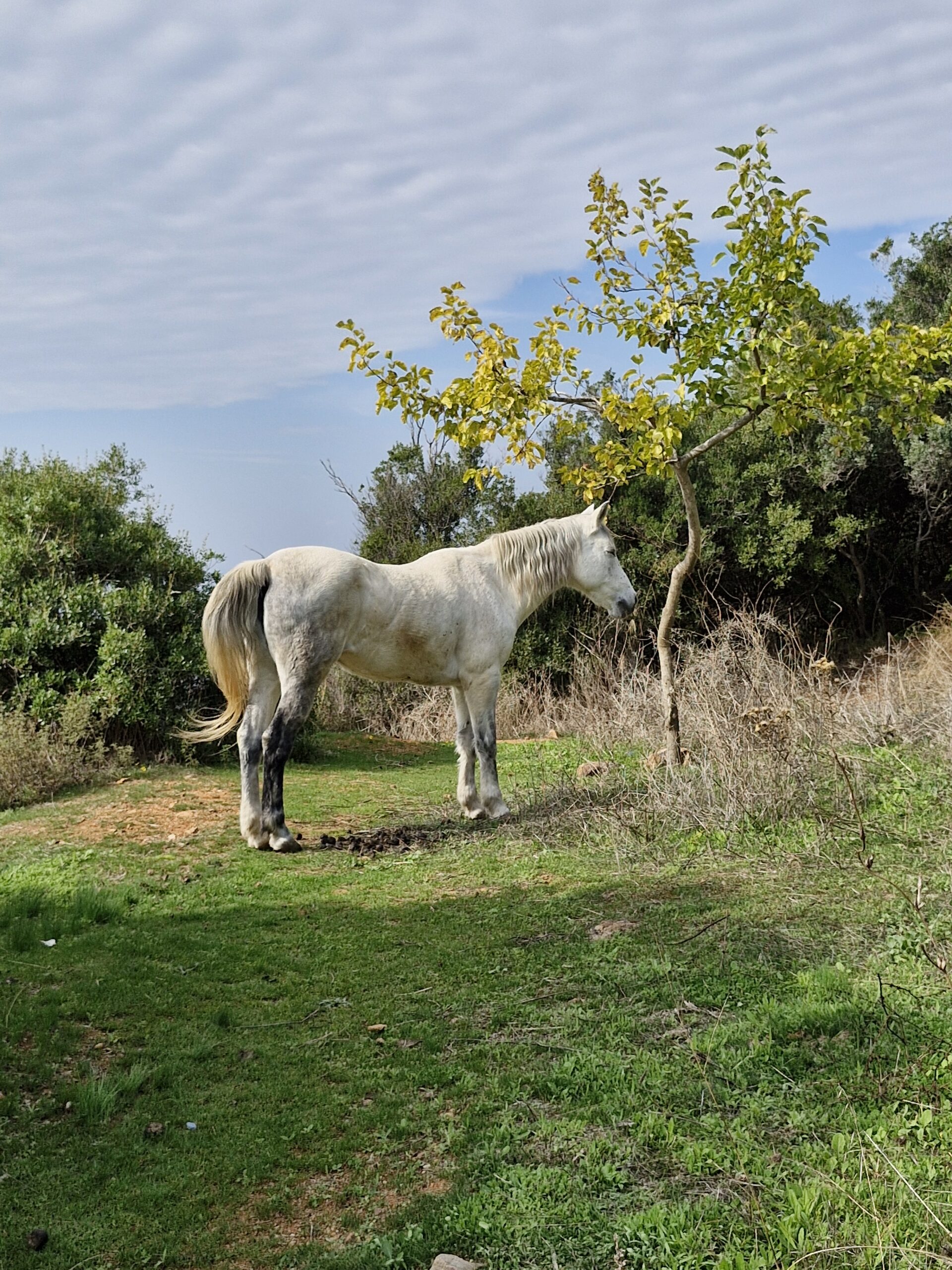
Despite what my research suggested there were no signs of the Hristos Monastery and Church that I could see, let alone any signs of a cloistered community, but there were two rather large, skittish young cows. Their presence limited my usual enthusiasm to go down paths unknown, but I did see a once stately old building behind a locked gate, with a bell tower to its right, as well as a fire brigade base. The firemen were busy cleaning things and showed less interest in us than the cows, who seemed to take a shine to me!
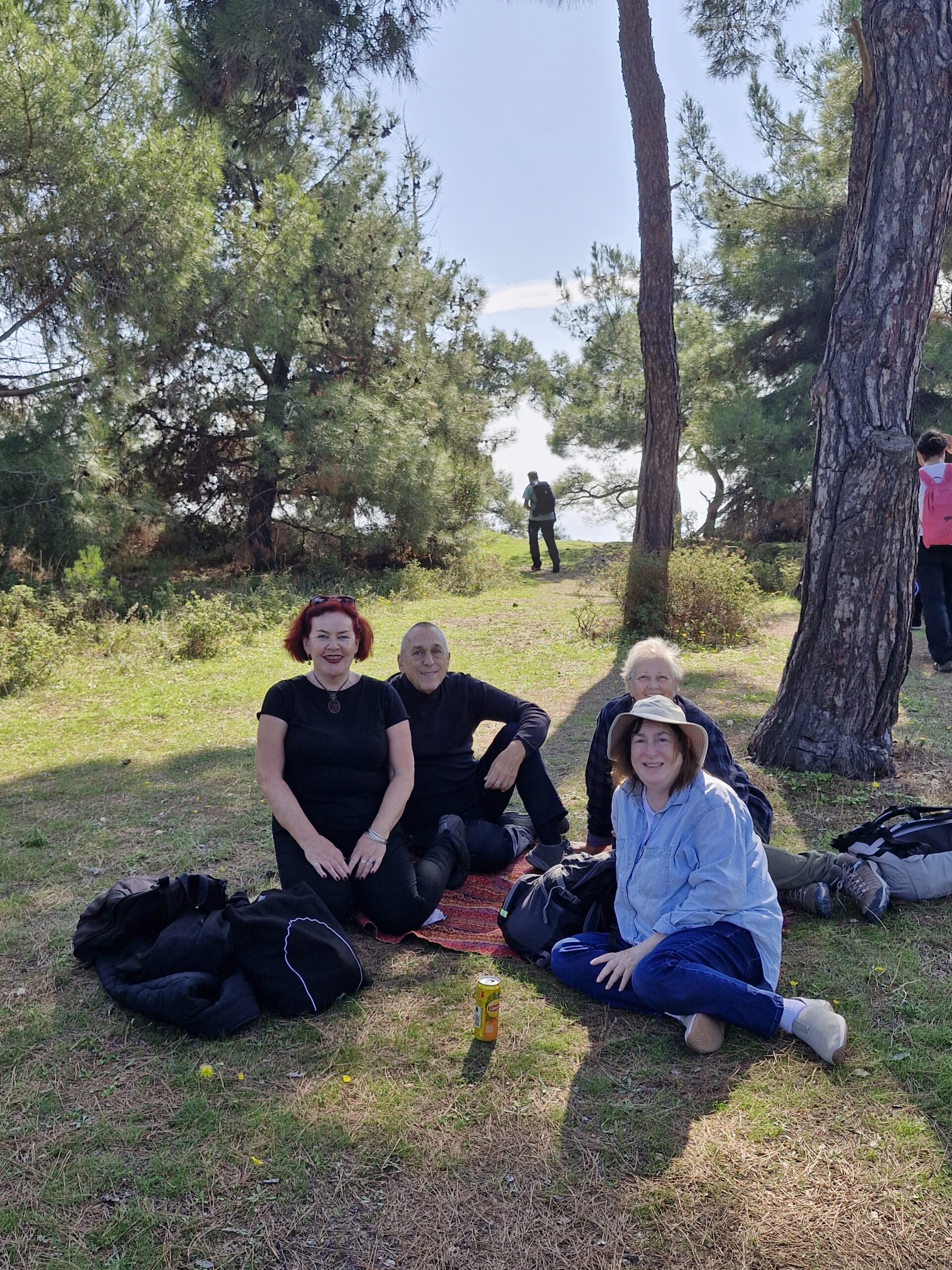
We’d all brought food to east so picked a spot under the trees and enjoyed a picnic with gorgeous views across the water. I’d read that somewhere down the bottom of the cliffs just beyond where we sat is an islet called Kumbaros five metres out from Burgazada, connected to the island by rocks under the sea. I plan to live a long life so I didn’t try to look over the edge and see if I could spot it!
It was gloriously peaceful, the cows went their way and the only interruption was the occasional appearance of a joyful Turkish hiking group, decked out in all-weather gear, singing as they followed their leader.
Once we’d packed up what was left of our food and made sure we hadn’t left any rubbish behind, we crossed over the clearing and headed down the hill back into town. Around the halfway mark the road levelled out and we came to what my research showed me was the Aya Nikola Çay Bahçesi. The garden wasn’t open as it was out of season, and if the church it’s named for is still standing, I’d love to know where because we couldn’t find it.
Madam Martha Koyu
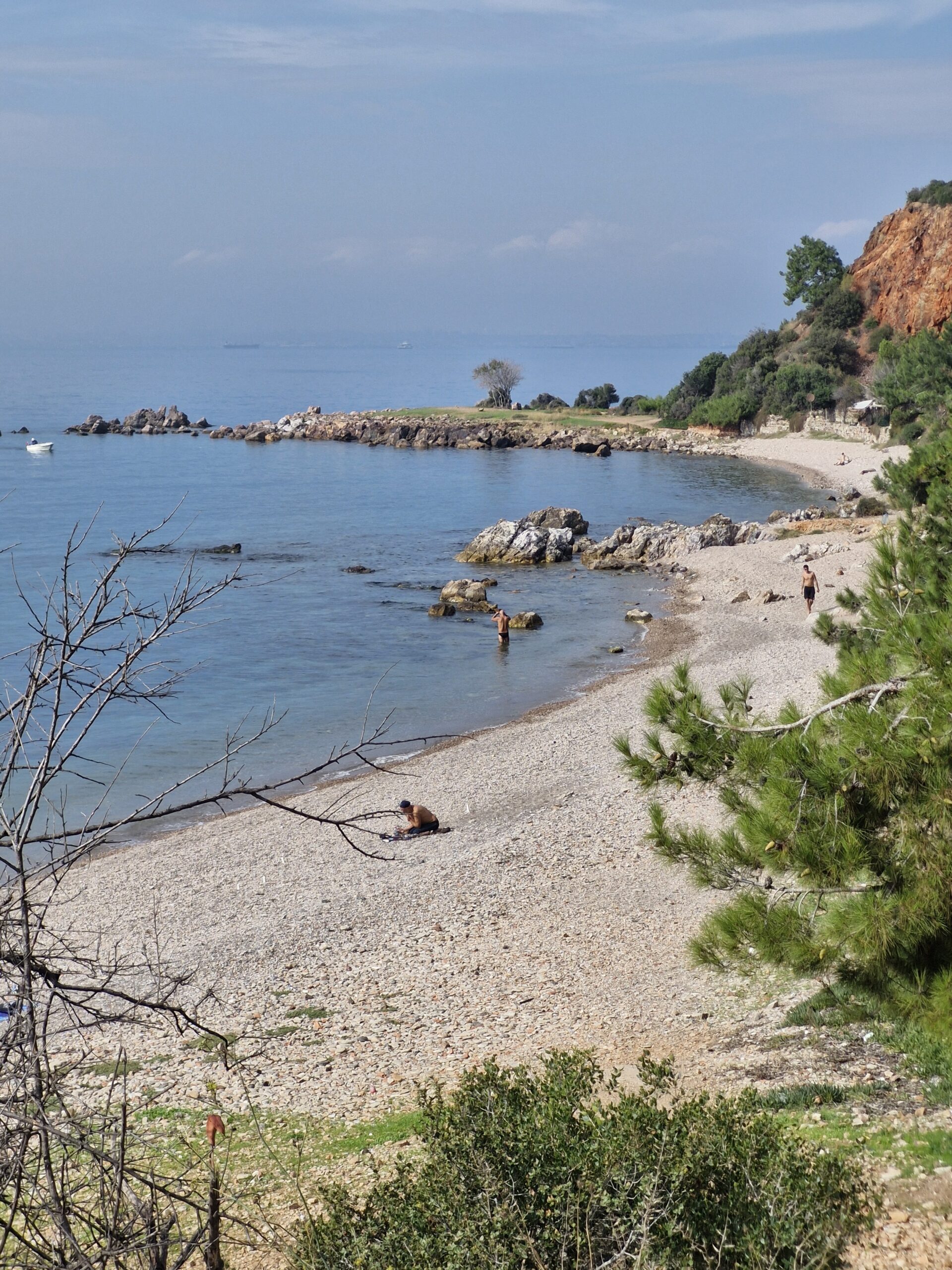
I left the others having a rest and headed down to the much loved Madam Martha beach. This cove takes its name from ballerina Martha Arat, born in Armenia in 1920. She came to Istanbul as a child when her father was appointed to the role of manager of the Ottoman Bank. After finishing high school she became a student of Lydia Krassa Arzumanova, one of Turkey’s first ballerinas who opened her own ballet school. After she married, Martha settled on Burgazada and dedicated herself to nature and the sea.
Although her house was near the tea gardens, she spent most of her time in an old hut on this bay that has long since been known as Madam Martha Koyu. According to local stories she took responsibility for keeping the bay clean and made necklaces out of stones she collected from the sea for children. Long before it was fashionable she wore tight-fitting bandanas over her long hair, wooden bracelets, huge hoop earrings and silver anklets.
Each night she went down to the wharf in her colourful outfits to meet her husband off the ferry. Sadly, her eccentric style became grist for the gossip mill, and she’s said to have died heartbroken from the rumours and innuendo.
Martha’s Cove has long been a public beach popular with students and those on low incomes who spend summers picnicking on the shores and swimming in the sea. The law states coastal stretches like this are open for everyone to use equally and freely, and no structures are allowed to be built on them to impede that right. Nonetheless back in 2024 the government put it out to tender to allow private control which would have meant restaurants, cafes, plus sun loungers and umbrellas cluttering the coast and access by payment only. The island’s municipality successfully challenged this and when I saw it, there was no real infrastructure in place, just an empty, peaceful beachfront open to all.
Aya Yorgi Karapis Manastiri Kilise (St. George Karipi Monastery)
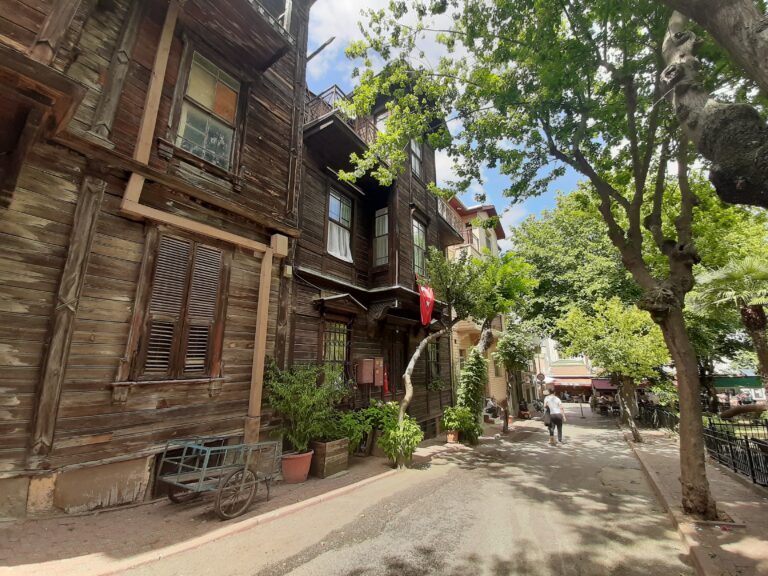
After I rejoined the others we headed along Gönüllü Caddesi, a pretty street with huge mature trees and lovely houses on either side. I was looking forward to seeing the Aya Yorgi Karapis Manastiri Kilise, the St. George Karipi Monastery but it’s behind barbed wire so you can’t see very much.
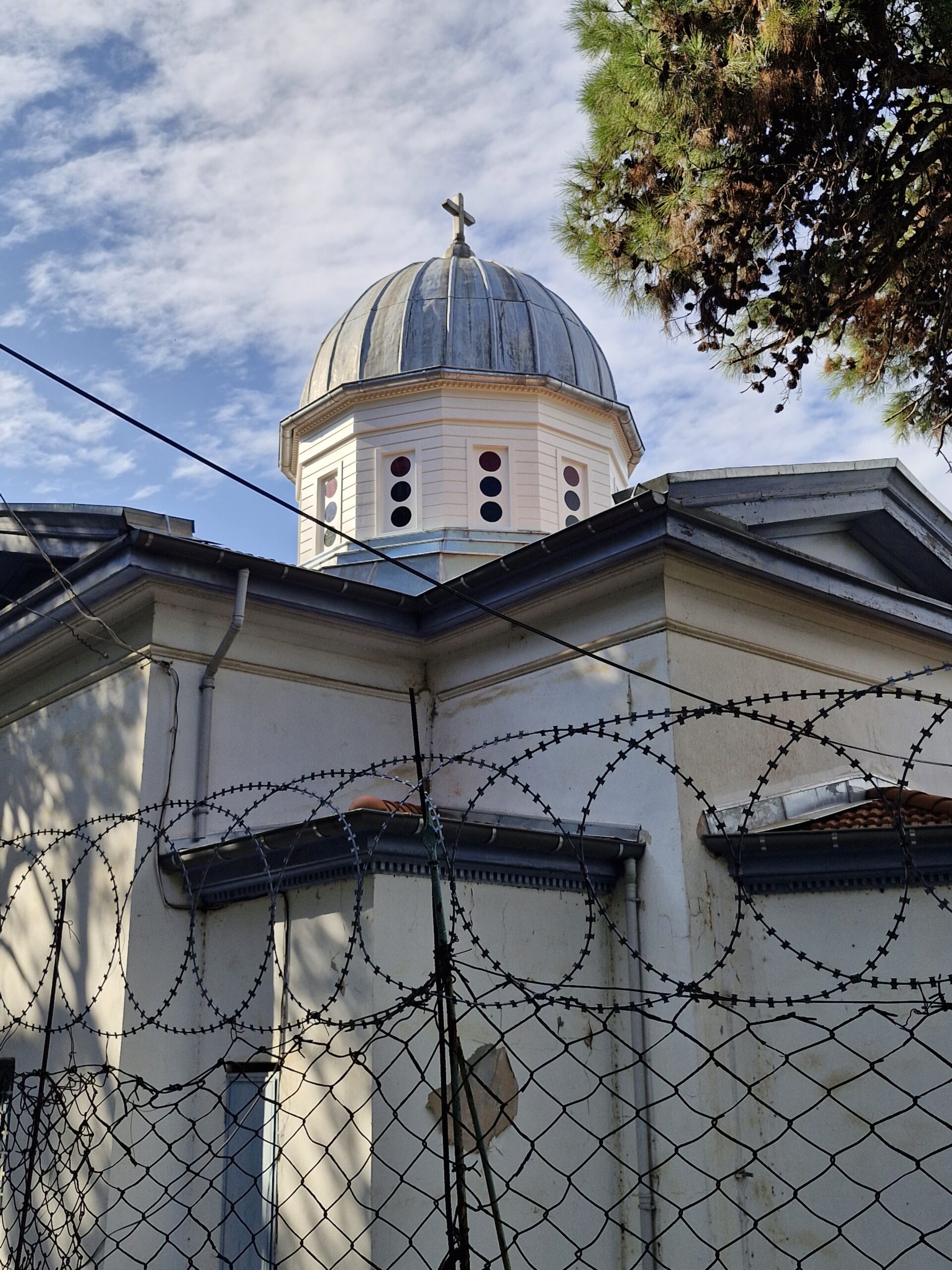
Historically it’s very interesting. The closest building to the road is the church, designed by architect Petraklos Kambanakis (1858-1929). The previous church was Byzantine, but after being severely damaged in the 1894 earthquake it was rebuilt in its present form. The design is fairly typical, a Greek cross layout with a central space covered by a high-drummed dome, but there’s no bell tower. Instead the bells are hung on an iron post near the church entrance.
The monastery, St. George Karipi, is further down the slope. It started out as a sanctuary where monks retreated into seclusion but is now run like a boarding house with rooms rented out to families from the Greek Orthodox community during the summer months. Even though it doesn’t function as one anymore, it’s the only surviving monastery on Burgazada. When it first opened it was called St. George Monastery and the monks would help poor local fisherman who moored in the cove it overlooked, providing them with food and other assistance. As a result the word karipis, meaning poor or destitute in Greek, was added to the monastery’s name.
We walked further along and the street name changed to Cami Sokak, after a small mosque with stunning views over the water. It’s just next to a quaint fork in the road that’s a popular selfie spot for Turkish tourists.
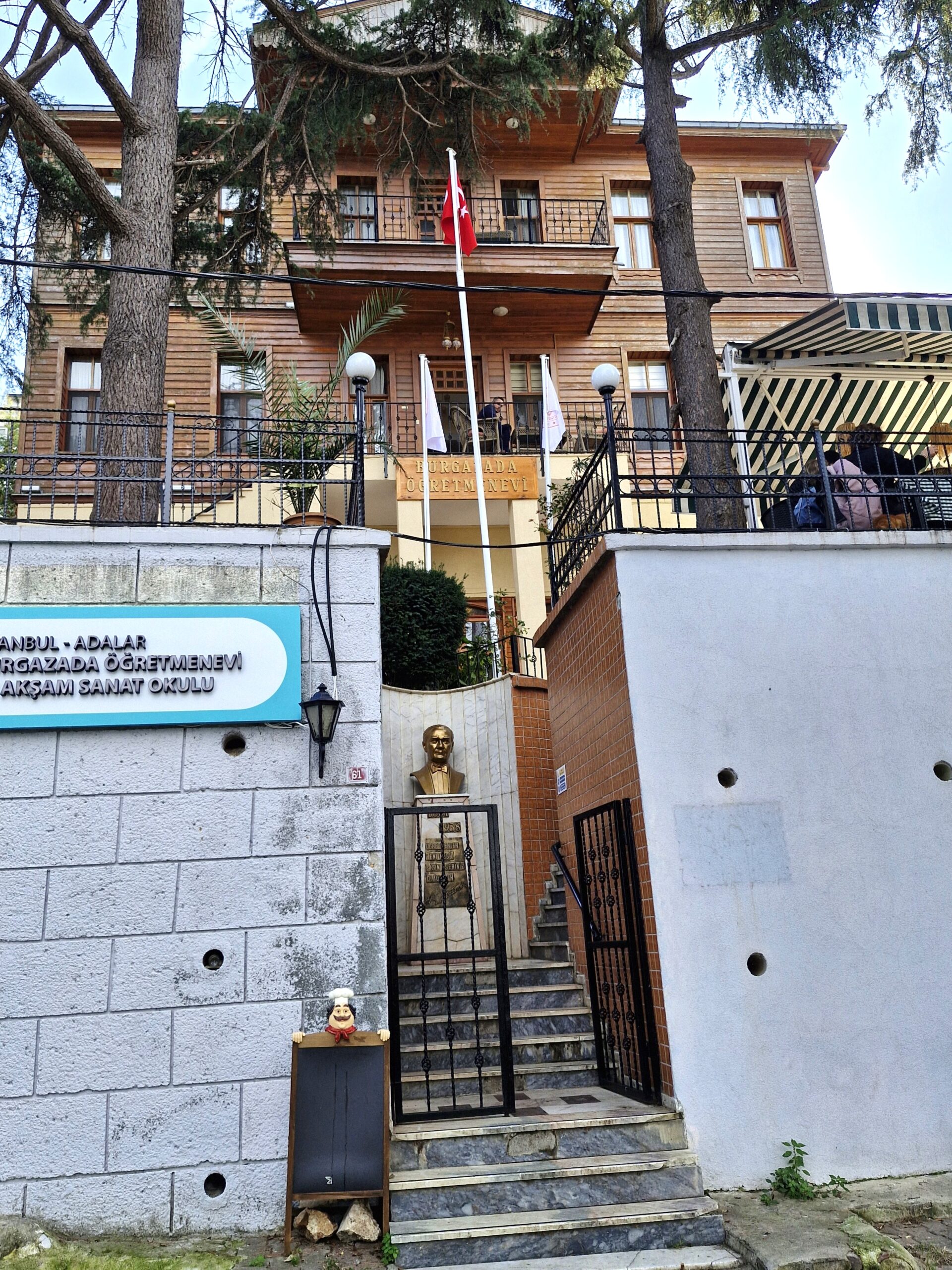
On Çayır Sokak we passed the former island home of Sait Faik Abasıyanık, whose statue you see at the wharf. It’s now a museum dedicated to his life and works, housed in one of the spectacular wooden mansions similar to those you find along 23 Nisan Caddesi on Büyükada, the largest of the Princes’ Islands.
Formerly known as the Spanudis Mansion, it dates to the early 20th century and is a striking example of civic architecture, particularly the roof. Sait Faik’s father, Faik Bey, bought the house and when he died in 1939, Sait Faik moved in permanently with his mother, Makbule Hanım.
We didn’t go in because I’m not familiar with his work but I am familiar with the contents of Turkish museums dedicated to much-loved writers who aren’t well known outside the country. If you’re an aficionado you’ll love it, but if not, it won’t have much meaning. For those of you who want to head there first and skip this walk, you can catch a council run electric bus around to the Kalpazankaya Sahil stop and take in some of the island on the way.
Where to eat on Burgazada (assuming you don’t leave anything behind)
Our walk was to end with relaxing coffee and cake at a café a stone’s throw from the wharf. At least that was the idea! After we sat down and placed our order, Kim realised he’d left his coat somewhere, most likely at a table in the Aya Nikola tea gardens. As I have the most Turkish, I went off to find it. First I headed to the bus station where the little electric buses start and end, and told the group of bus drivers enjoying their break what had happened and where I wanted to go.
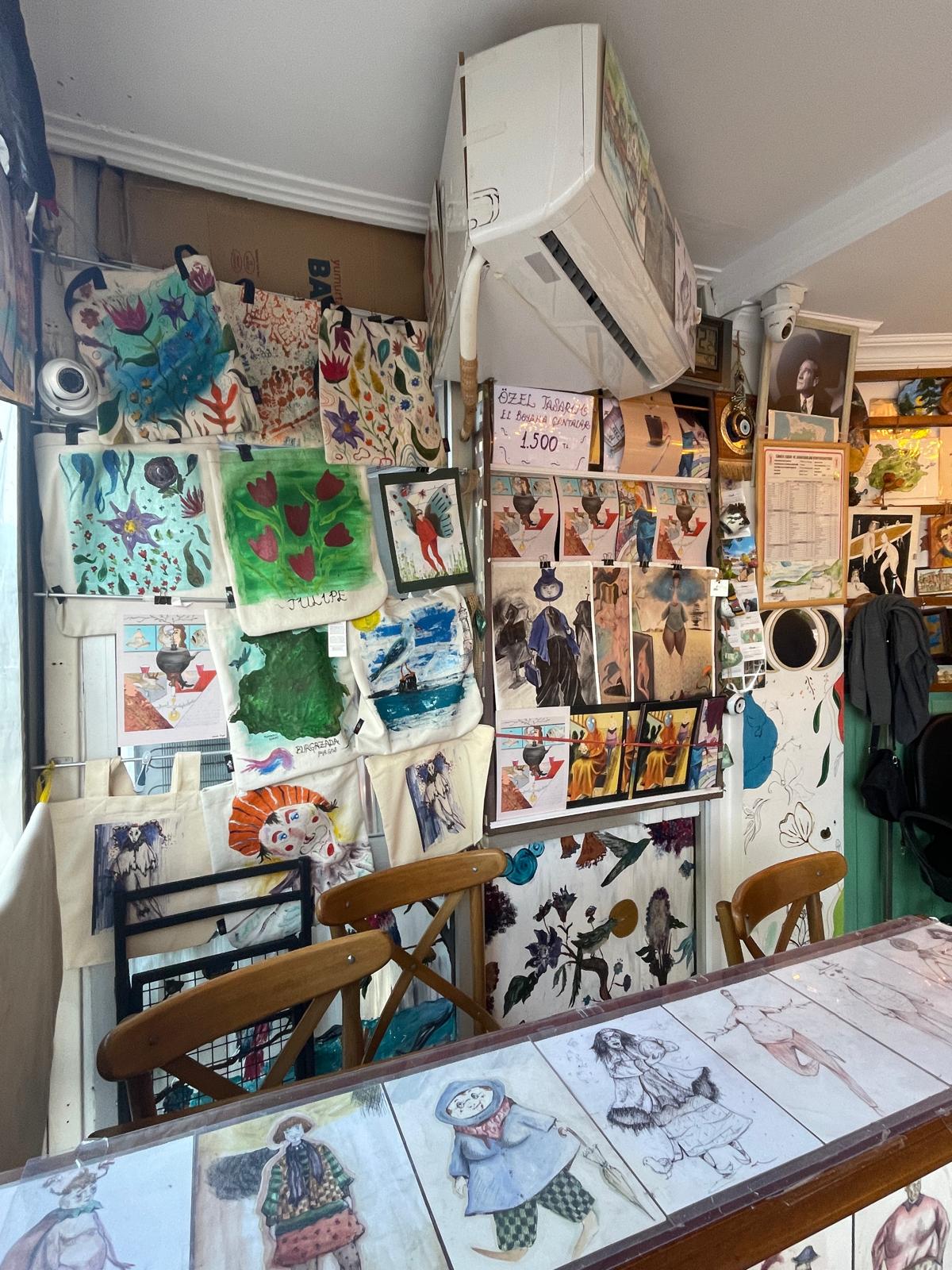
First an IETT electric gold buggy taxi was suggested but the fare was a bit steep. Then they told me the ordinary IETT bus route took in the tea garden and I’d definitely make it there and back in time for the next ferry. I reported back to the group, bolted down my coffee and cake, then hopped on the next bus, swiped my Istanbul card and off we went. Speedy they aren’t which caused me some concern, but I just had to wait and see.
When we finally made it to the tea garden, having zigzagged up and down the slope of the island, around streets we’d walked down, picked up some tourists who took an agonisingly long time to work out how to pay for their fare (they used their credit cards in the end), I was thrilled to see Kim’s jacket where he’d left it, neatly hanging off the back of a chair. The bus driver waited until I retrieved and then we followed a different and equally circuitous back to the café. I made the ferry with 10 minutes to spare!
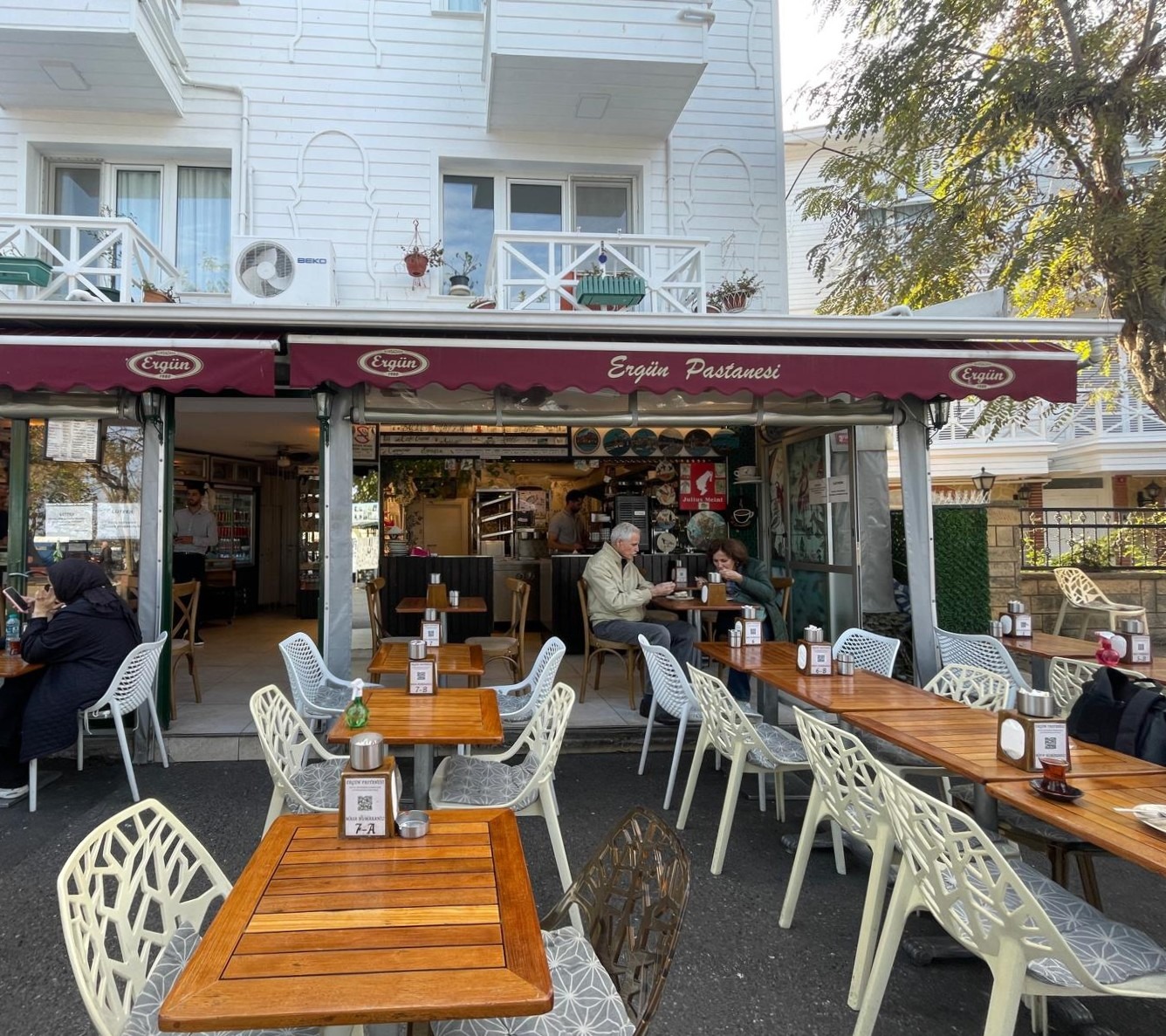
The others had enjoyed their coffee and mille-feuille, the speciality of Ergün Patisserie, at a much more leisurely pace. Ergün Patisserie is owned by Bahri Ergün, a man born in Kastamonu who came to Istanbul in 1968 to apprentice in a pastry shop in Kasımpaşa, in Istanbul. Once he was fully qualified Bahri Bey worked with prominent master pâtissier until he opened his own shop in 1977. Then, in 1980, he moved from Istanbul to Burgazada, where he continues to make his mille-feuille. They are yum, as is the Karl Meindl coffee he serves up.
If ice cream is more your thing head for Sinem Dondurması and if you want a full meal you might like Akasya, an upmarket bistro serving a range of burgers, pasts and the like. For a more formal setting the long established Kalpazankaya Restaurant on the south side of the island is the perfect spot for a feast of traditional Turkish dinners, fresh seafood and beautiful sunset views.
Or you can make like we did, and take a picnic.
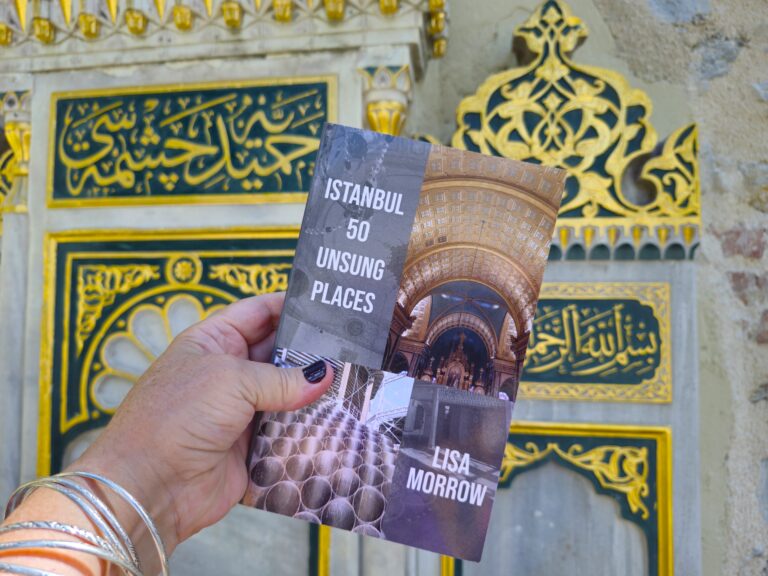
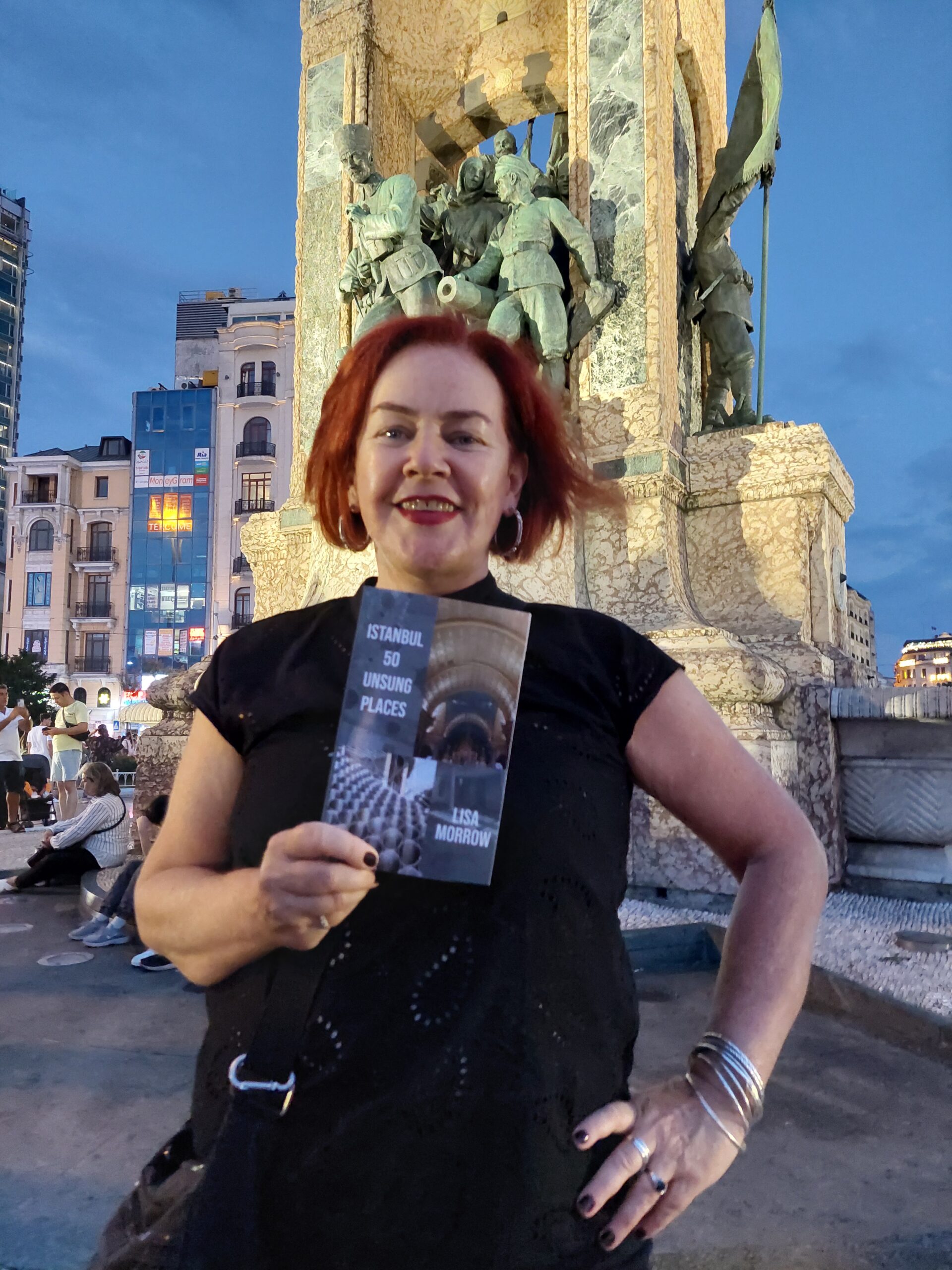
If you want more suggestions for off the beaten track sites in Istanbul, grab a copy of Istanbul 50 Unsung Places. My eclectic guide celebrates the rich cultural heritage of Istanbul, combining history, little known facts, transport information, directions and handy tips, meaning you can travel deeper into the world I call home.
How to get to Burgazada
There are a number of ferry lines that run to Burgazada from different points in the city. You can take Sehir Hatları, the Istanbul City Ferry lines that runs between Kabataş and Bostancı, stopping at Kadıköy and all the other islands.
Alternatively you can catch a Mavi Marmara ferry from Bostanci up the Sea of Marmara on the Asian side of the city.
Once on Burgazada you can follow the route I suggested or catch an IETT electric bus around the island but it doesn’t go to Bayrak hill. Like the ferries, you can pay using an Istanbul Card or use a debit or credit card. As of February 2026 the bus fare was ₺143.95 per person but that might have changed by the time you go there.
However you travel, fast or slow, on foot or by bus, have fun and stay safe!