Hamam in Istanbul – touristy and authentic
I’m a member of a lot of Facebook travel groups and I frequently see people asking for recommendations for the best authentic, non-touristy hamam spas in Istanbul. I live in Istanbul and have been to hamam here and elsewhere in Turkey, so thought I’d share what I know.
Hamam history
The idea of going to a hamam to bathe in hot water takes inspiration from ancient Greek health centres and thermae built by the Romans. They were public baths that functioned as social clubs where people met with friends to wash, gossip and debate. Many of the bathing rituals still popular today are a legacy of the Seljuk and Ottoman Empires and traditional hamam have separate men and women’s sections.
When I lived in Kayseri, the provincial capital of Cappadocia I regularly went to the hamam and met many women enjoying time with family (in Turkey extended family members often make up an individual’s complete social life), celebrating a new bride joining the family or simply because they didn’t have hot water in their homes.
Which hamam is right for you?
The first thing to understand when you’re thinking about going to a hamam in Istanbul is that an authentic hamam is completely different from a spa. If you’re after skin treatments, medical massages, aromatherapy and so on, plus time in a hamam in the same establishment, you generally get that in hotel spas that have a small modern hamam as part of their personal care facilities.
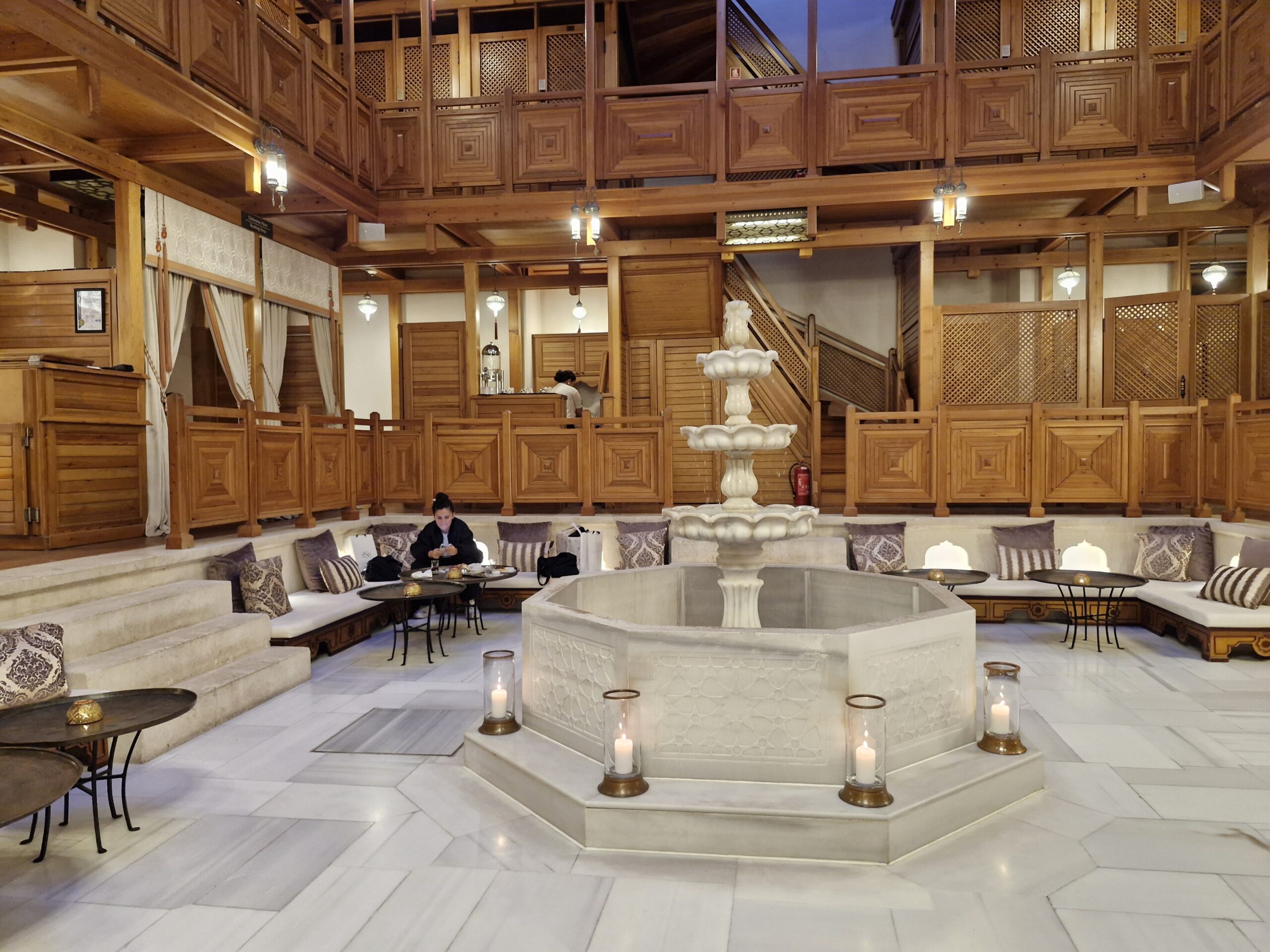
The next thing to understand is that hamam catering to tourists in Istanbul are often actually very authentic. They’re housed in centuries old buildings with fully qualified 3rd and 4th generation hamam attendants, and that less touristy hamam catering solely to local Turks might not give you the service and experience you’re expecting.
I’ve been to both types in Istanbul and elsewhere in Turkey. What I can tell you is the big name Istanbul hamam, Zeyrek Çinili, Çağaoğlu, Aya Sofya Hürrem Sultan, Kiliç Ali Paşa, Çukurcuma and Çemberlitaş (scroll down for more information on each) are all historical hamam that offer genuine hamam services in luxury style.
These hamam provide you with soap, shampoo, hairdryers, towels, gowns, slippers and disposable underwear as well a variety of other things ranging from complimentary fruit platters to free hotel pick up and return. They follow health, safety and cleanliness regulations, the staff are highly trained caring individuals and management follow up to make sure you were happy with the service.
These more upmarket hamam are a great option if you’re a visitor because you don’t need to take anything with you or know any Turkish. In contrast, if you go to hamam catering to locals, you often need to bring your own footwear, towels, a swimming costume or bikini to wear in the hamam, and the staff are less likely to know any English.
From reviews I’ve read, getting the treatment you’ve paid for can be rather hit and miss. The buildings aren’t always in good condition either and even when they are clean, I know firsthand the change rooms are very basic as are the cool rooms where you lounge about after the hamam. Some still function as bath houses for people living in substandard accommodation without functioning hot water. They don’t have a lot of money so they do their own scrub and wash, and you won’t necessarily get the treatments you’ve read about, the body scrub, foam wash, general massage and so on.
Hamam Culture and practices
In the past, wealthy families attended the hamam on a regular basis so women took personalised items with them to use. Silk or linen edged embroidered satin cloths contained all the necessary accoutrements. The more elaborate the embellishments on their bathing equipment, the higher a person’s social standing.
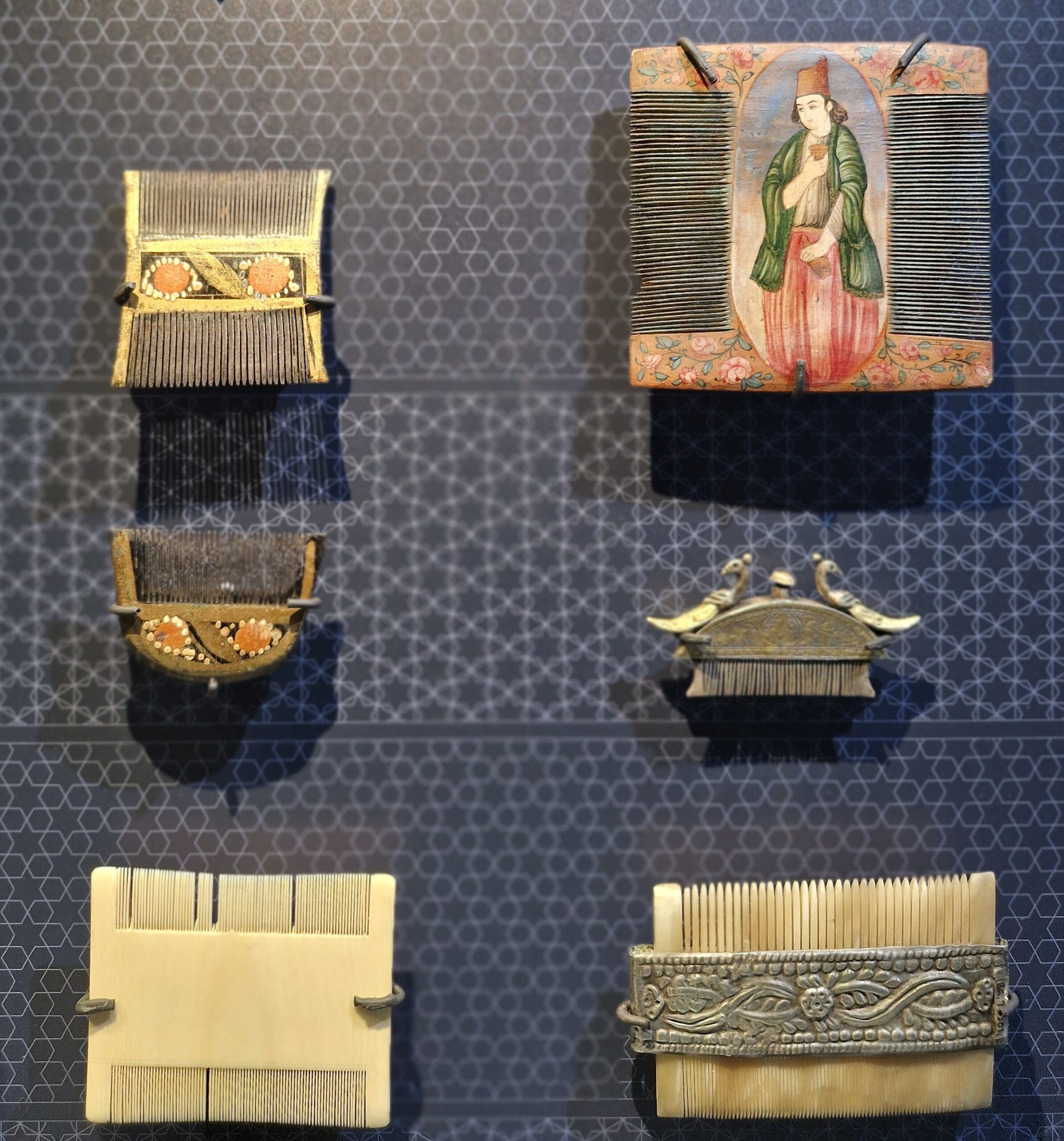
Towels known as peştemal, traditionally made of pure cotton, were used to warm the benches where they sat, to dry their feet and cover their bodies. Peştemal are still used today and you can buy your own to use at home, on holidays or at the beach. They also took bowls called hamam tası for pouring water over their bodies. Custom made examples had embossed motifs worked onto the sides, some with precious jewels inserted into the centre, as was described to me by a student recounting visits to her grandmother’s private hamam. Copper dishes called kildence were used to hold soap, a kese, and a comb.
Most Turkish soap is made from olive oil because it cleans without stripping away the skin’s natural oils. A kese is the coarse mitt used to scrub dead skin from the body which was then traditionally removed using a lif, or loofah. These can be made from cotton, linen or goats’ hair. When you visit one of the hamam I recommend, the kese your bathing attendant uses is solely for you. If you like the results you can purchase a kese to use in your own bathroom back home.
You can find out more about the fascinating history of hamam practices, accounts from early travellers and much more at the Istanbul II Bayezid Turkish Hamam Culture Museum in Beyazit, along the tramline from Sultanahmet. You’ll find all the details on how to get there and more, in my bespoke city guide, Istanbul 50 Unsung Places.
How to prepare for a hamam
It might sound obvious, but it’s always a good idea to make a reservation because going to the hamam is a popular past time for locals as well as visitors. Many hamam are open until 10pm and some will pick you up from a restaurant instead of your hotel if it’s not too out of the way, opening up the possibility of having a hamam in the evening. They can also drive you back to your hotel which I know will appeal to solo female travellers.
To get the most benefit from the kese, the process of having your skin rejuvenated by the removal of dead cells with a rough glove, don’t wax or use moisturiser or other oil-based skin treatments on the day. You’re also advised not to drink alcohol beforehand in case the heat overwhelms you.
What to expect in a Turkish hamam
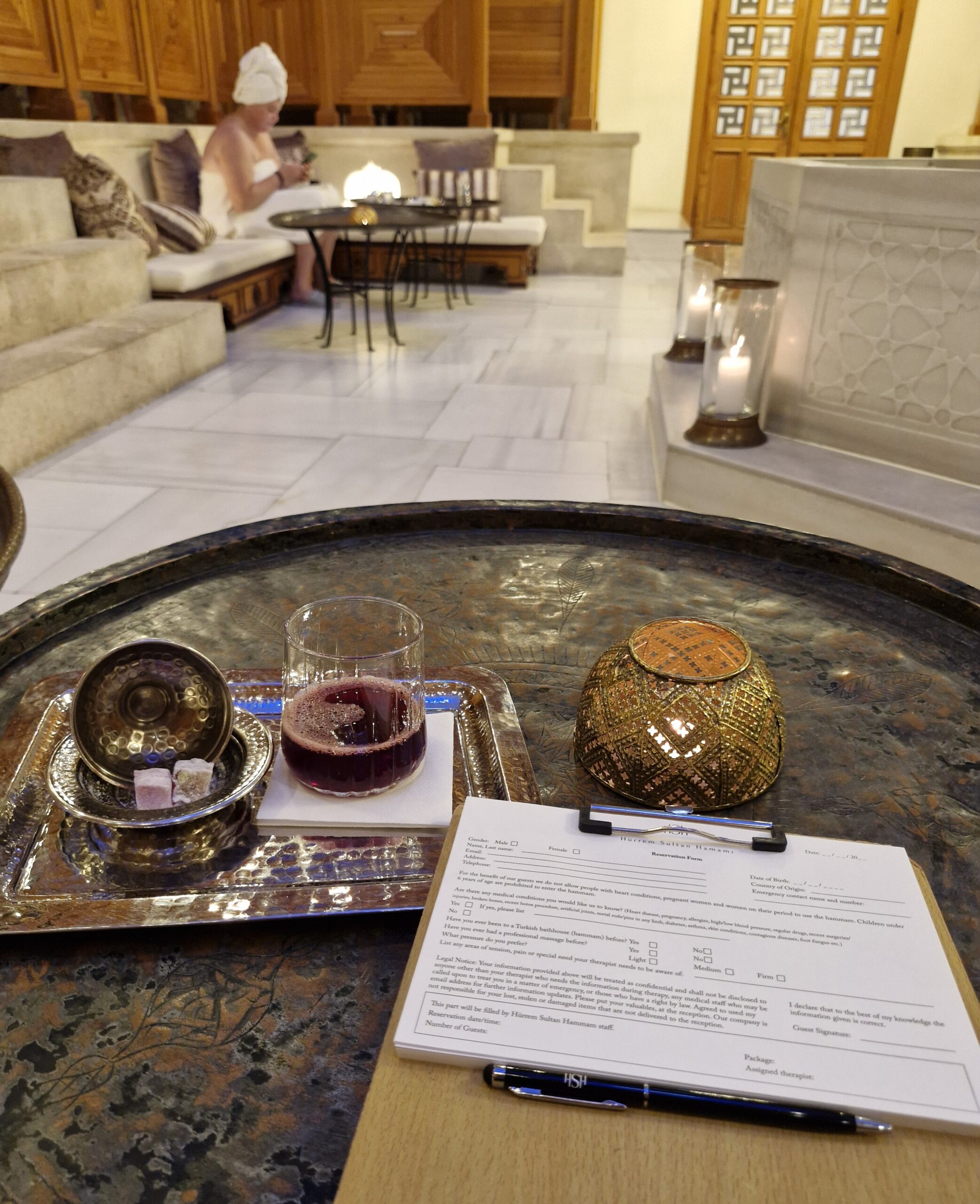
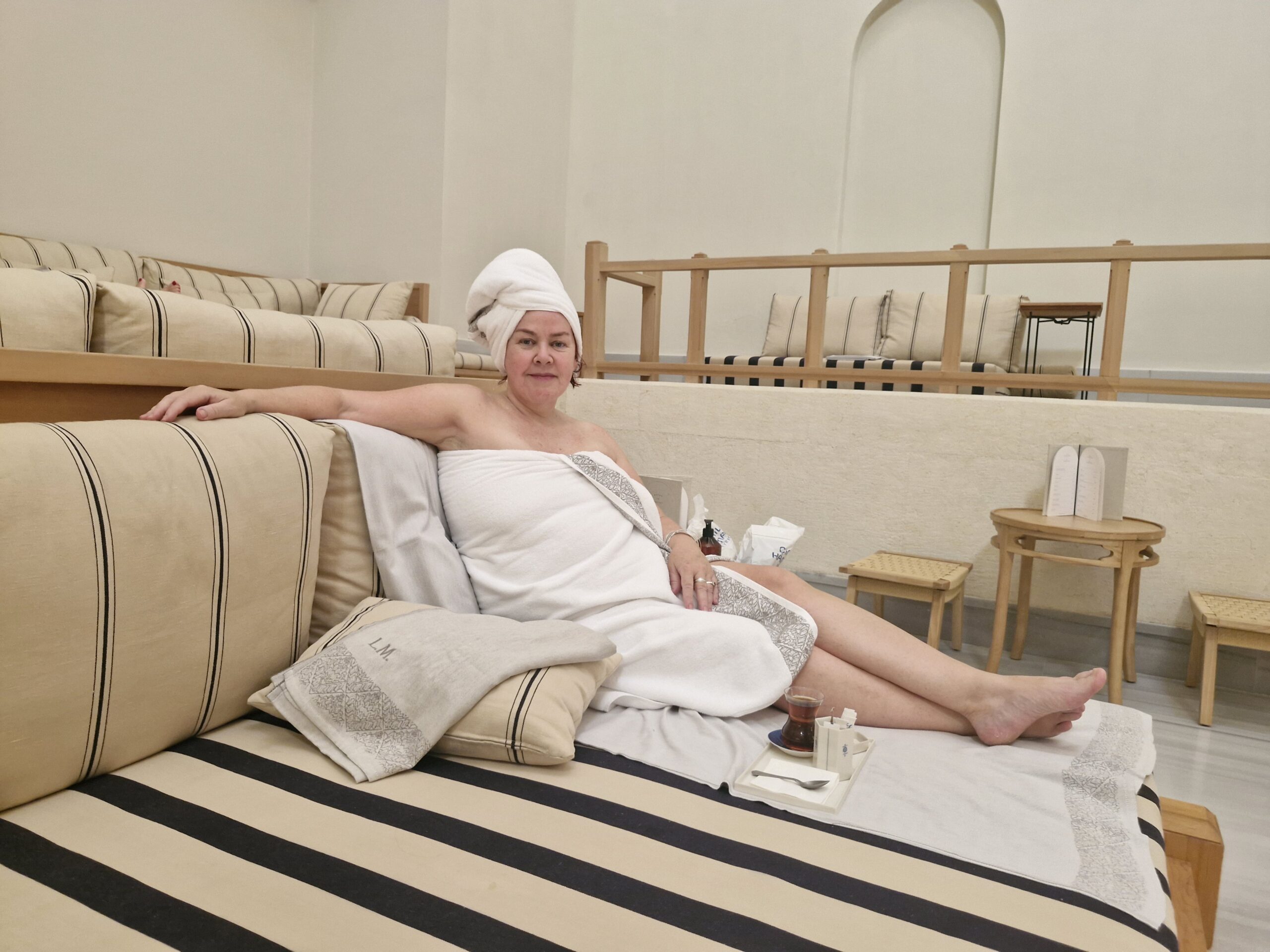
After being greeted and filling out a health form in the camegah, a large entry hall/coolroom/lounging area, an attendant will show you to a small room or dressing area where you can safely leave your clothes and belongings and either change into the disposable underwear provided or your own swimming/bikini bottoms. I don’t like the disposable knickers they offer because they’re always too small and have a tendency to fall apart just when you don’t want them to.
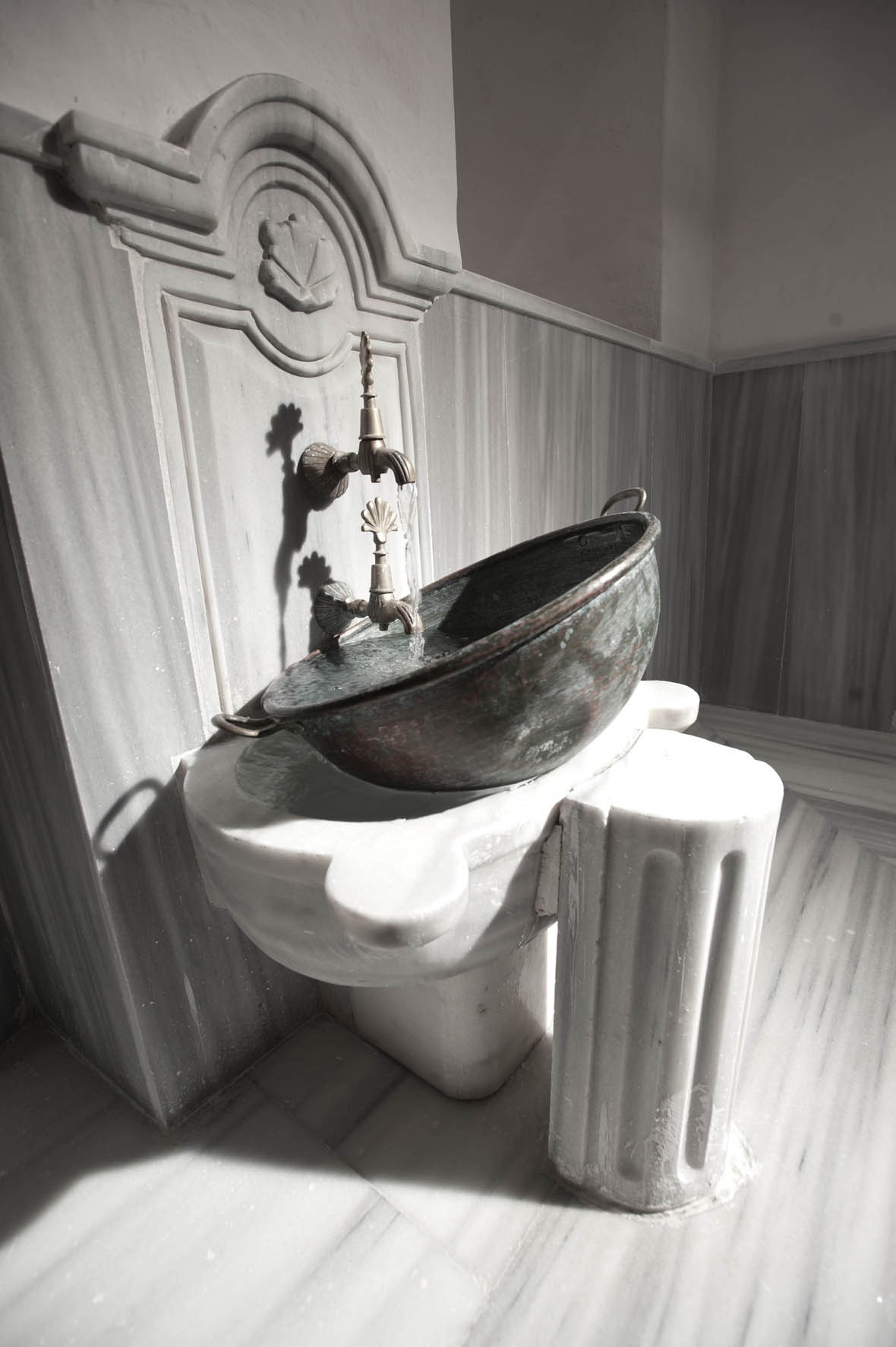
Once you’re ready, wrap yourself in the peştemal provided and go back to the main room. From there you’ll be led through a series of small cool rooms into the hot belly of the hamam. First your attendant will rinse you off with warm water then help you lie down on a peştemal spread on the central marble platform, the göbek taşı. The aim is for you to build up a sweat in preparation for the next procedure.
The sound of running water and the softly dripping taps is like a lullaby, and you might even fall asleep. Who knew marble could be so comfortable? The combination of the light from the high dome with sounds that echo yet are muted and the steamy almost mystic quality of the air makes the world stand still.
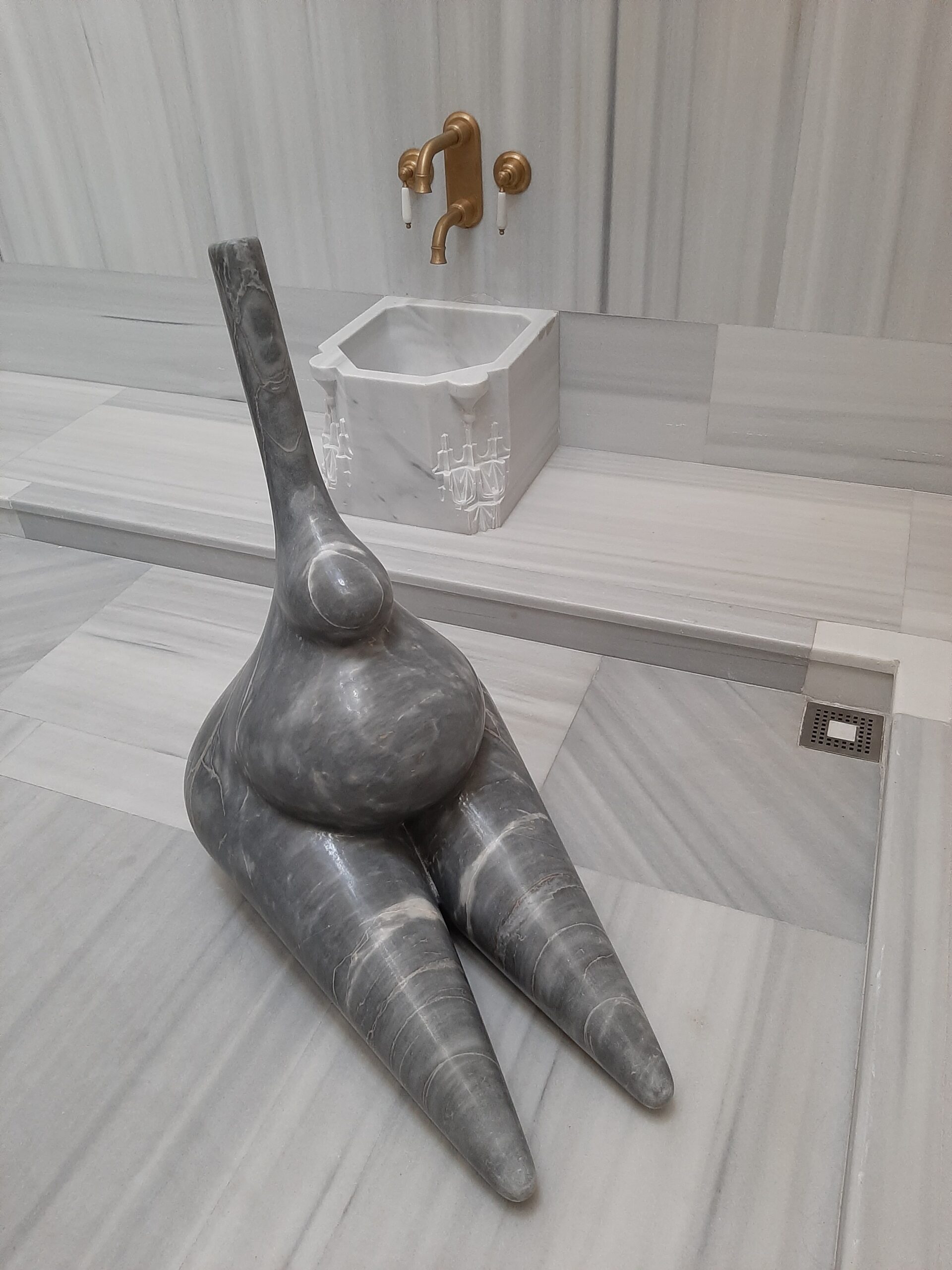
Your attendant usually leaves you to sweat for about 15 minutes, then they either sit you up on the platform, or lead you to a smaller side niche with a kurna, a marble basin set into the walls. First they rinse off the sweat then start with the kese. A good kese can feel quite rough on your skin so I always ask them to go soft on my face and neck and firmly elsewhere. It tickles when my attendant starts on my stomach and I can barely contain myself when she starts on the soles of my feet. You’ll probably have sensitive areas too, but don’t worry, it’s normal.
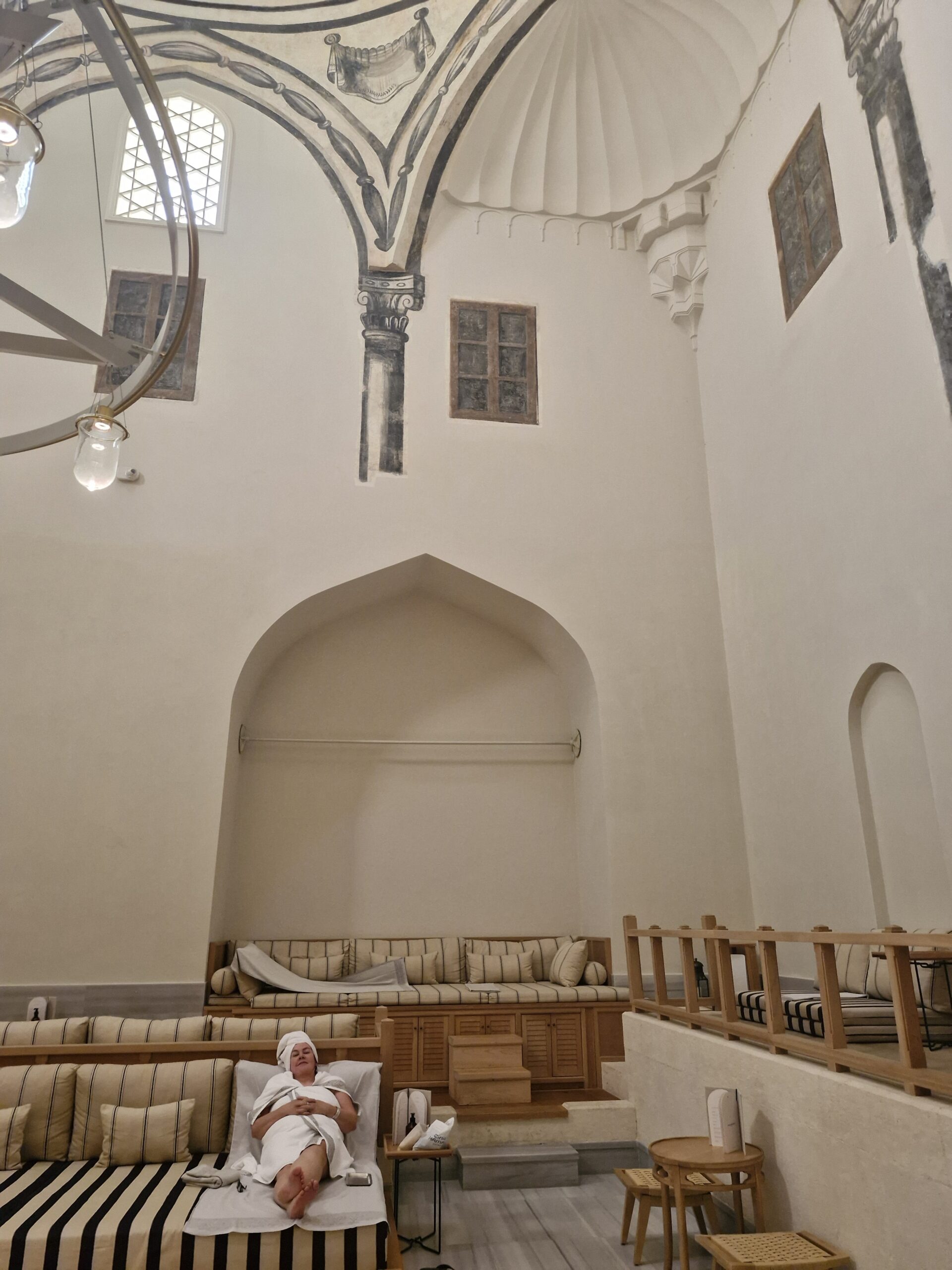
It’s always a bit of a shock to see the thin black rolls of grit form on the surfaces of my body as the attendant rubs away the dead skin cells and normally unseen city grime. When she’s finished I’m startled by how brand new my skin feels, with a silky velvet-like softness. Next comes the pre-massage ritual where the attendant dunks a sheet of fine muslin into a bowl of warm soapy water, then billows it out to create foam she then gently wafts onto your skin. This creates a lovely slippery surface for her to get grips with your body to message away any of the cares I have left after being so thoroughly pampered.
When my hamam attendant has finished, I always accept her offer to wash my hair. Having someone sculpt soapy circles in my scalp is the ultimate indulgence and takes me back to being a child again. By the end of my hamam experience I’m putty in their hands and am happy to be taken back to the cool room, swaddled in a towelling gown, and lounge about in a kind of blissful stupor until I’m ready to get dressed and leave.
Authentic hamam in Istanbul
The Ayasofya Hürrem Sultan Hamam in Sultanahmet Square was designed by Mimar Sinan, the incomparable chief Ottoman court architect for Roxelana, the wife of Süleyman the Magnificent in 1556. It was the first hamam built with a separate women’s section that is as lavish as the men’s and has a marvellous camegah with a marble fountain in the centre and latticed wooden dressing rooms built along the upper balcony floors.
They offer a great range of treatments but no transfer services. Mention my name when you book and receive a 10% discount.
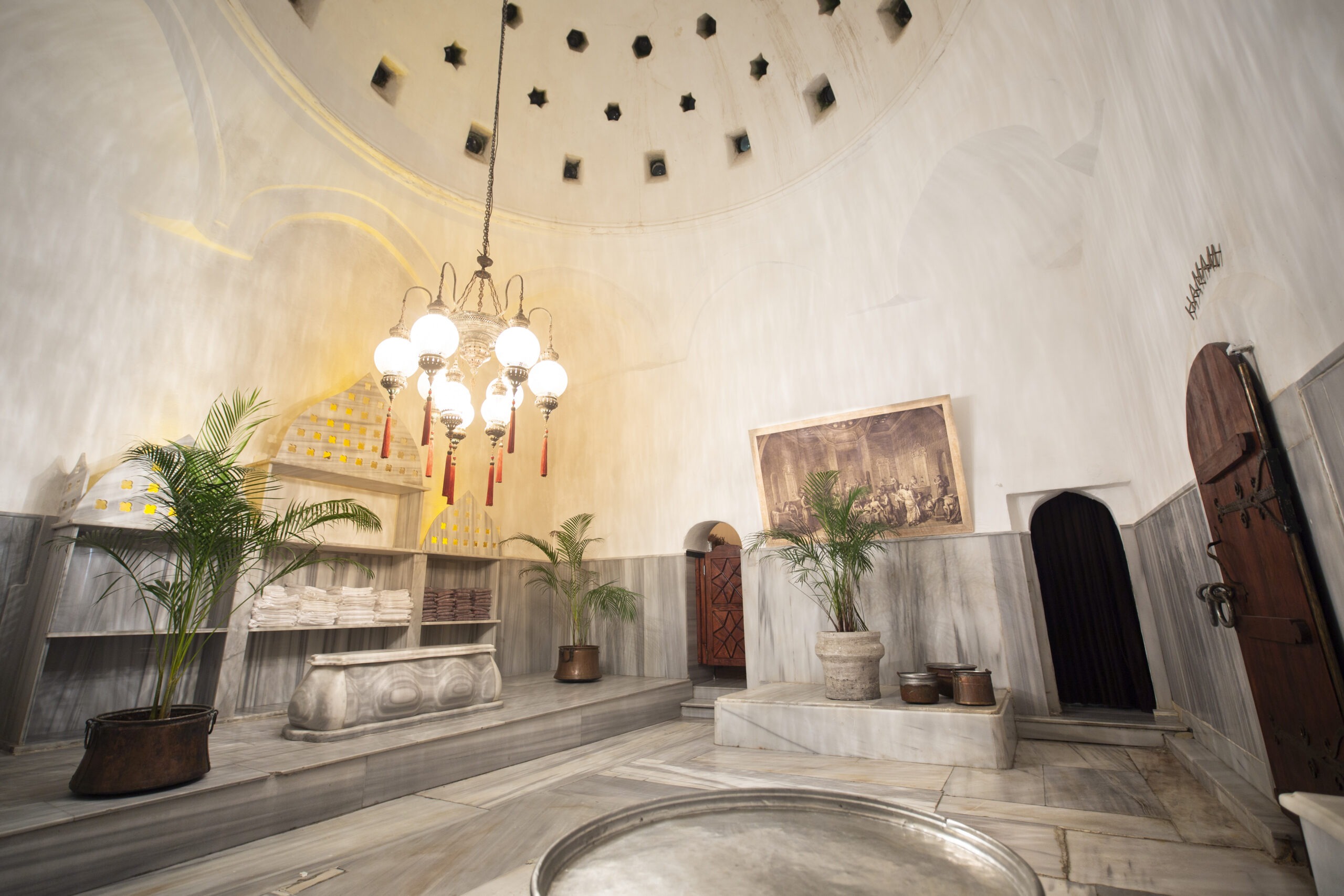
Built in 1741 to raise revenue to fund Sultan Mahmut’s library that was originally housed inside the Hagia Sophia Mosque, the Cağaloğlu Hamam features wooden change rooms built around the camegah which has a pretty central fountain done out like an oasis surrounded by palms. In the bright white marble interior in the heart of the hamam you’ll feel as though you’ve been transported to the skies and are floating on a cloud.
Another Mimar Sinan design, the Çemberlitaş Hamam, dated 1584, was also built with mirror image male and female sections. The light streaming through the holes in the large central dome creates a cocoon of elegant serenity and it’s a popular choice for bride’s to be celebrating their kına gecesi, the Turkish version of a hen’s night.
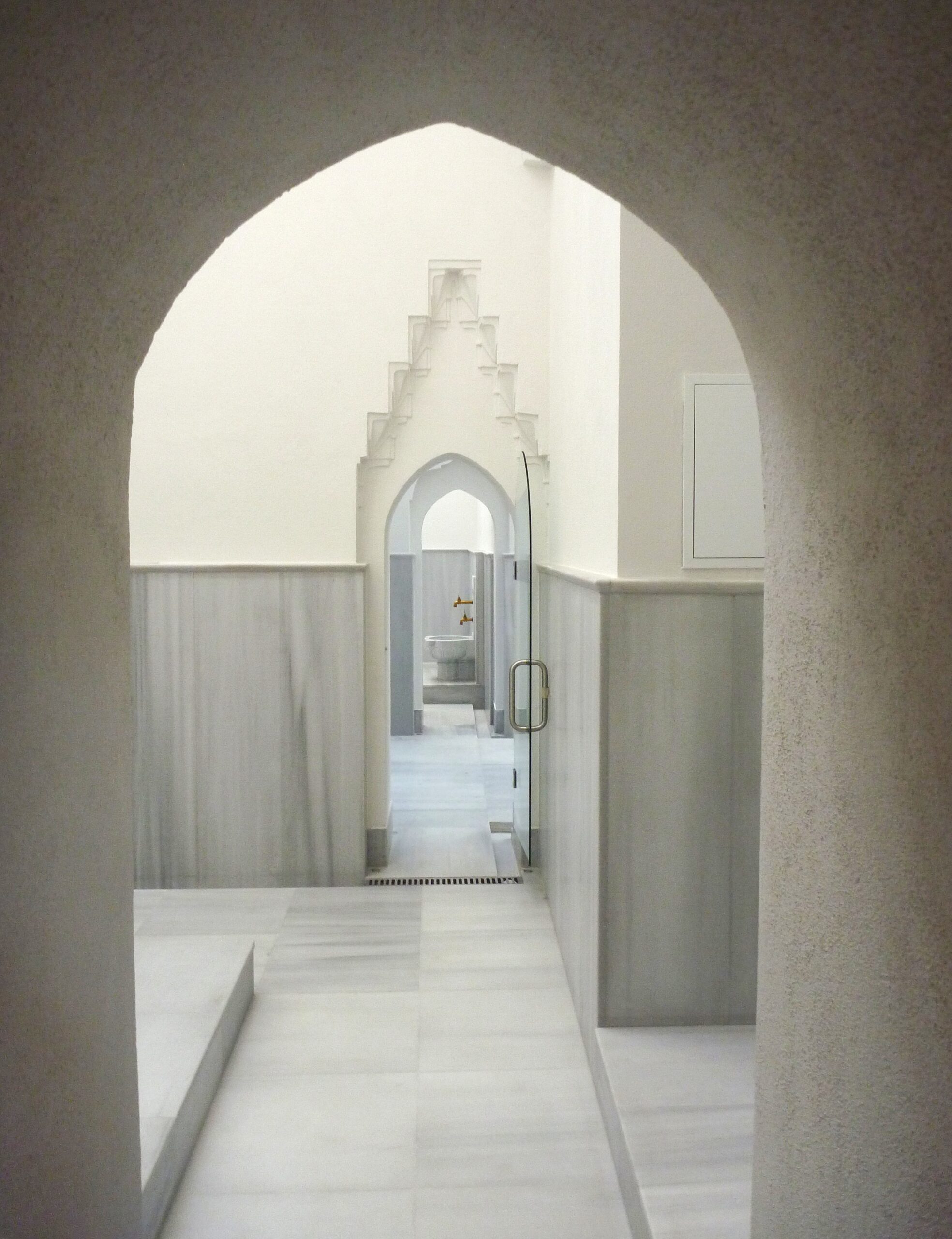
The bare stone walls of the camegah in the Kiliç Ali Paşa Hamam showcase the architectural glory of the structure, and stand out in stark contrast to the smooth marble of the interior rooms. Constructed between 1578 and 1583, this Mimar Sinan work was commissioned by the Ottoman admiral for whom it’s named. Despite the grandeur it has a homey, cosy feel and women who don’t know each other smile together and chat briefly.
Kiliç Ali Paşa Hamam offer very traditional and authentic hamam services including kına gecesi. The natır (your personal attendant inside the hamam) only speak basic English, but other staff ensure your wishes are conveyed. I highly recommend Menteşe for your hamam experience. She is a lovely women with marvellous energy.
Unlike some of the other hamam Kiliç Ali Paşa only has one section, so women have access during the day while men can visit from late afternoon into the evening. Let me know if you’d like to make an appointment and I can arrange a special deal for you.
Made famous in Ferzan Özpetek 1997 film Hamam, the Çukurcuma Hamam dates to the 1830s when it was built for French born Naqshidil Valide Sultan, wife of Abdulhamid I. The white and gold interior reflects interior fashions of the time. They offer traditional hamam services as well as alternatives such as aromatherapy, facial treatments and specialist massages (foot, sports etc).
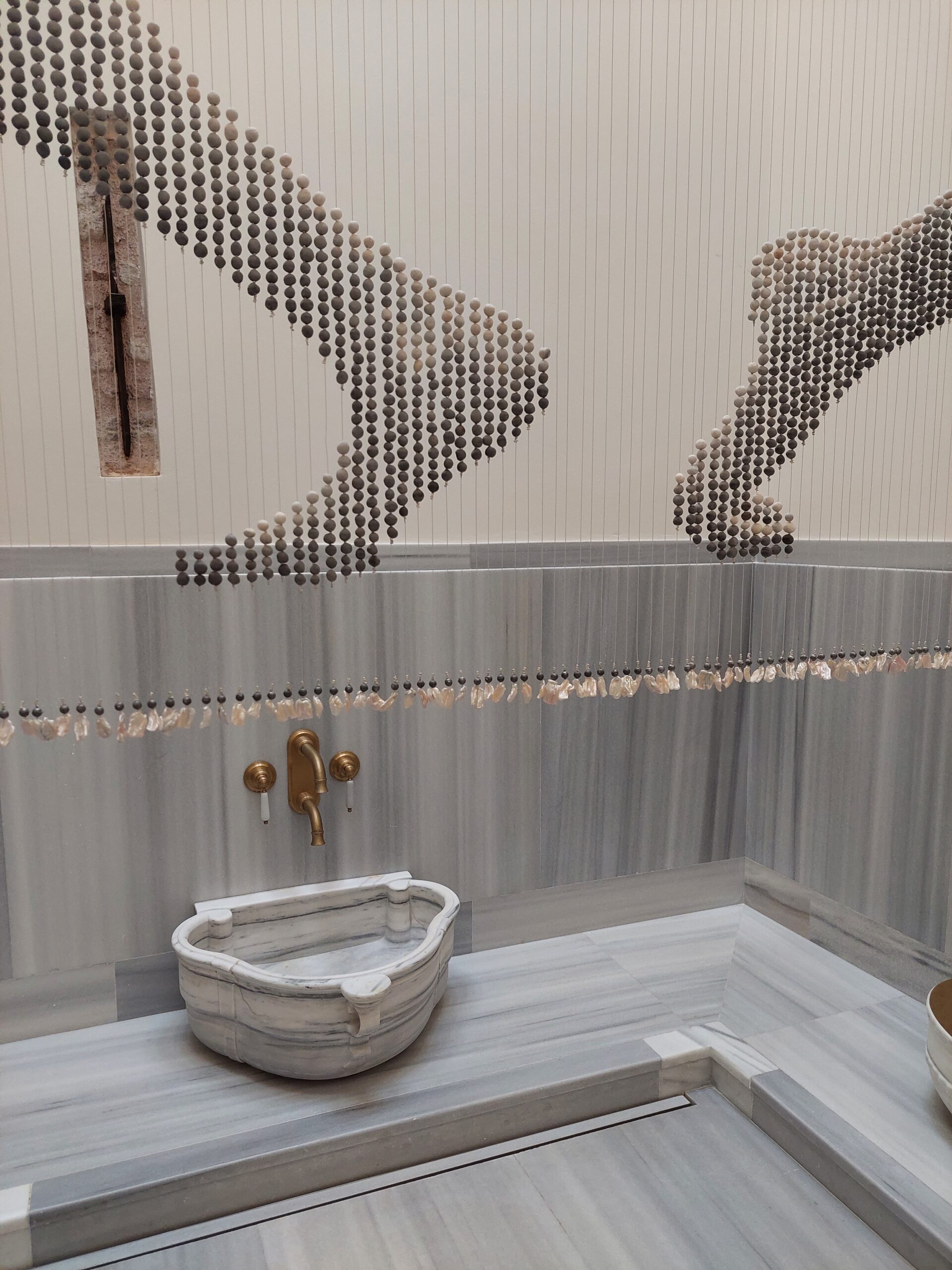
Zeyrek Çinili Hamam was commissioned for pirate turned Ottoman admiral Hayreddin Barbarossa in the 16th century. It’s another Mimar Sinan masterpiece, combining a hamam, museum and Byzantine-era cisterns. The hamam area is done out in warm Scandi tones and polished marble, containing layers of history uncovered in the 13 years it took to fully restore. They offer exquisite hamam services with meticulous attention to detail and client satisfaction, plus free pickups and drop off from your hotel (location dependent).
All the hamam mentioned here accept credit cards and cash and although it’s not mandatory, I do tip my attendant which makes them very happy.
One last thing I’d like to mention is the question of mixed hamam. Traditionally, men and women never take a hamam together and the majority of hamam in Istanbul only offer single sex services. However many hotels with hamam/spa facilities offer couples packages and while I have heard of one or two hamam holding mixed sessions, they aren’t the norm. Personally I prefer women only hamam and I always check that’s what I’ll get when I make a booking.
Now that you’ve come to the end of this guide, I hope it helps you choose where to have your hamam in Istanbul and that you love the experience as much as I do.
Take care and however you travel, stay safe in Turkey.