Bursa – What to see and do
Bursa History
For many years Bursa was known as the green city, largely because of its leafy parks but also due to myriad mosques decorated with beautiful green Iznik tiles. Sadly, modern life has struck and much of the city is now streets full of breezeblock apartment buildings and ribbons of concrete. While the city itself doesn’t fit the description as much anymore, the surrouhttps://www.insideoutinistanbul.com/unesco-world-heritage-sites-turkey/nding areas, including Mt Uludağ more than make up for this.
Nonetheless there are oodles of picturesque historic sites to visit in Bursa, many of them concentrated in the old city centre in Osmangazi. The majority of them date to the 13th and 14th centuries when Bursa was the capital of the Ottoman Empire. Today there are eight UNESCO and World Heritage listed structures such as mosques, külliye (social complexes), tombs and han in Bursa, as well as thermal baths and well-established ski resorts nearby.
What to see in Bursa
In fact, there’s so much to see in Bursa it can be hard to decide what to prioritise. To make it easy for you, I’ve put three asterisks *** alongside the sites I think are must-sees, especially if you have limited time. When planning your itinerary it’s important to note that the old city of Bursa is on the plain while Cekirge, famous for its thermal baths, is up the hill. Uludağ, one of the country’s premier ski centres is around 31km south east of town.
Mosques and Medrese in Bursa
Old Bursa centre
Ulu Camii*** (Grand Mosque – Cami Kebir)
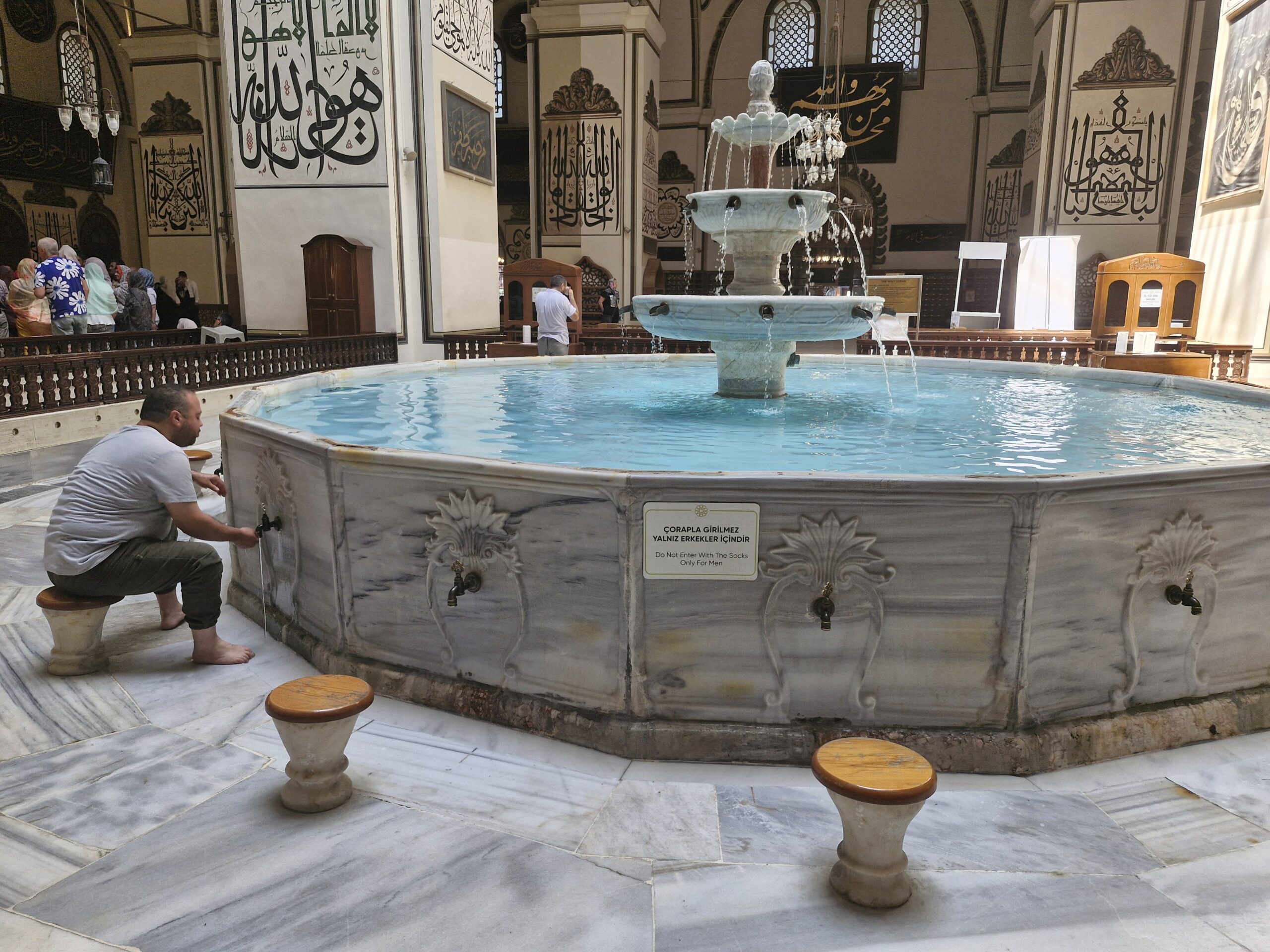
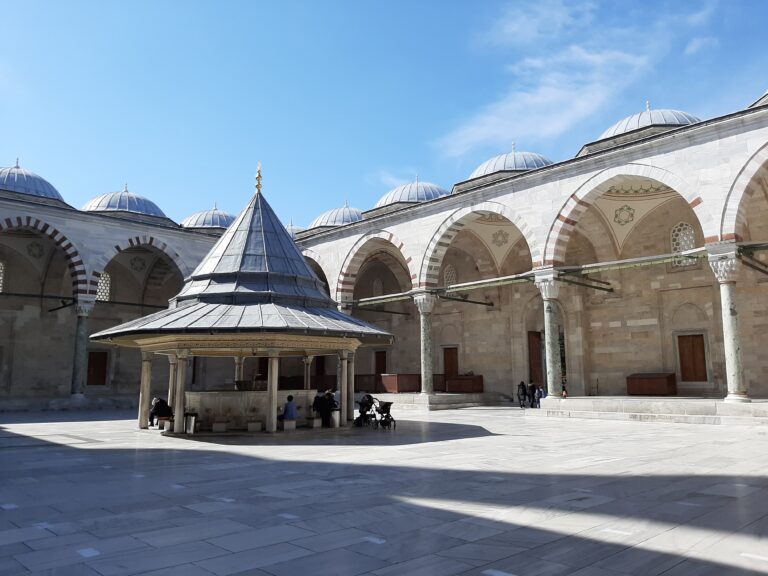
Ulu Camii, the Grand Mosque of Bursa was commissioned between 1396-1400 by Sultan Yildirim Bayezid. It was renowned as largest Ottoman multi-domed mosque built before the conquest of Istanbul and has the unusual feature of a hexagonal pool located inside the mosque, beneath one of the 20 domes. The pool functions as a şardıvan, an ablutions station where worshippers cleanse themselves before performing prayers.
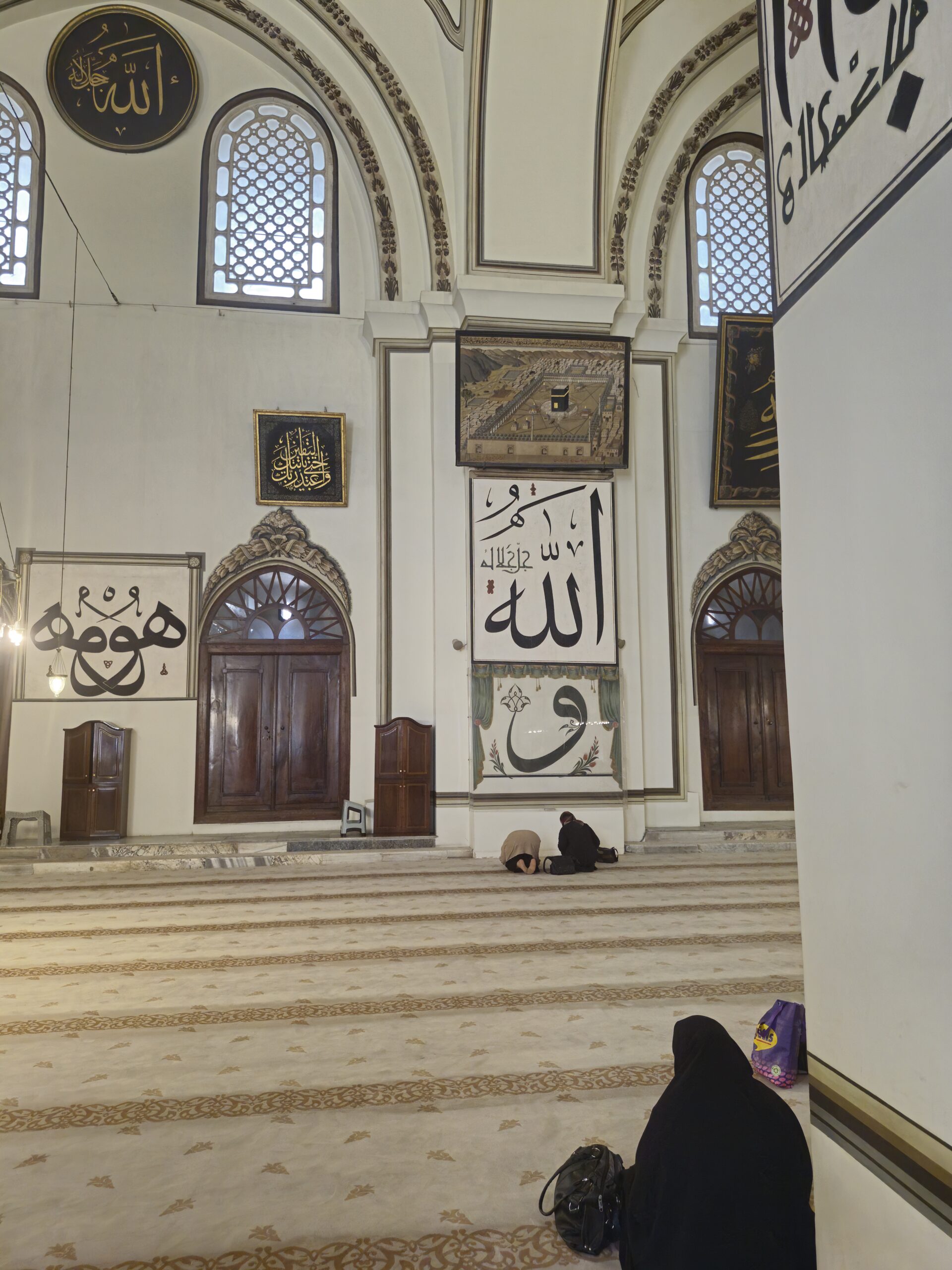
The wooden carved pulpit to one side, set with exquisite inlays, and the muezzin’s platform supported by walnut columns are also of particular note, along with the elegant mihrab. The pulpit was constructed by Hacı Muhammed bin Abdulaziz bin İbnü’d-Devâkî and is made of interlocking parts that stay together without using nails or glues. This joinery method is known as kündekari. It’s behind a large sheet of Perspex, but if you look carefully you can see the solar system depicted on the east side and the Milky Way to the west.
Orhan Gazi Bey Mosque (UNESCO site)
This small mosque was built for Orhan Gazi, the son of Osman Gazi who founded the Ottoman Empire. It was constructed in 1339-1340 as part of a külliye, a religious and social complex, and was the first such complex built in the Empire. The original complex consisted of the mosque, a medrese, two hamam, an imaret (a soup kitchen) and a han. Today only the mosque remains, surrounded by the city’s historical Grand Bazaar and other shops. Interestingly Orhan Gazi’s mosque was built without a minaret and the one you see today dates from the 19th century.
West of old Bursa centre
Muradiye Külliyesi*** (UNESCO site)
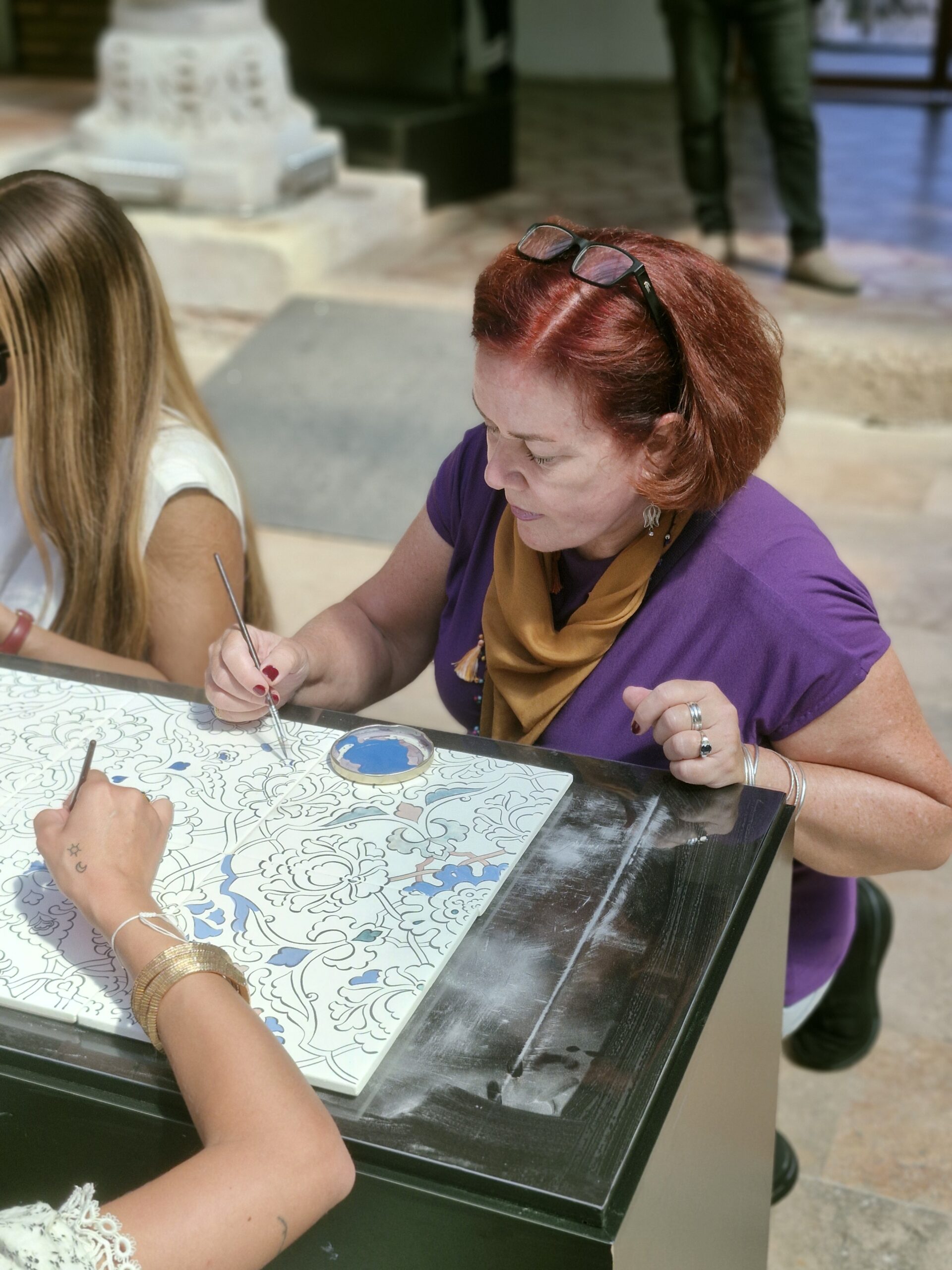
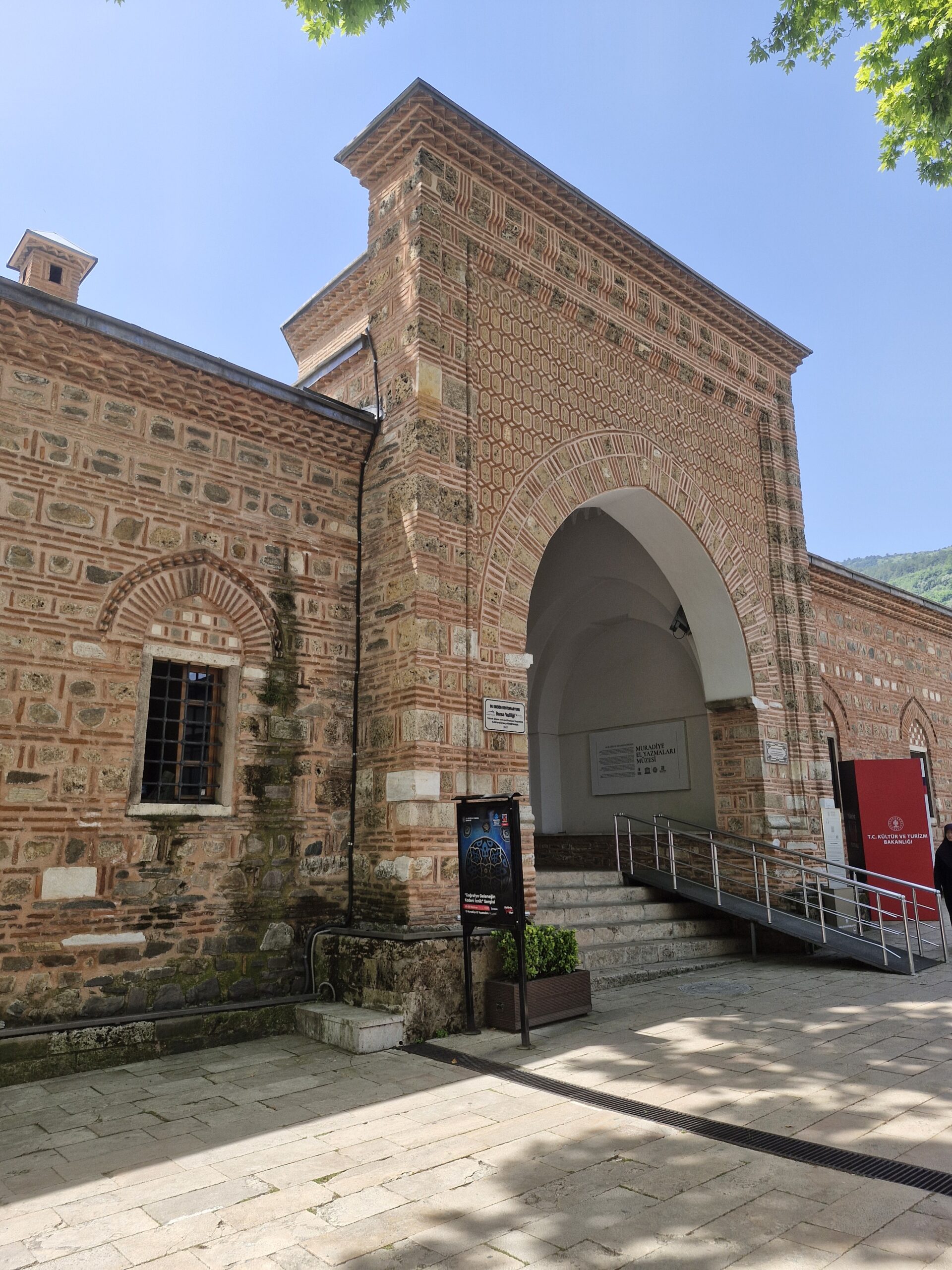
The Muradiye Complex built in honour of Sultan Murat II, the 4th Ottoman Sultan, has been beautifully restored. It consists of the Sultan Murat II (Muradiye) Cami from 1426, a large medrese, ornate tombs and lush green park. The 15th century medrese now houses the Muradiye El Yazmaları Müzesi, the Bursa Quran and Manuscripts Museum.
I visited it as part of a press trip in 2024 and had a fun time trying my hand at painting. Back in the 1950s the medrese was a tuberculosis clinic and it still houses a small medical clinic.
The cemetery contains 12 imperial türbe, elaborate tombs decorated with tiles, painted calligraphy and inlaid woodcarving. Although they’re a tribute to the people they were built for, they’e also a reminder of a rather grim Islamic dynastic tradition.
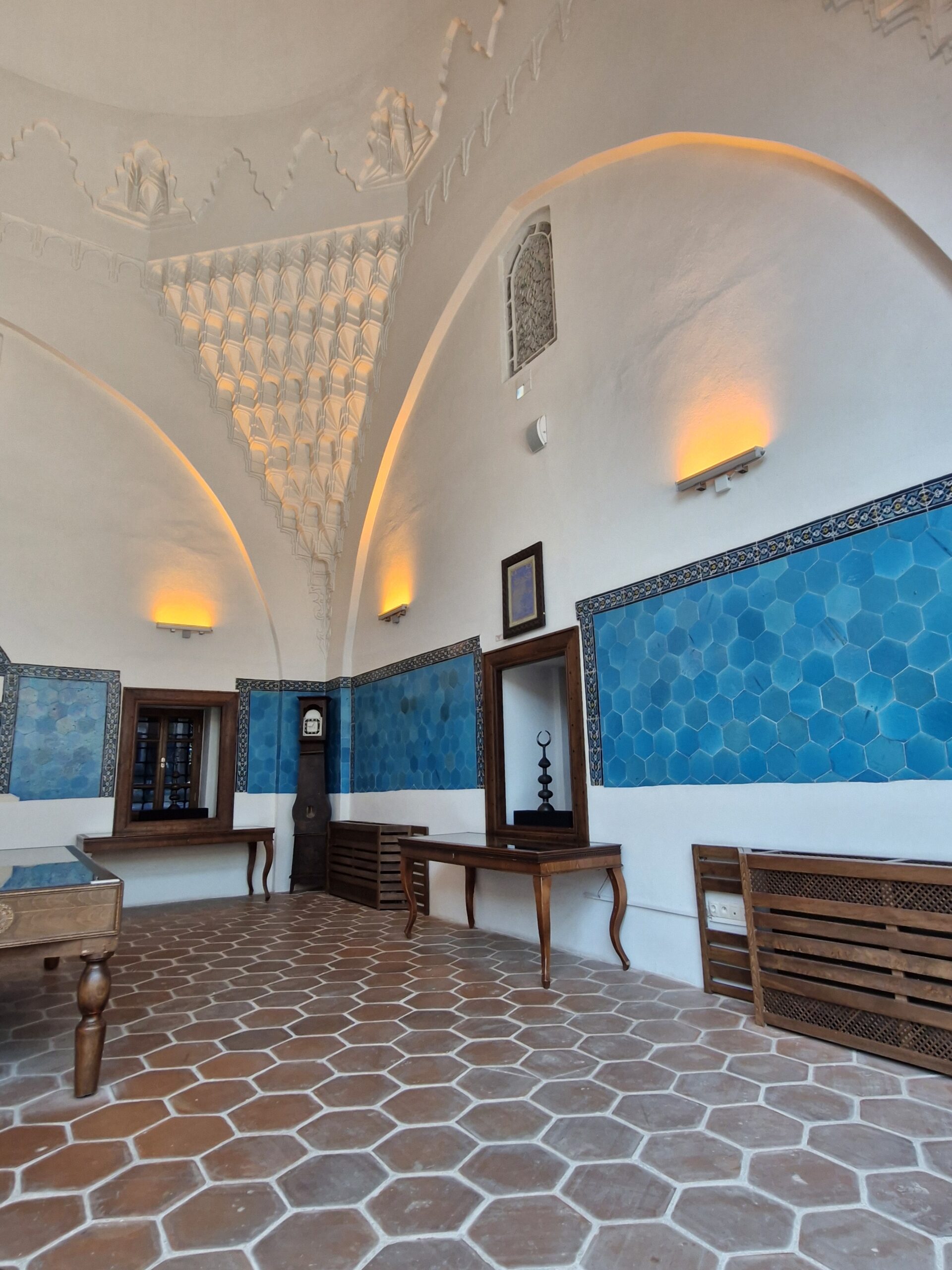
Unlike the rights of primogeniture where power passes directly to the first born male heir, any royal Ottoman son could claim power when their father died. As you can imagine, competition was fierce and fatal. In fact all the şehzade, the imperial sons buried here, were killed by close relatives.
The 17th century Ottoman House Museum just across from the tombs is very well done. It’s similar to many other ethnographic museums I’ve seen in Turkey so I didn’t go inside, but it’s definitely worth a visit it you’ve never seen one before.
East of Old Bursa centre
Yeşil Külliyesi***
One of the most iconic images of Bursa is the Yeşil Camii, the Green Mosque, so called due to the ethereal colour of the Kuthaya and Iznik tiles used to decorate it inside and out. The mosque is part of the Yeşil Külliyesi, the Green Complex, along with the Yeşil Türbesi (scroll down for more information in tomb section below), the tomb of Çelebi Sultan Mehmet (1381-1421) the 5th Ottoman Sultan, a medrese that now houses a museum, an imaret, shops and a café.
Yeşil Camii*** (Green Mosque)
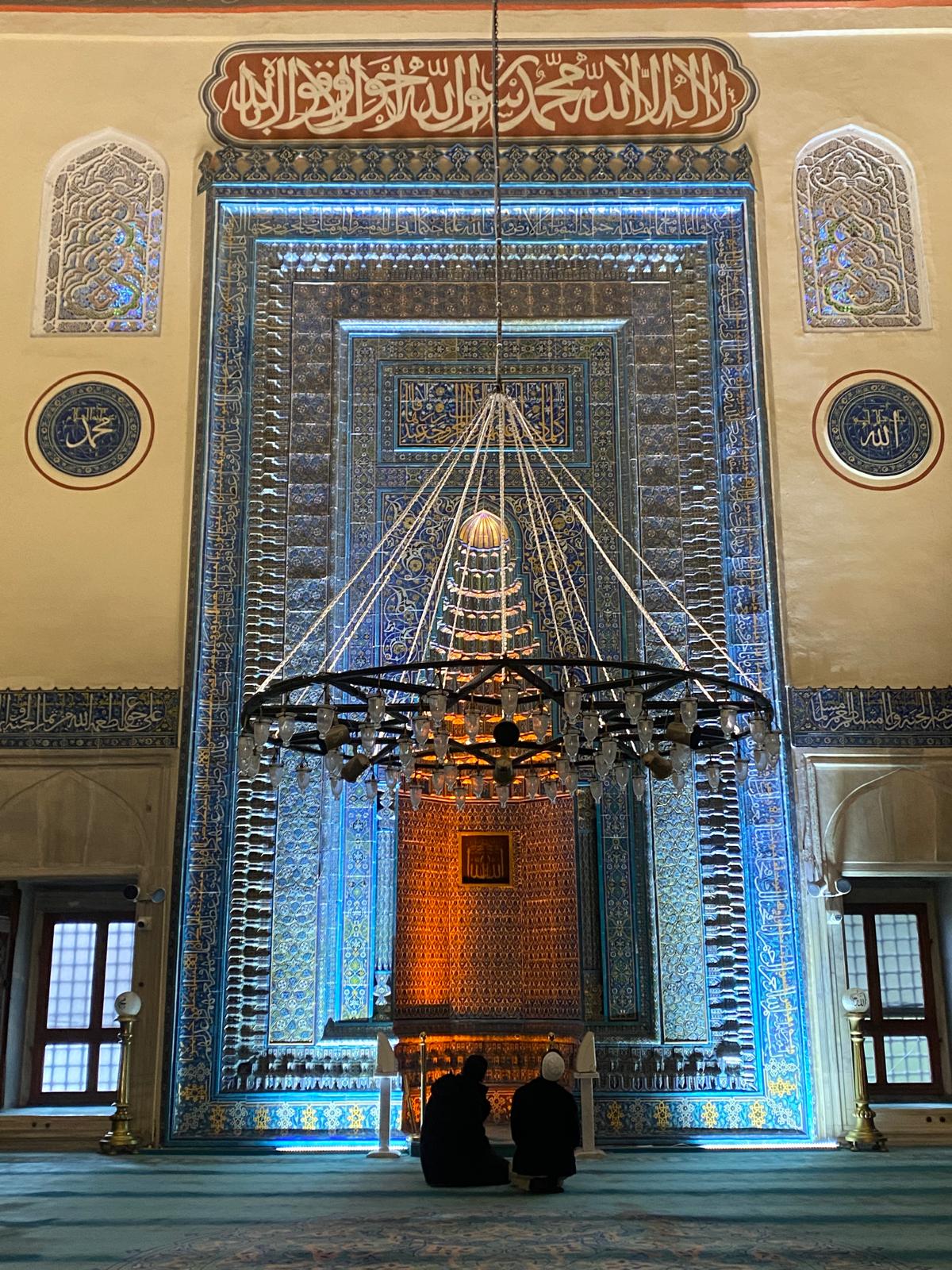
This mosque was built for Mehmet I between 1419 and 1424 and is considered the first mosque to be built to a truly Turkish design. Previous mosques built by the Seljuk dynasties followed Persian styles. Mehmet I was also known as Mehmed Çelebi where Çelebi is a Turkish title meaning gentleman, well-mannered, or courteous.
I’ve seen a lot of mosques and have to agree that this is likely one of the most beautiful I’ve seen. Unfortunately a technical hitch meant I lost all my photos, but luckily my good friend Kate W. let me use a couple of hers. Luminous Iznik tiles adorned with flowers and various geometric motifs cover the mihrab and green stone and marble were used to form the arch of the main doorway. The niches surrounding the door contain calligraphy in different styles, by different master calligraphers. Some parts have been left unfinished because work on the mosque stopped three years after Mehmed died.
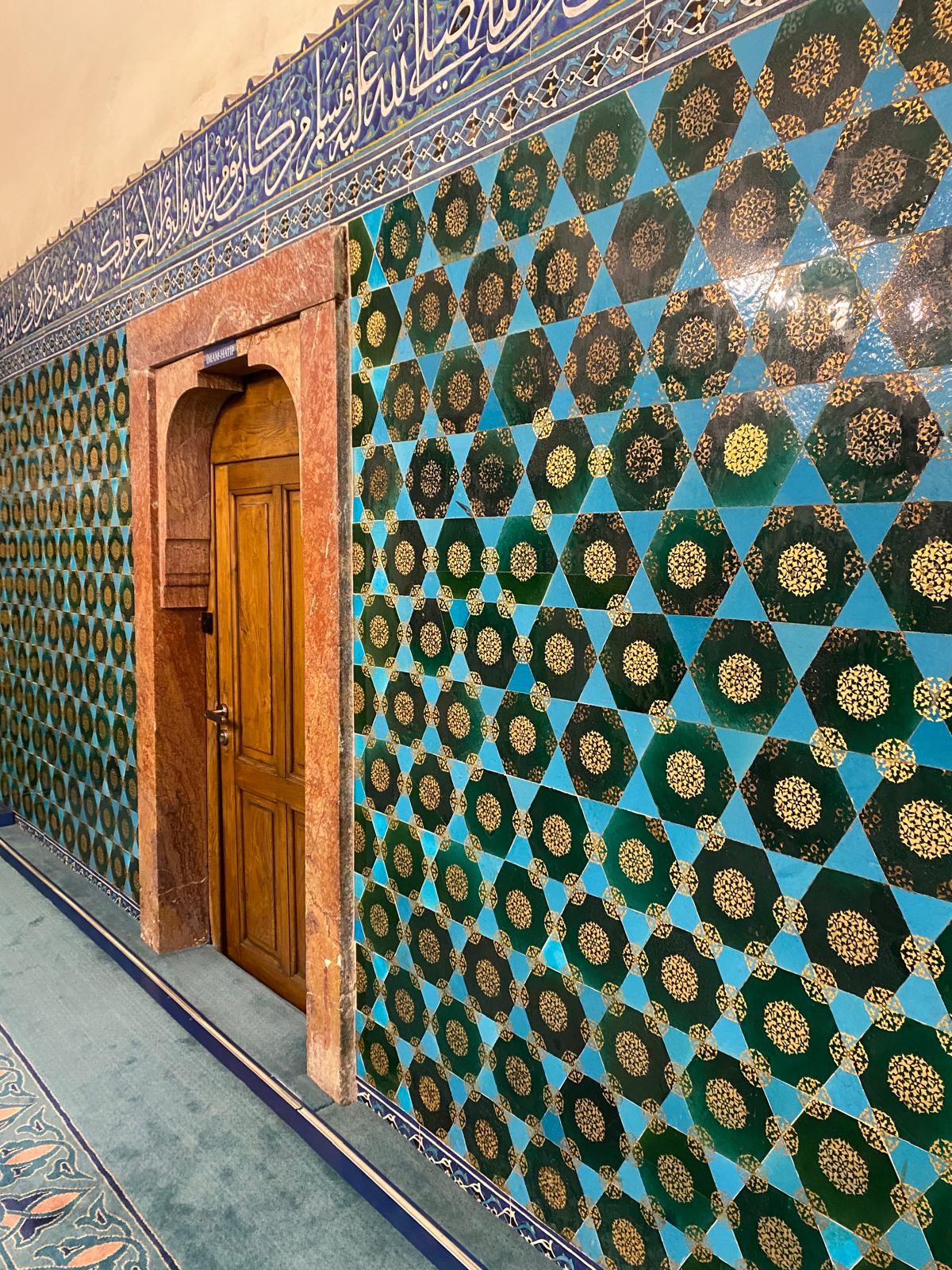
If you’re a fan of painter Osman Hamdi Bey like I am, this mosque will seem familiar. That’s because the room the scholar and the tortoises in his painting Kaplumbağa Terbiyecisi, the Tortoise Trainer, are standing in, is an actual room on the upper floor of the Yeşil Camii.
Yeşil Medresesi*** (UNESCO site)
The Yeşil Medresesi, also known as the Merzifon Çelebi Mehmet Medresesi or Sultaniye Medresesi, was one of the first Ottoman religious schools to be established. It was constructed by architect Hacı İvaz Paşa between 1414 and 1424, the man behind the Green Mosque and now houses the Turkish & Islamic Arts Museum*** (you can read more about it in the museum section below).
Emir Sultan Camii
When it was first built in the 15th century, the Emir Sultan Mosque was part of a complex that included a hamam, medrese and health clinic. It’s named for a sultan however the man in question was actually a renowned Persian scholar and religious leader called Şemseddin Mehmed Ali el-Hüseyin el Buhari. He was married to Hundi Fatma, the daughter of Bayezid I for whom he acted as an advisor.
Like many historic buildings in Turkey the original structures suffered significant damage over the years. The mosque along with the complex was rebuilt by Selim III in 1805. After earthquake damage in 1855 it was rebuilt by Sultan Abdül Aziz in 1858. The rich Ottoman Rococo style exterior with wooden, curved and painted arches was restored in the early 1990s.
Side note: If you walk from Yesil Camii to Emir Sultan Mosque you’ll pass the cemetery containing grave of Iskender Usta, creator of the Iskender Kebab dynasty.
Bursa Museums
Panorama 1326 Bursa Fetih Müzesi
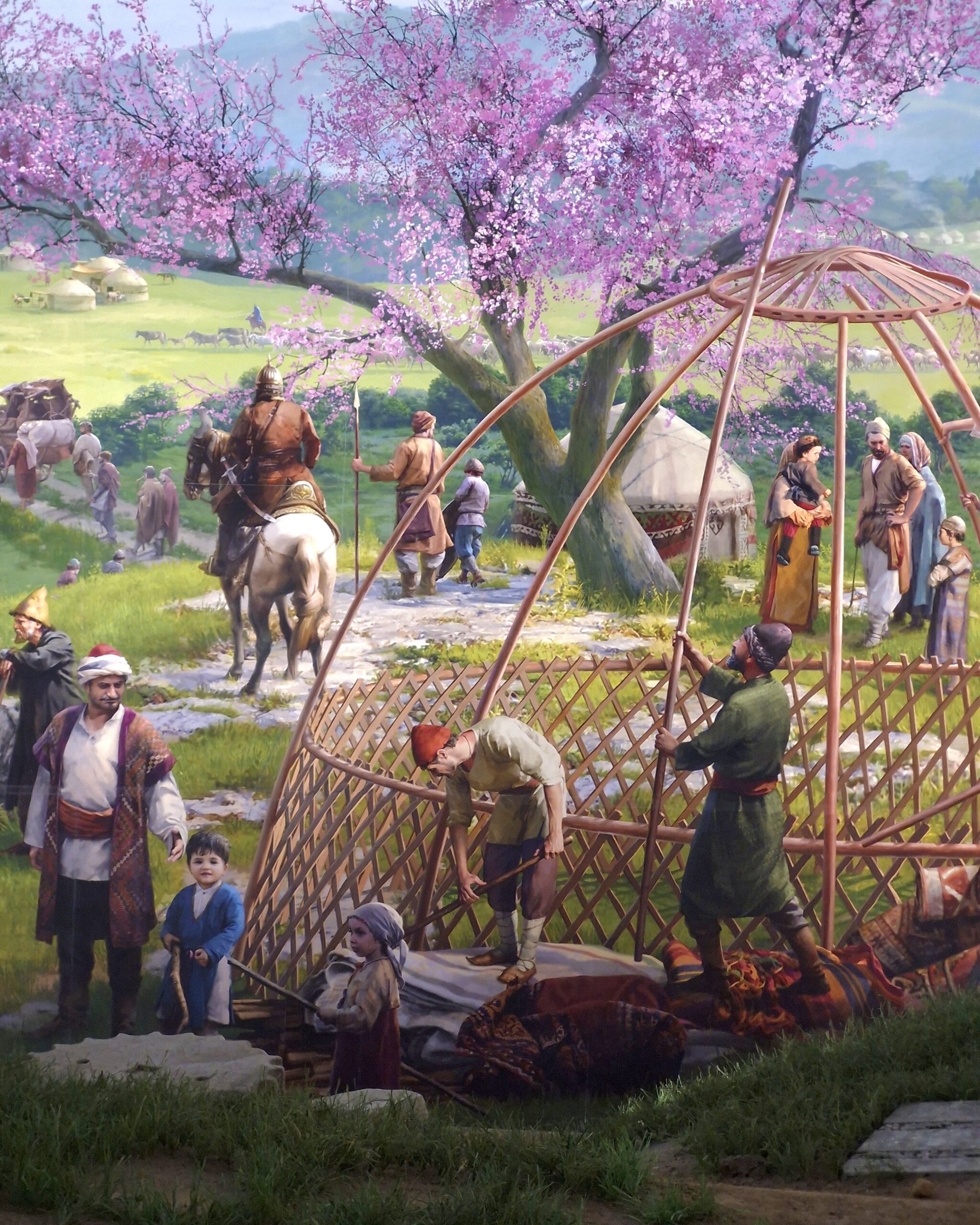
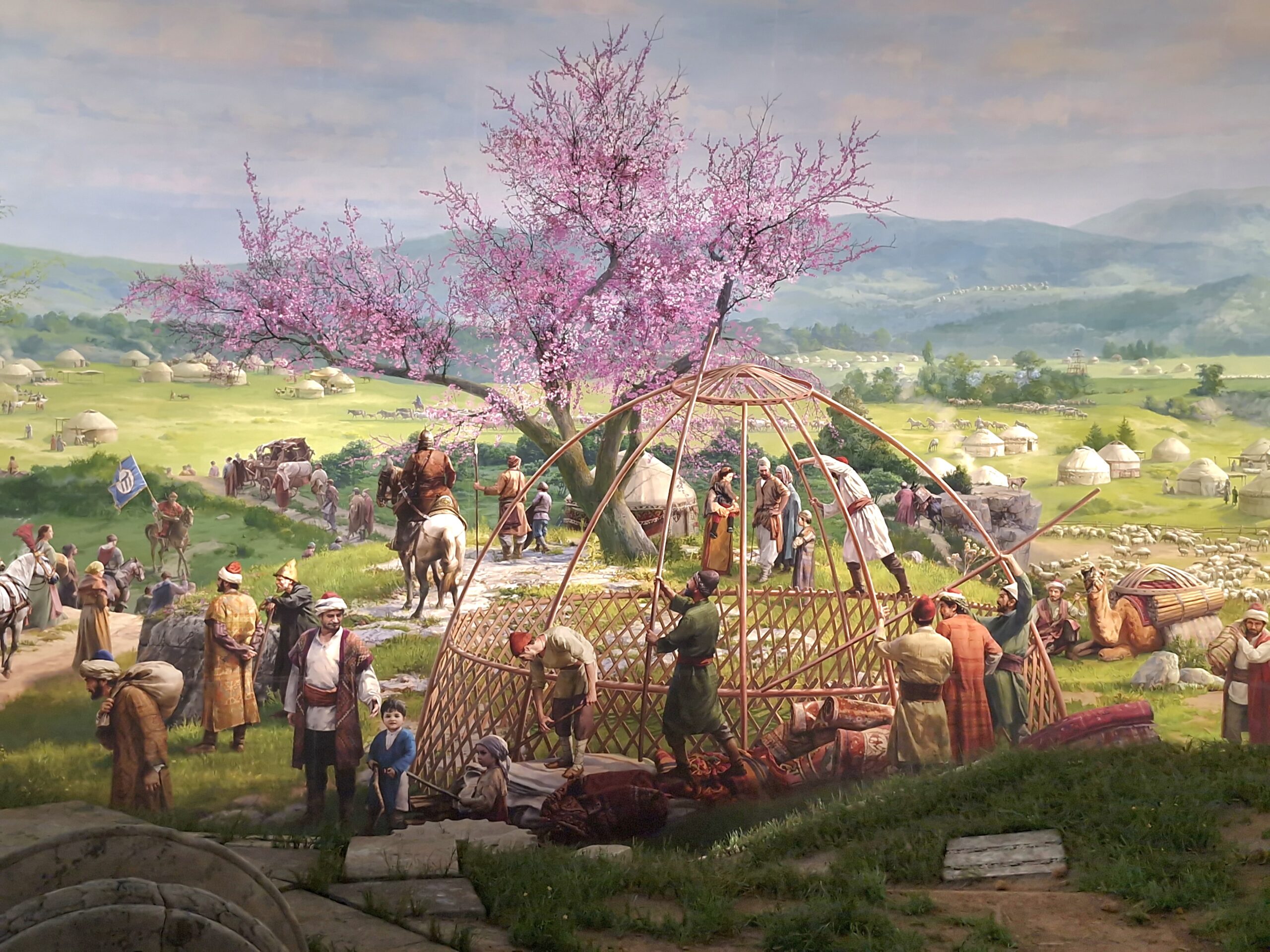
The Panorama 1326 Bursa Conquest Museum is an architectural paean to the founders of the Ottoman Empire and the history of Bursa. According to their website it’s the world’s largest fully panoramic museum. It certainly is big and an incredibly immersive experience, provided you’re not there on a weekday being swarmed by dozens of high volume Turkish teenagers on a school excursion. Given the number of selfies they posed for I’m not sure they appreciated the panorama in quite the way their teachers hoped, but I did. The workmanship and scale are astonishing.
Opening hours: 9am-5.30pm, Tues-Sun, closed Mondays. Entry price – 30tl (payable in cash only)
Bursa Türk İslam Eserleri Müzesi***
The Bursa Turkish and Islamic Arts Museum was the first to be established in Bursa, and was the work of an individual named Azmi, the Director of Bursa Education and Resad, an accountant at the Boys High School. It opened in the grounds of the school in 19 August 1902 then was developed and enriched with help of primary education inspectors, teachers, and students under the direction of Governor Mümtaz Reşid Pasha.
The museum was officially opened in 1904 by Osman Hamdi Bey (yes, the painter), then General Manager of Museums. In 1930 the collection was moved to the Yeşil Medresesi, opening to visitors on 8 April 1930. The collection includes hundreds of items from the 12th to the 20th century including tiles and ceramics from Seljuk, Beylik and Ottoman periods, examples of Turkish metal art, wood carvings, weapons, hand-written documents, Seljuk and Ottoman coins, inscriptions, traditional Turkish handicrafts and clothes with grave and tombstones exhibited in the garden.
Opening hours: 1 Apr-1 Oct: 8am-7pm, 1 Oct – 1 Apr: 8am-5pm. Entry price – 75tl.
Bursa Merinos Tekstil Sanayi Müzesi
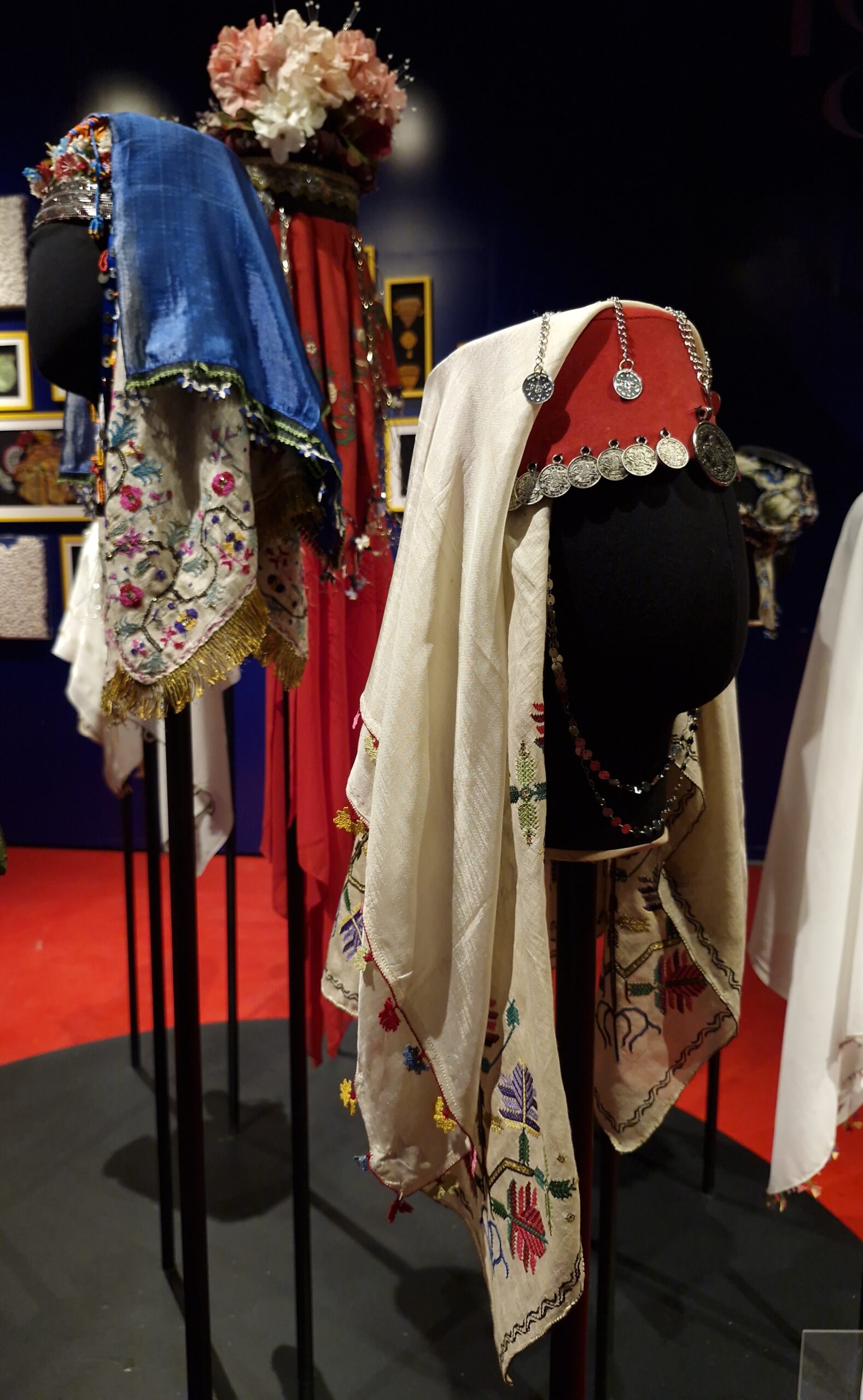
I’m a sewer from way back so have a passion for textiles. I also have a thing for repurposed industrial architecture, of which there’s a lot in Turkey these days. The Bursa Merinos Textile Industry Museum is a great example of both.
It’s housed in the original state wool factory founded in 1938, and contains a well-thought out collection featuring historic looms and fabric samples, gorgeous temporary exhibitions (see photo), as well as demonstrations of silk pulling and weaving demonstrations.
Opening hours: 9am-5.30pm, closed Mondays. Entry free.
Uluumay Osmanlı Halk Kıyafetleri ve Takıları Müzesi***
Uluumay Ottoman Folk Costumes and Jewellery Collection opened as aprivate museum in 2004. It’s housed in the 15th century Ahmet Paşa Mesdrese, a few minutes walk from the Muradiye complex. Inside you’ll find Ottoman clothes and jewellery collected by one of the founding members of Anatolian Folklore Foundation, Esat Uluumay, over a period of 45 years. There are around 90 items of clothing and 500 pieces of jewellery from Anatolia and Rumelia dating back to the 15th century, displayed in small rather cramped rooms. Nonetheless it’s a must see if you’re interested in textiles, fashion or folk culture.
Opening hours: 10am-5pm, closed Mondays. Entry fee – 150tl approx.
Karagöz Müzesi*** (in Çekirge)
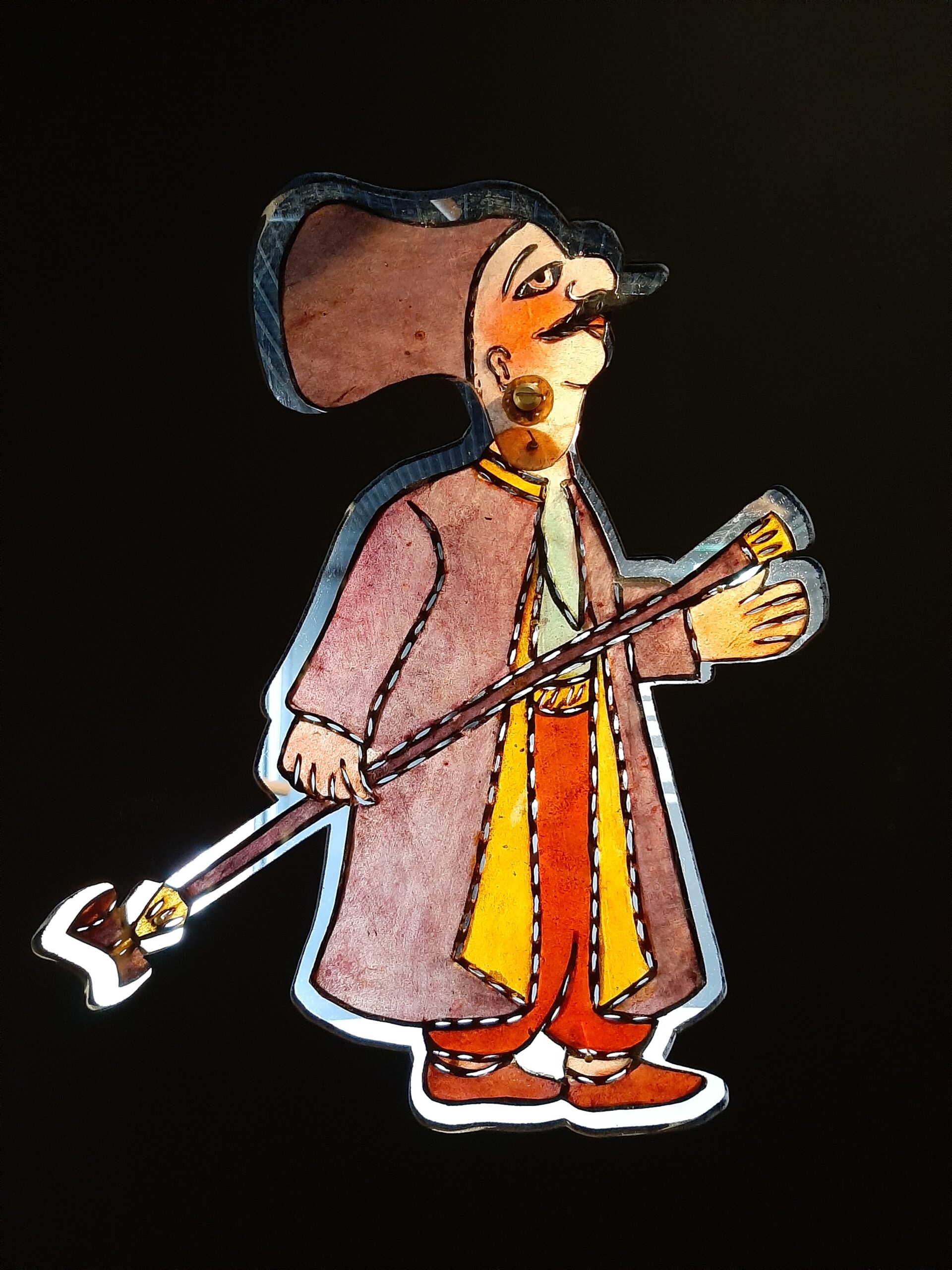
The Karagöz puppetry tradition has a long history in Turkey, and has always operated on two levels, one as a simple fun entertainment for kids and the other as political commentary. It’s importance was recognised by UNESCO in 2009 when it was inscribed on the UNESCO Intangible Cultural Heritage List.
The Karagöz Museum in Bursa is the country’s only museum dedicated to preserving and keeping the art of shadow puppetry alive. The collection covers the history of Karagöz plays, set design, and puppet-making techniques with lots of original handmade figures and sets on display.
At the time of publishing this guide, Bursa’s Karagöz Museum was temporarily closed for renovations, so I suggest you check the status before you go.
Opening hours: 9.30am-5.30pm, closed Mondays.
Tofaş Bursa Anadolu Arabaları Müzesi
Although I got my driver’s licence I’ve never owned a car but I still find automobile museums interesting. This one, the Tofaş Anatolian Car Museum in a restored former silk factory, is dedicated to the history of the Turkish automotive industry. It traces the development of wheeled transport from horse-drawn carriages with wooden wheels through to modern cars, showcasing Ottoman ox carts, war chariots, and modern Tofaş car models along the way, in neat chronological order.
The museum is three kilometres from the old town centre so ironically you might need to use some form of wheeled transport to get there.
Opening hours: 10am-6pm, closed Mondays. Free entry.
Somuncu Baba was a humble baker who distributed bread to the men working on the construction of Ulu Cami in the 14th century. This complex contains the original bakery, warehouse, kitchen, fountain and a çilehane, a hermitage, as Somuncu Baba, real name Hamid from Kayseri, was a benevolent and learned man.
Bursa Atatürk Evi Müze (in Çekirge)
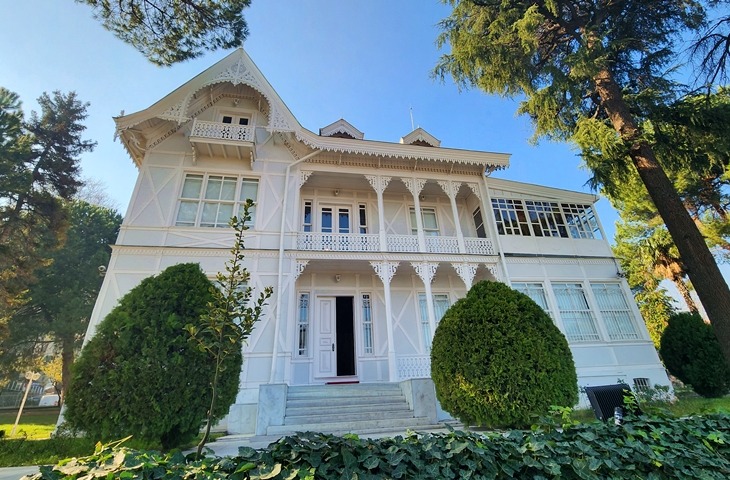
Bursa’s Atatürk Museum is housed in a lovely looking three-storey stone building and is a prime example of the civic architecture of the period. It was built by one Colonel Mehmet Bey in 1895. Atatürk spent a lot of time here when he visited Bursa and ended up being given it as a gift. He in turn donated it to the municipality in 1938, and it opened as a museum in 1973 to mark the 50th anniversary of the Declaration of the Turkish Republic.
Much like other Atatürk Museum’s in Turkey, it contains many of Atatürk’s personal effects, including oddities like the preserved remains of his beloved dog Kont (you can see one of the great man’s dental plates at the museum in Istanbul) .
Opening hours: 8am-5pm, closed Mondays. Entry price – free entry
Tombs in Bursa***
Tophane Park west of the old Bursa city centre is named for the historical cannons placed in the grounds. In the past, shots would be fired from them to mark the start of iftar and sahur during the month of Ramadan. The park offers sweeping views of Bursa, but the main reason people come here is to visit the tombs of Osman and Orhan Gazi.
Osman Gazi ve Orhan Gazi Türberleri*** (UNESCO site)
Osman Gazi tomb***
Osman Gazi was the founder of the Ottoman Empire. He lived between 1258 and 1324 and on his death was laid to rest on this hill, once the site of the Saint Ellie Eastern Roman Monastery. You can still see remnants of the monastery on the floor inside his tomb. Osman’s majestic mother-of-pearl inlaid sanduka, a type of cenotaph placed over the gravesite of distinguished individuals in Turkish-Islamic tradition, is flanked by 12 others belonging to relatives.
Orhan Gazi tomb***
On Osman’s death his son Orhan Gazi ascended to the throne. During his long life (from 1281 to 1362) Orhan conquered Bursa, established state structures and minted a coin with his likeness. On his death he was interred in a tomb next to his father. His wife Nilüfer Hatun, children and other relatives lie in sanduka beside him.
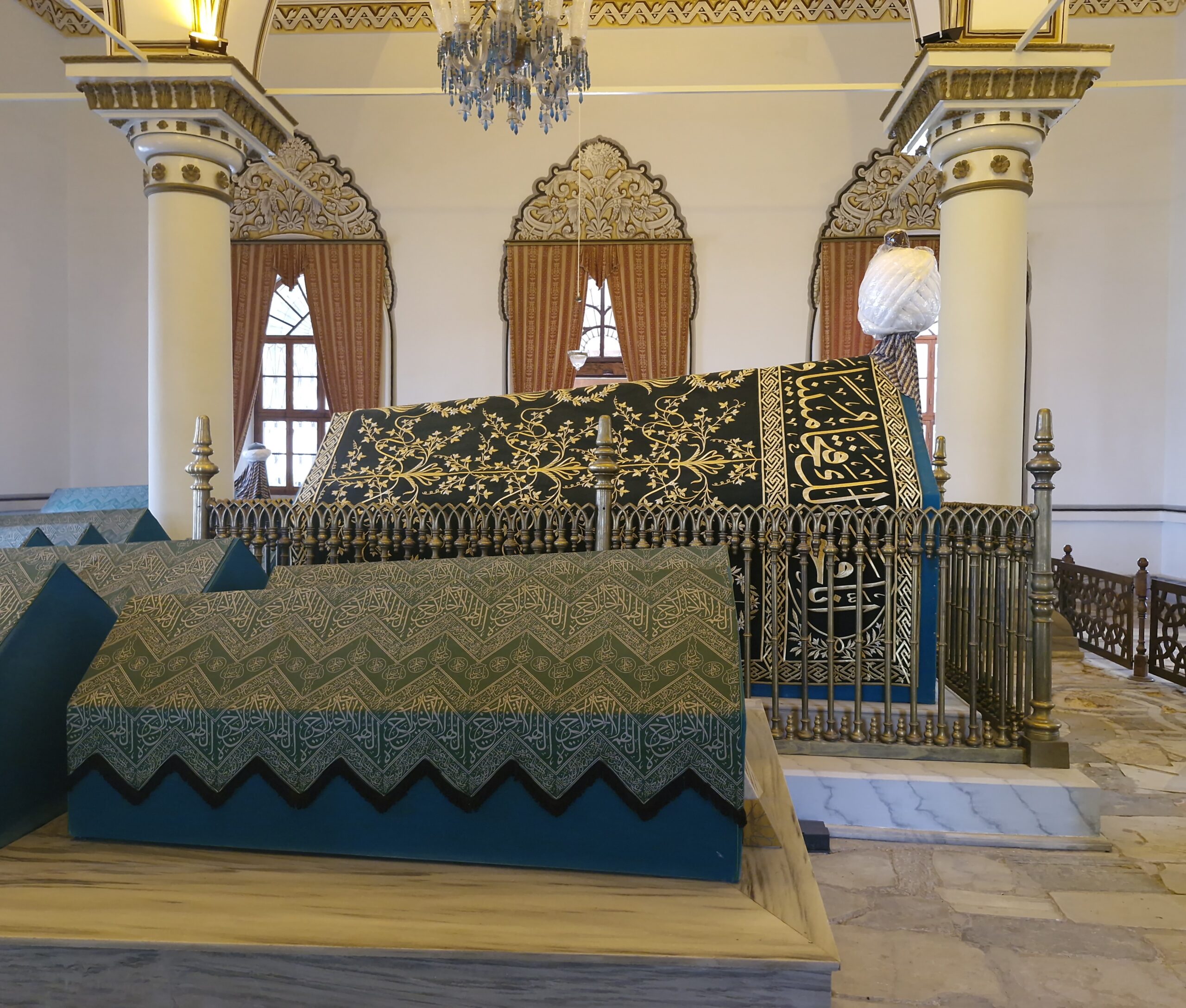
The original tombs were destroyed in the 1855 earthquake and then both rebuilt in Baroque style in the 1860s. Osman’s is the more ornate of the two with the mother-of-pearl inlaid timber sarcophagus enclosed in brass railings. According to myth, when Bursa was under siege, Osman Gazi pointed out building with silver dome to Orhan and told him, ´My son, when I die, bury me under that silver dome’. Following his death he was buried according to his wishes.
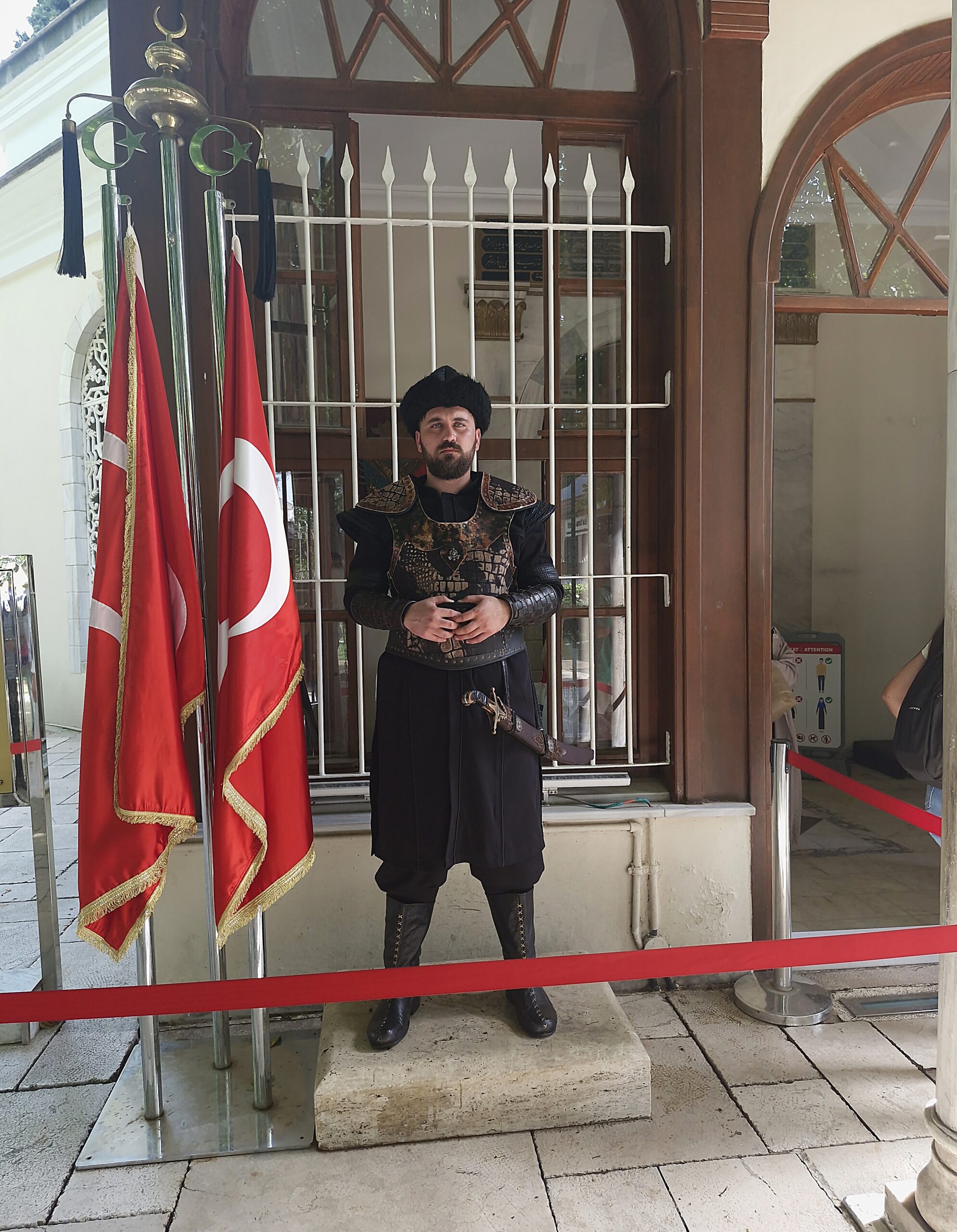
These days visiting the tombs is popular with fans of Ottoman miniseries who come for the solemn changing of the guard ceremony that takes place each afternoon.
Yeşil Turbe***
The Green Tomb is part of the Yeşil Külliyesi, the Green Mosque complex, and deserves far more than three asterisks. It was commissioned by Sultan Mehmed I in 1421, and he was laid to rest here in a sanduka also covered in exquisite tiles. The whole structure is covered inside and out with brilliant turquoise Kutahya tiles that positively glow in certain lights. They were added to the tomb after the 1855 earthquake.
Unlike in most mosque complexes this tomb sits on a spot higher than the mosque itself. Sultan Mehmed had this done on purpose to suggest the might of the Ottoman Empire was intact despite their losses at Battle of Ankara in 1402 against the Turkic ruler Timur/Tamerlane.
Other things to see and do in Bursa
Irgandı Köprüsü
Built in 1442 during reign of Murat II, this single arch bridge is lined with small artisan shops selling a variety of items. It’s a popular Instagram location and in my opinion best viewed from a distance.
Çekirge
As I mentioned earlier in this post, Çekirge is a hillside suburb overlooking Bursa. It’s known for its pretty streets lined with historic houses but is famous for its hot mineral springs. A lot of the Çekirge hotels have mineral and sulphur baths on the premises. One of the best known is Hotel Çelik Palas. It was the last building designed by Giulio Mongeri, the architect responsible for the Church of St Anthony in Istanbul, and the thermal spa, opened in 1935, was the first hotel spa built in Turkey.
Atatürk Rehablitasyon Merkezi Kükürtlü Kaplıcaları
The Kükürtlü sulphur baths in Bursa were set up as a treatment centre so lack the luxury of thermal spa centres. That said, they have decent basic accommodation, family hamam and three different thermal facilities, and the bonus of being located in an historical Turkish bath complex dating back to the Ottoman period. The men’s section was built by Sultan Murad I and the women’s by Sultan Bayezid II.
Day trips from Bursa
Skiing
The ski resorts on Uludağ, literally Ulu Mountain, are some of the first to be established in Turkey. I’m not a skier so I’ve only been up the mountain to have a mangal in spring many years ago. However if you’d like to go skiing there, here’s more information about Bursa’s ski resort.
Cumalıkızık***: A Living Ottoman Village (UNESCO site)
The 700 year old Ottoman village of Cumalıkızık is one of seven villages near Bursa built in a kızık, a narrow valley. Cumalikızık is particularly attractive with narrow, irregular streets lined with lovely examples of Ottoman residential architecture in the form of two and three-storey houses overlooking streets laid with flagstones.
The village is famous for its breakfasts so it’s advisable to go early and go hungry. Once you’ve eaten your fill, take a walk and look out for the small museum, mosque, Zekiye Hatun Fountain and the Cumalıkızık Baths. The village is only 12 kilometres from Bursa and you can get there by public transport. Catch the Hamamlıkızık Mahalle ring minibus from outside the Heykel PTT Merkezi, the Heykel Post Office across the road from Ulu Camii. The trip takes around 35 minutes.
Shopping in Bursa
Kapalı Çarşi***
Bursa’s Covered Bazaar isn’t as large or as old as Istanbul’s more famous Grand Bazaar, but it is well worth a visit. It consists of a number of different han, each historically famous for selling different items and products. Despite the passing of time, they still have an air of ancient mystery about them.
Koza Han*** (behind Orhan Gazi Park)
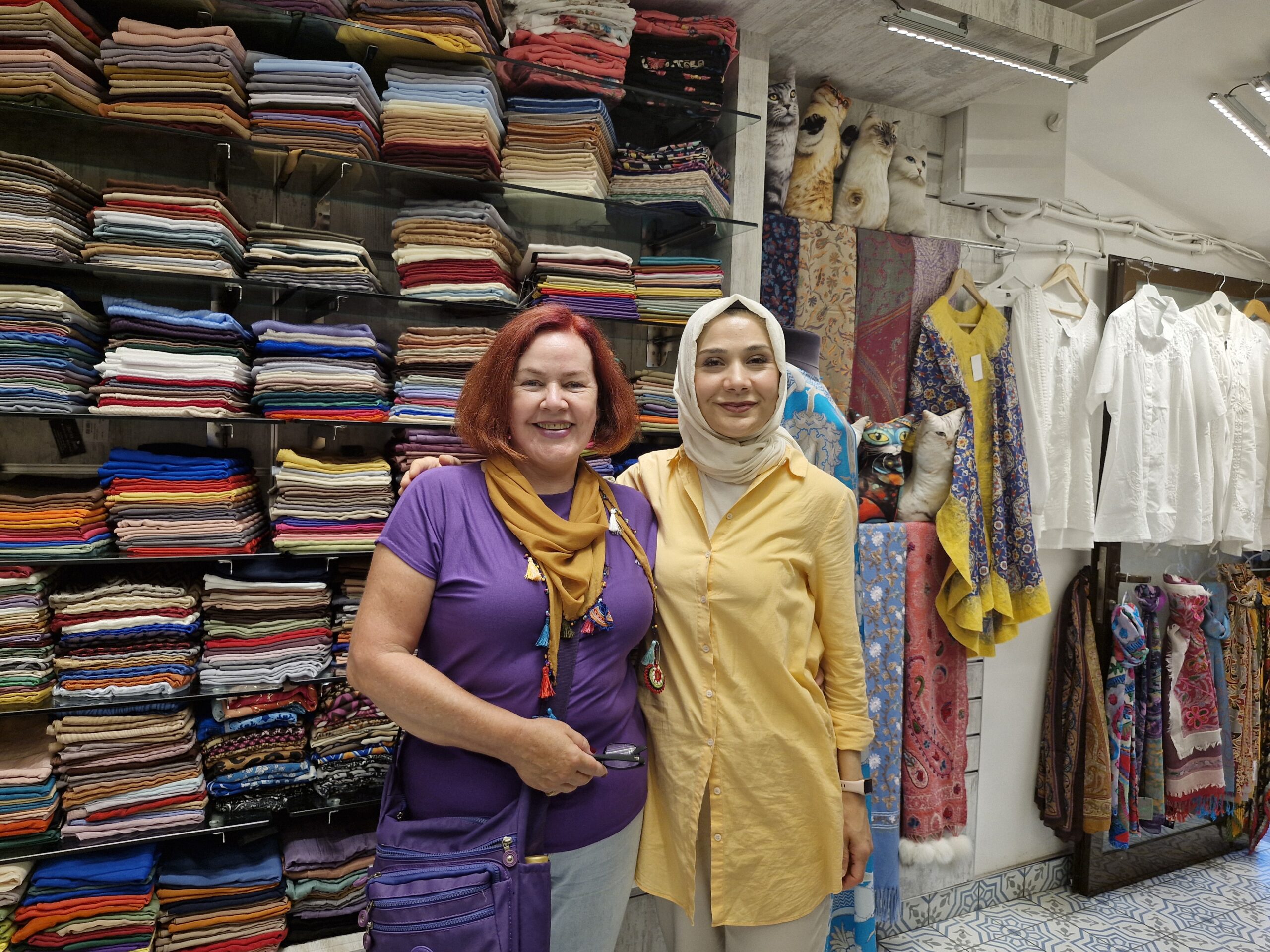
Koza Han was built in 1491 by Beyazid II as part of a much larger complex consisting of a mosque, school, bathhouse and hospital. Koza means cocoon in Turkish and this han served Bursa’s silk trade, which was one of the most important and lucrative industries in the Ottoman Empire. There are a total of 95 rooms inside the han, 50 on the upper floor and 45 on the lower. All the rooms on the upper floor house shops selling silk and silk products. As you can see from the photo, I couldn’t resist.
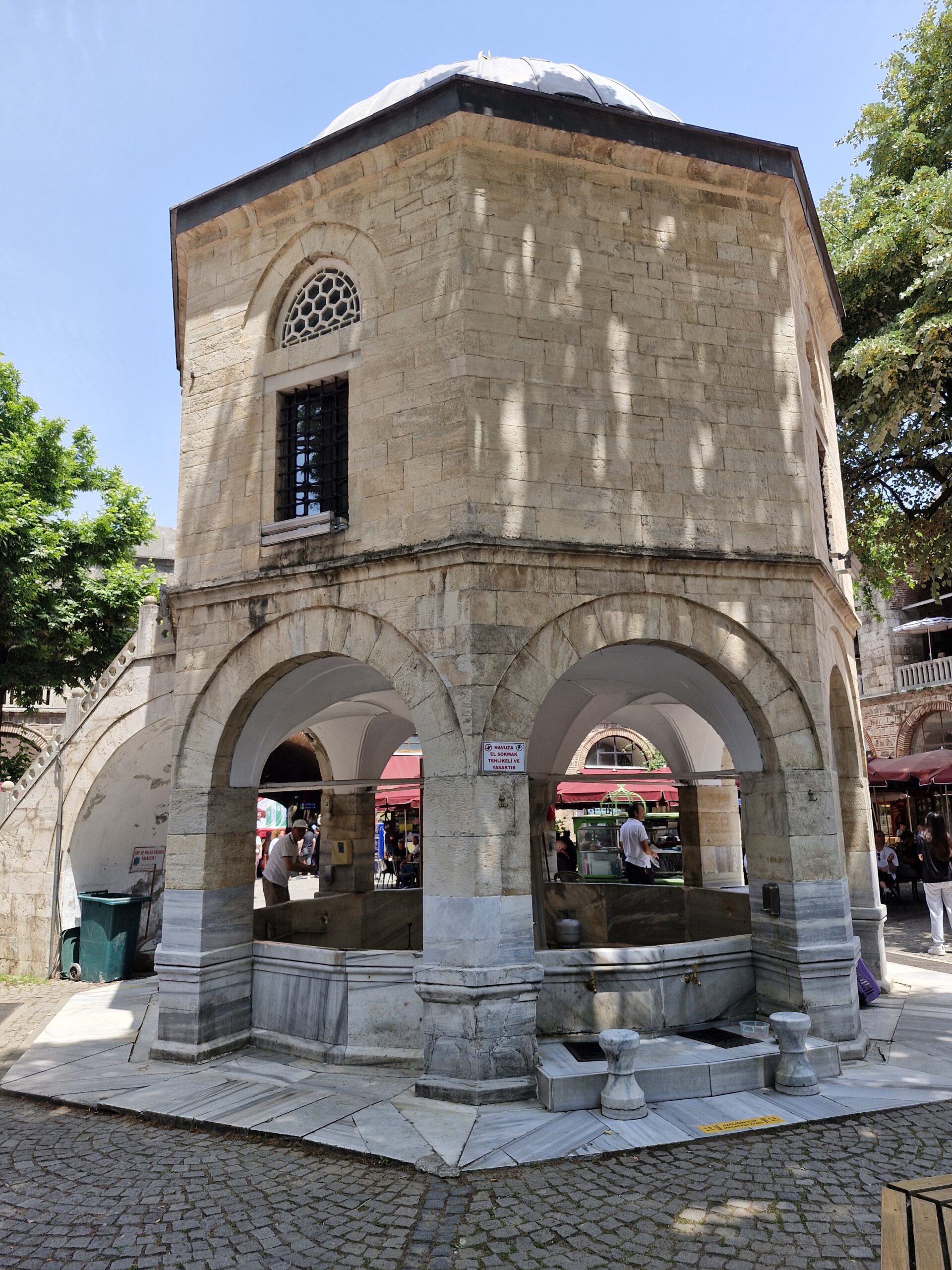
The courtyard is a popular place to stop and refresh with a tea while admiring the pretty domed mescit, the prayer room sitting on six fountains in the middle of the square. People also come for the iskender kebab at Koza Han Kebapçısı. It’s said to be the original Iskender Kebab restaurant in Bursa, but I came across a number of them. There’s more of that to come, and other local specialities in the Where to eat in Bursa section coming up.
Ipek Han
The quieter Ipek or Silk Inn has a similar layout to Koza, without the mescit in the centre. It was built in the first half of the 15th century by Sultan Çelebi Mehmet to generate income for the Yeşil Külliye (Green Complex).
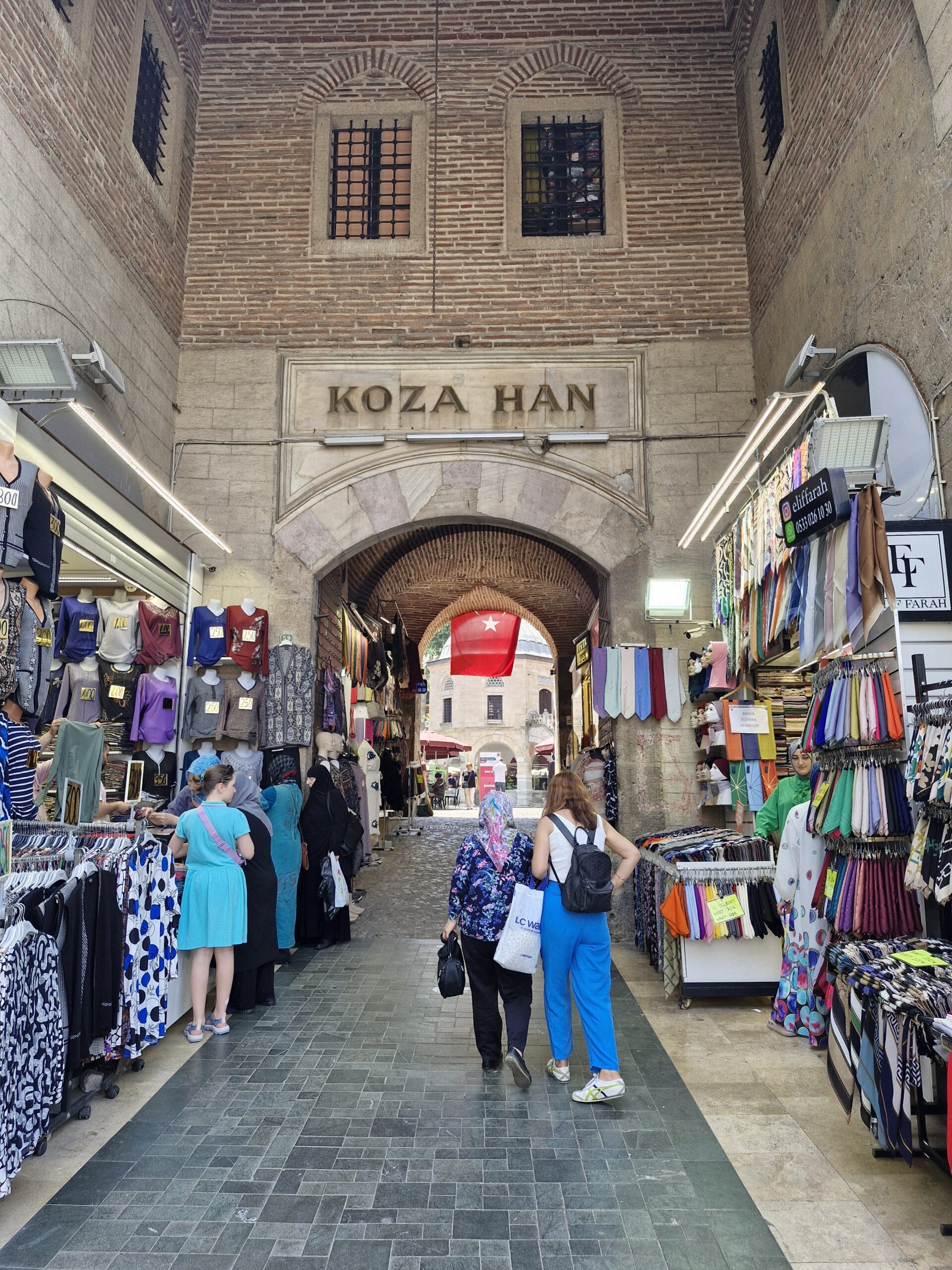
Çukur Han, built by Emir Sultan (I mentioned his mosque earlier, is small and quieter than either Koza or Ipek. It’s also known as Kuthaya Han.
Emir Han
Despite the name, Emir han just behind Ulu Camii, was commissioned by Sultan Orhan (Orhan Gazi that is) in the 14th century to generate income for the Grand Mosque complex. It is the first Ottoman han to be built in Bursa. Over the years it suffered extensive damage due to fires and has been rebuilt many times. Today it houses shops selling religious books and pilgrimage supplies.
What/where to eat in Bursa
Bursa is famous for three things – silk, the ski fields of Uludağ and a type of kebab called Iskender.
Iskender kebab
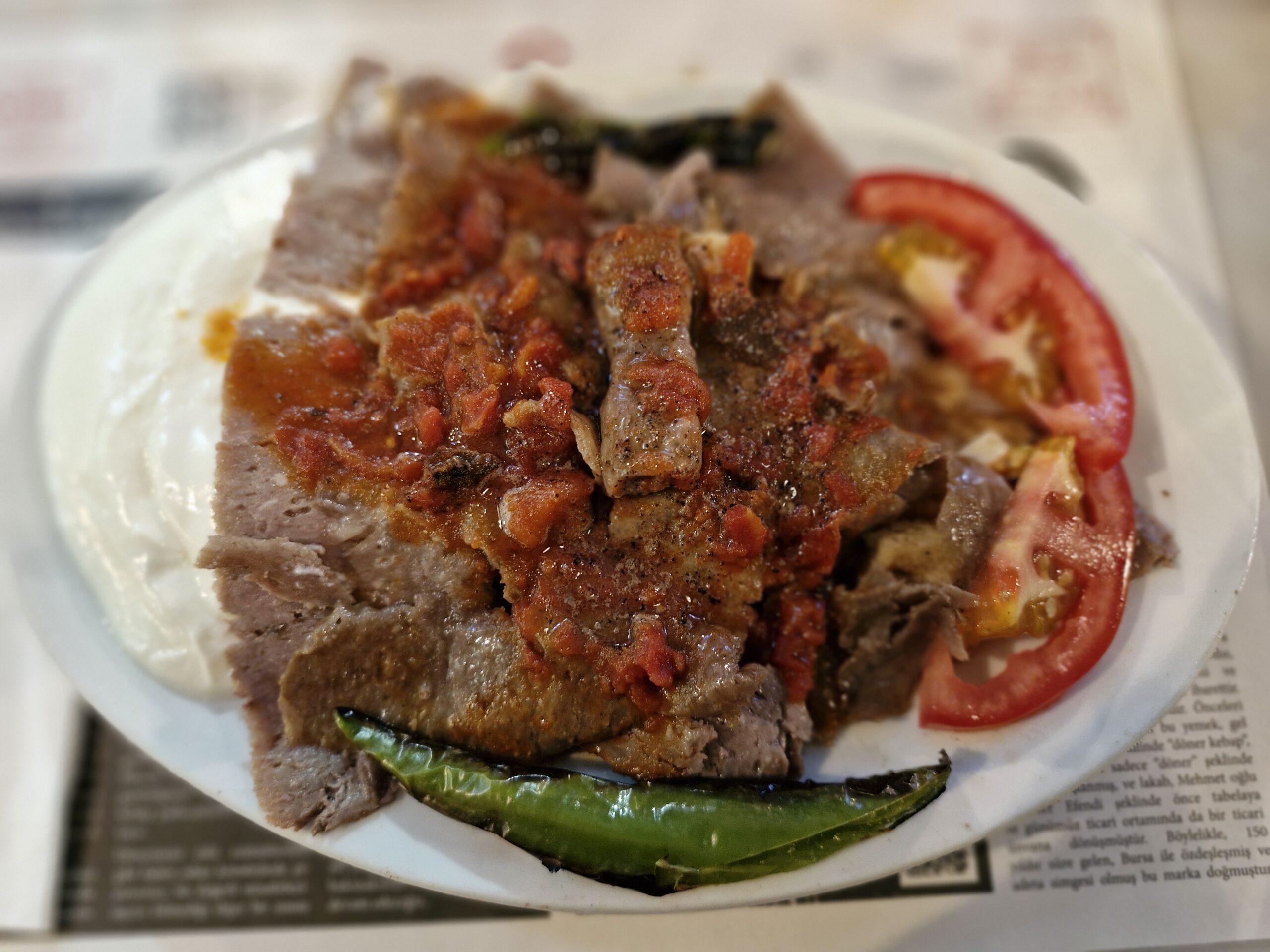
Iskender Kebab is made from thin slices of döner meat layered on pieces of plump pide bread, bathed in a freshly made tomato sauce then anointed with melted butter straight from the pan. Yoghurt, grilled tomatoes and green peppers are served alongside.
According to my research, the first person to cook this dish was a Mr Kayhan who prepared it for workers in Bursa’s Kayhan Bazaar in 1867. A quick Google search brings up the name Mehmetoğlu (Son of Mehmet) İskender Efendi as the creator. According to the Iskender Iskenderoğlu (literally Iskender, son of Iskender) website, grandfather İskender worked with his middle son Süleyman in their first shop in the Kayhan Bazaar. Obviously something got lost in translation but I can confidently say that Iskender Iskenderoğlu, run by the fourth generation of Iskenders, are the originals.
They offer a modern setting with lovely historical touches, and of course wonderful service and food. However if you’re after something a bit more intimate, head for Mavi Tenteli Iskender Kebapçı (Kebapçı Iskender with Blue Canepe).
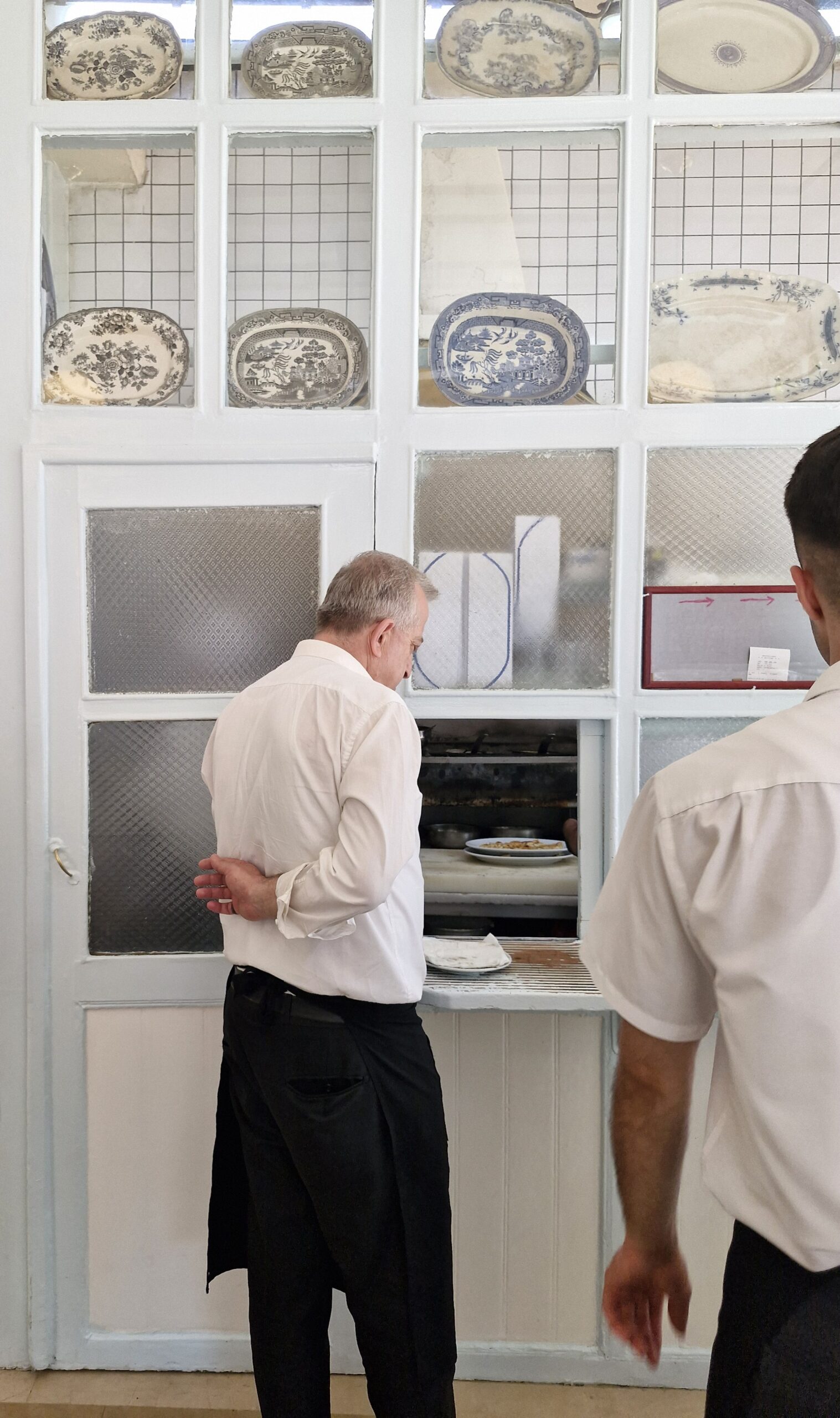
This tiny establishment only has a handful of tables and masses of character. Dining here feels like being in the middle of an Agatha Christie Poirot story, complete with waiters dressed in formal black white. The kitchen is behind white panelled walls and the Iskender is handed through a sliding window. Booking is essential.
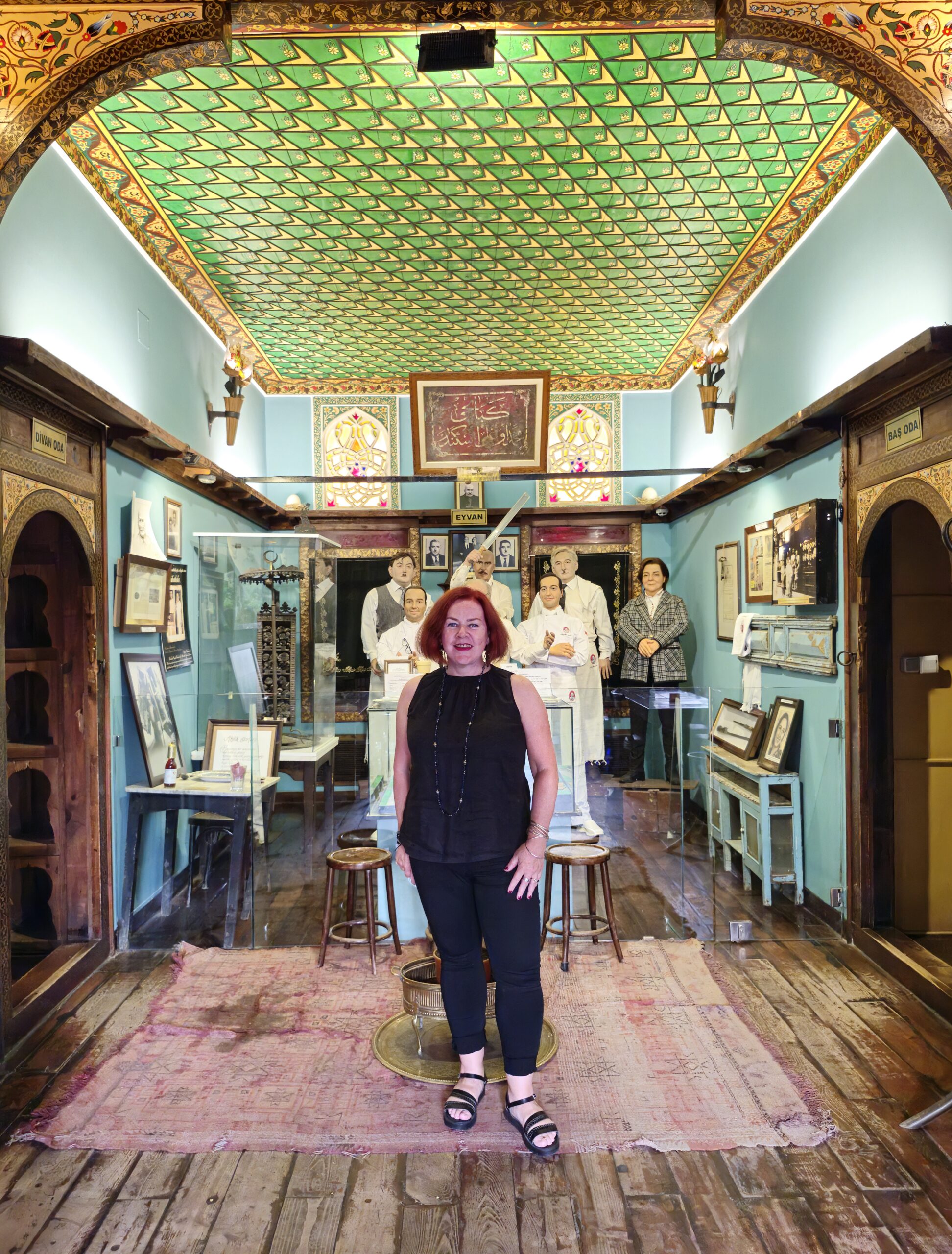
My last recommendation is Kebapçı Iskender Yavuz Iskenderoğlu in İskender Efendi Konağı . I dined here on a press trip run by TGA and I have to be honest, the Iskender was OK but the service wasn’t great. There were a lot of groups and our meals came out in dribs and drabs. That said, I would go there again and one reason you should is to tour the magnificent museum area on the first floor. The restaurant is set in a konak house, an old wooden mansion, and it is glorious. There’s even a hidden room!
Pideli köfte
Pideli köfte is a simple meal of köfte, meatballs, served on cushiony pide bread. This Bursa speciality came about as an alternative to döner in the historical Kayhan Bazaar. The meatballs have almost no spice with the taste coming from the quality of the meat and the addition of creamy butter. I tried it at Kebabci Idris Pideli Köfte x, Kayhan Cd. No. 55 and loved it along with the family run friendly character of the place.
Tahini pita
Tahini is spread on the pita dough then it’s baked in the oven until golden brown. It’s a popular breakfast dish in Bursa.
Şekerli kestane
No visit to Bursa is complete without a taste of Şekerli kestane, sugared chestnuts. Plump chestnuts harvested in Uludağ are wrapped in thin cheesecloth, placed in a pot to simmer until the flesh is soft but still firm, then smothered in sweet syrup. The nutty flavour of the chestnuts balances out the sweetness perfectly. They make a perfect gift for friends or work colleagues, provided your gift-wrapped packet makes it home intact!
How to get to Bursa, where to stay and other practical information
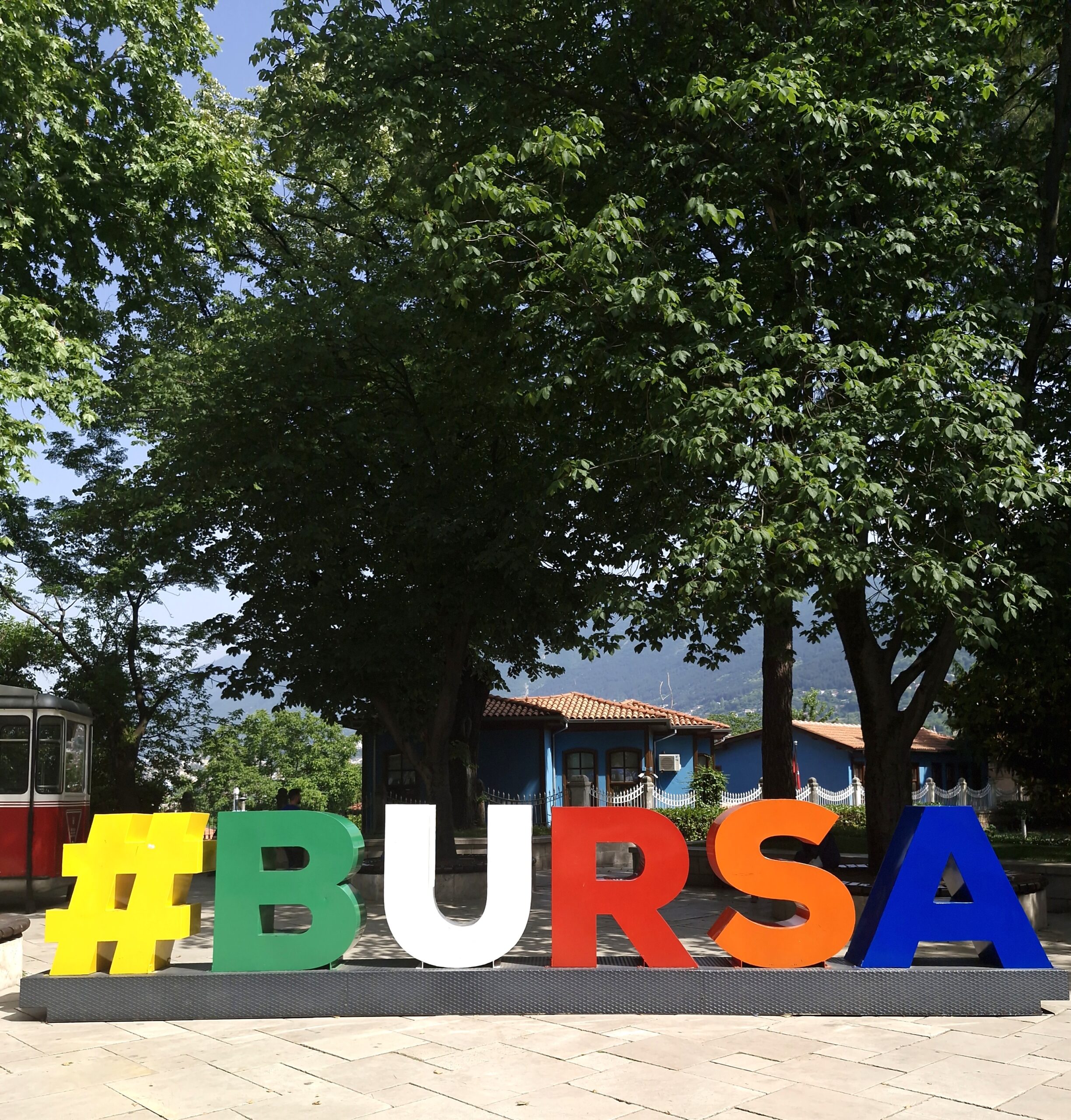
Before your feet even hit Turkish soil there are a few things you need to lock in, like whether you need a tourist visa, and booking a nice place to stay.
Here’s everything you need to know about evisas.
As for the second, if you leave booking your accommodation to the last minute, you might be disappointed with the options available or have to pay more than you bargained to get something decent. One place I really like is Kitap Evi Otel, literally Book House Hotel . As I’m an author it feels fitting. It’s in a lovely old building with a good restaurant on site, and they offer free picks ups from the Bursa bus terminal. It’s a little way outside the city centre so if you’re after something closer in, there are plenty of other options on Booking.com. I’ve been using their platform for years (hello Genius!) with no problems.
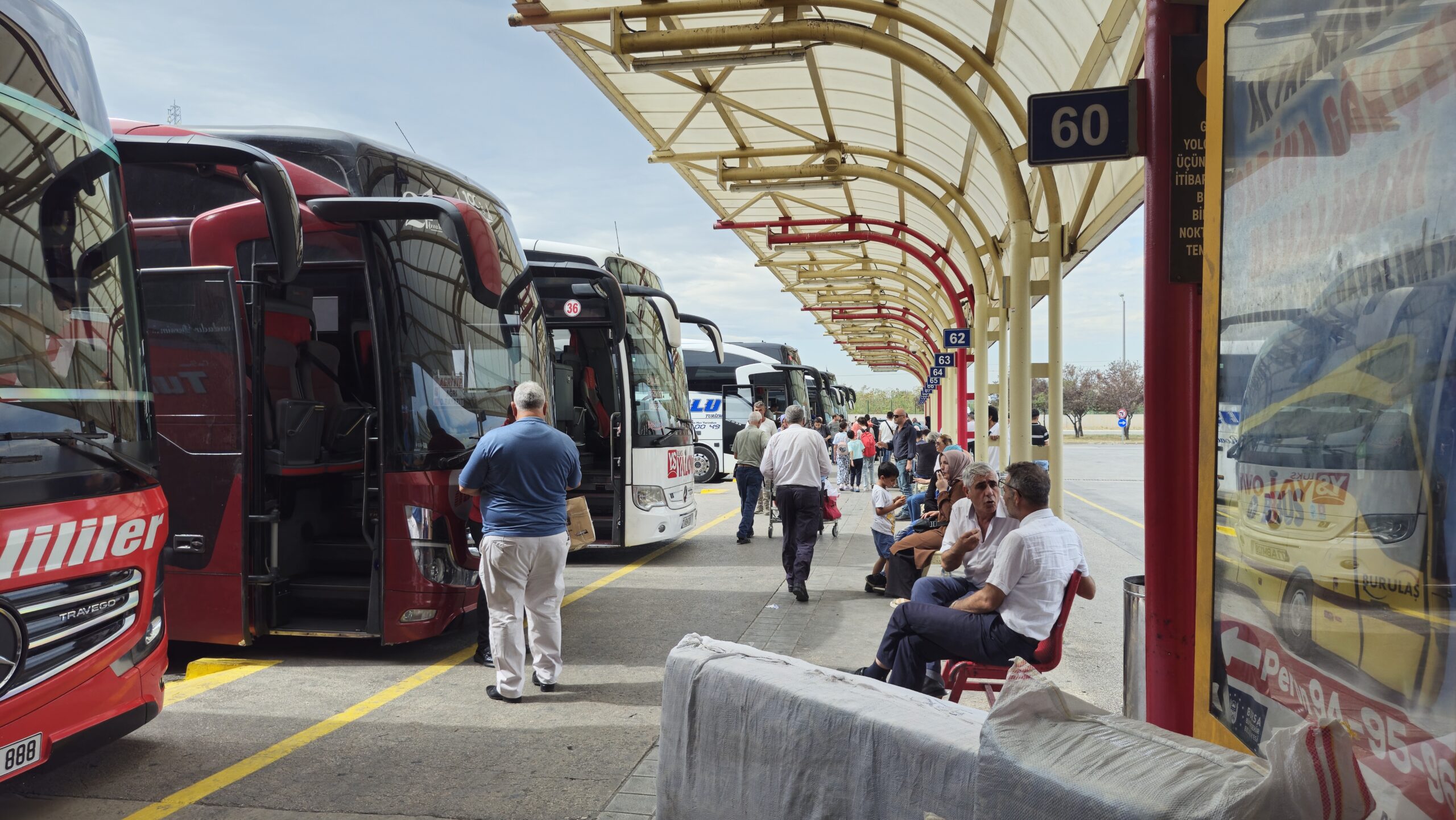
Speaking of buses, the quickest way to get to Bursa from Istanbul is by bus. It only takes about two hours and Turkish intercity buses, unlike what I’ve heard about the US Greyhound services, are clean, safe and efficient. Here’s absolutely everything you need to know about intercity bus travel in Turkey.
If you want to combine Bursa with a longer road trip through Turkey, then renting a car is the way to go.
These days travelling without WiFi coverage is inconceivable, and eSIM are the way to go. I recommend Truely, an eSIM provider working with local telcos meaning you don’t need to worry about workarounds like you do with other providers. I like that you can opt to buy 1 to as many days as you need, instead of being limited to 7, 15 or 30 days. Plus you can reload when you’re in Turkey which you can’t do with other eSIM. Truely eSIM are straightforward to install and activate but if you have any problems their responsive WhatsApp customer service is available 24/7.
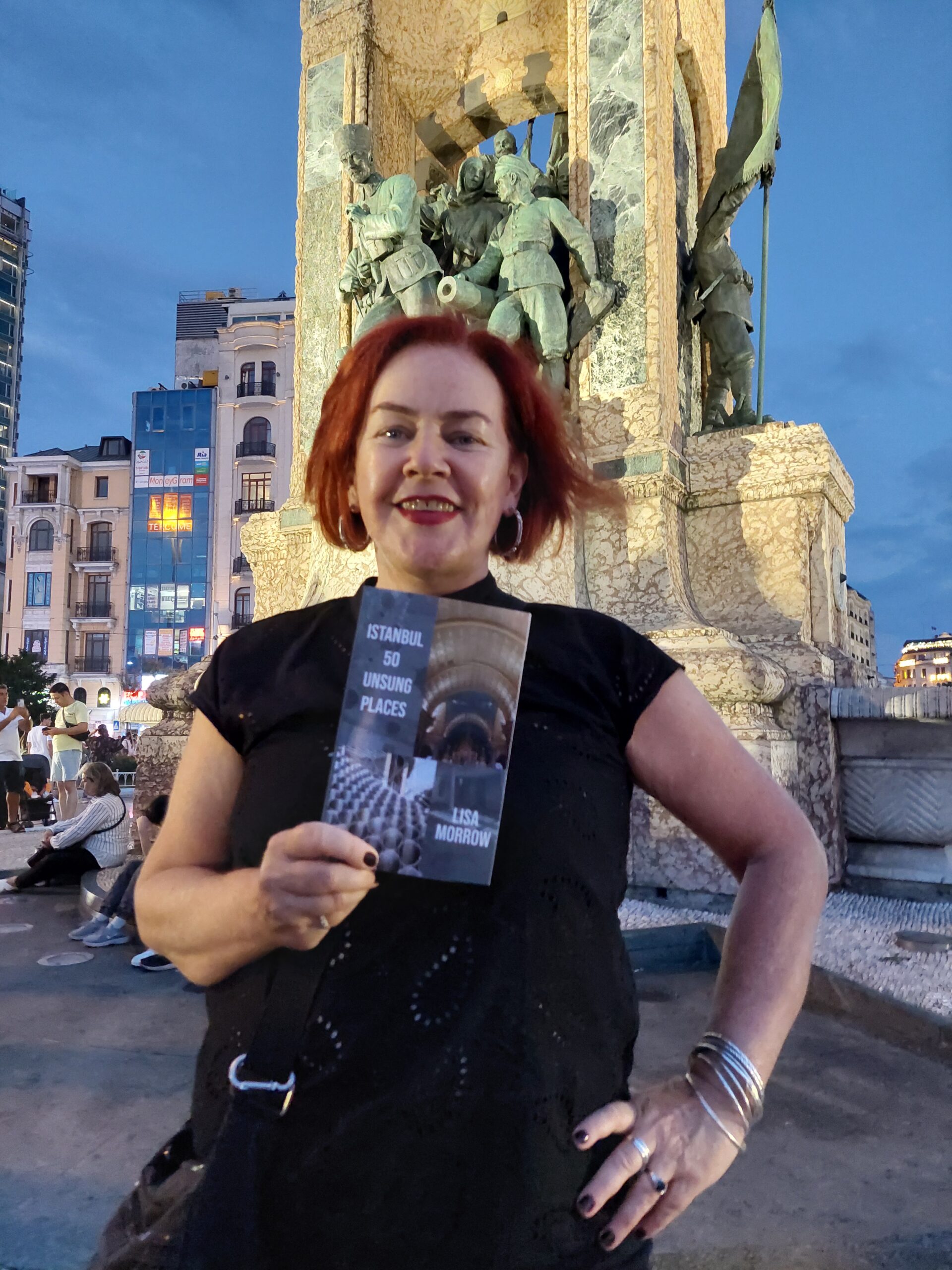
Use my code: insideoutinistanbul10 and get 5% off when you order through the Truely website.
Lastly, if you’re travelling alone, check out my post on useful solo travel tips Turkey for women (and men).
However you travel, welcome to Turkey, have fun and stay safe.
Iyi yolculuklar!